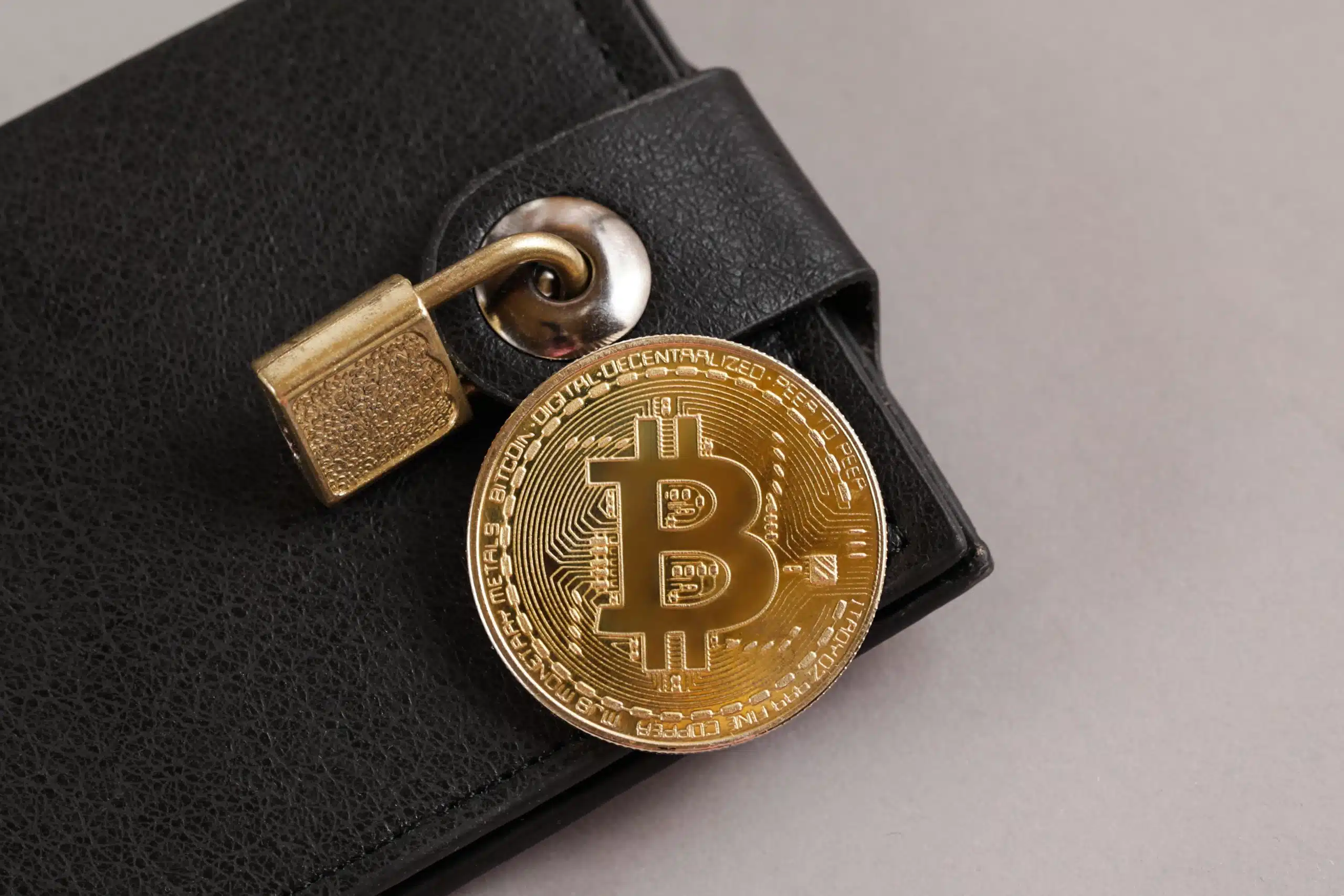
Privacy-minded investors are increasingly turning to anonymous crypto wallets to help keep their finances off the radar. These wallets allow users to skip the Know Your Customer (KYC) verification that most exchanges ask for and keep your identity separate from your crypto activities, eliminating the need to provide a heap of private information like your address, ID, or phone number to a company you don’t trust.
After extensively researching the top options, we recommend Best Wallet, Zengo, and Ledger as the best anonymous crypto wallets for investors of all experience levels. Below, we’ll cover the best anonymous crypto wallets in 2025, and explain their privacy features and what you need to know before choosing one for your needs.
Top Anonymous Crypto Wallets in 2026
| Ranking | Wallet | Privacy Features | Security Level | Ease for Beginners | Coin Support | Open‑Source | Justification |
|---|---|---|---|---|---|---|---|
| 1 | Best Wallet | Non‑custodial with no KYC, PIN/biometric, 2FA; lacks on‑chain privacy like CoinJoin | MPC, Fireblocks SDK; no independent audits published | Highly rated mobile UX; portfolio and quest features | 1,000+ tokens across 60+ chains | ❌ | Strong mobile UX and broad support, but closed-source and privacy features are marketing-based |
| 2 | Zengo | No transaction anonymization, but secure keyless backup | MPC, 3FA, no seed phrase | Very beginner-friendly | Multi-chain | ✅ | Excellent keyless security and beginner access |
| 3 | Ledger | Optional Tor, mixing tools via external apps | EAL5+ certified Secure Element | Moderate setup complexity | 1,800+ assets | ❌ | Best-in-class cold storage, but privacy requires external tools |
| 4 | Tangem Wallet | Key-share model hides identity from provider | Split-key model with PIN/biometric auth | Mobile-first and intuitive | BTC, ETH, select others | Mixed | Innovative key-sharing privacy on mobile |
| 5 | Trezor | Privacy via Wasabi, Whirlpool integrations | Fully open-source firmware and bootloader | User-friendly with customization options | 1,600+ assets | ✅ | Good privacy with open-source transparency |
| 6 | Wasabi Wallet | Built-in CoinJoin, Tor integration, zero-link transactions | Non-custodial, strong coin control | Steeper learning curve | Bitcoin only | ✅ | Best Bitcoin privacy toolset with advanced CoinJoin protocol |
| 7 | Cake Wallet | Native Monero privacy features (ring sigs, stealth addresses) | Monero protocol privacy | Requires some knowledge of Monero | Monero, BTC, LTC | ✅ | Great choice for Monero privacy enthusiasts |
Best Anonymous Crypto Wallets
If you want to jump into crypto with privacy in mind, this list will tell you about the top wallets to keep your identity and your funds private.
1. Best Wallet: Best Overall Choice for Security and Utility
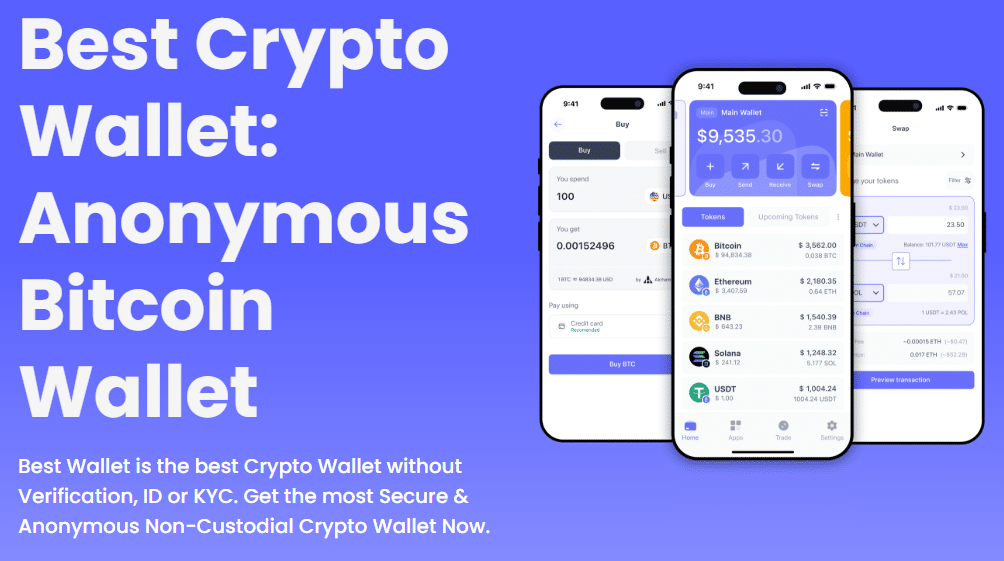
Best Wallet is a non-custodial wallet that doesn’t ask for KYC and is packed with quite powerful privacy tools. It uses multi-party computation (MPC) to keep your private key fragmented across servers, which means that there is no single point of failure.
Best Wallet is designed for users who want full privacy control across multiple chains. It supports privacy coins like Monero and integrates with Tor and CoinJoin.
Top Features:
- No KYC or registration required
- Supported assets: privacy coins like Monero and Zcash
- Top integration for IP masking
- Built-in CoinJoin for Bitcoin mixing
- Multi-chain support
Fees:
- Network fees (standard per-chain)
- Swap and fiat on-ramp fees (via partners)
Security:
- Non-custodial (you control your private keys)
- Optional passcode or biometric lock
- Open-source backend
2. Zengo: Most Secure Wallet With No Seed Phrases
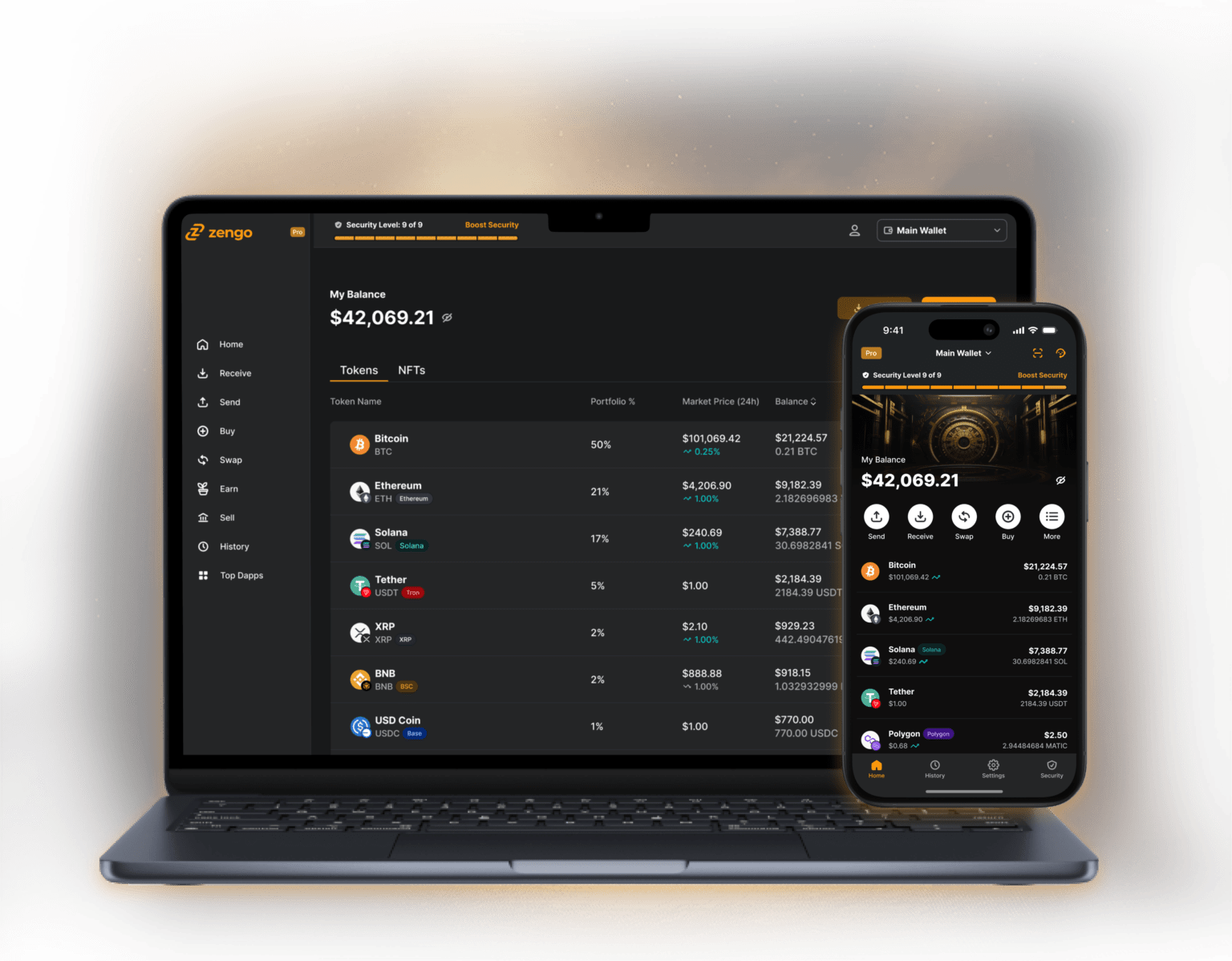
Zengo stands out for removing the stress that comes with seed phrases. Instead of using a recovery phrase, Zengo uses Multi-Party Computation (MPC), where your private keys are split into parts and never fully exist on any device. It is super easy to use and set up, though it isn’t designed for deep anonymity.
Top Features:
- Seedless backup with biometric recovery
- MPC-powered key protection
- In-app buy, sell, and swap options
- No KYC to use the wallet (only for fiat purchases)
- User-friendly interface
Fees:
- Network fees per transaction
- Spread on swaps and fiat buys
Security:
- Biometric security login and 2FA
- Non-custodial design
- Encrypted backups on the cloud for recovery
3. Ledger: Seamless Private Hardware Wallet With Great Features
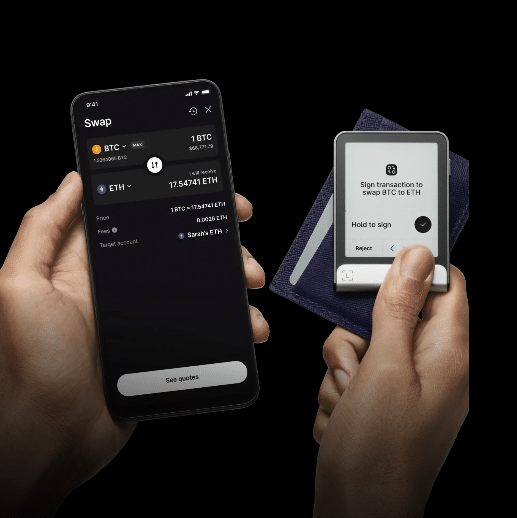
Ledger is one of the most trusted hardware wallets on the market. It doesn’t require KYC for setup or use, and since it stores your private keys offline, it offers strong protection against hacking.
This is not a privacy tool by itself, but when it is paired with wallets like Wasabi or Electrum over Tor, it becomes a very powerful anonymous setup. The anonymous crypto wallet supports thousands of coins and tokens.
Top Features:
- Offline storage via a secure element chip
- Supports 5,000+ cryptocurrencies
- Integrates with Wasabi and Electrum for privacy
- No KYC required to use the hardware
Fees:
- One-time hardware purchase
- Network fees per transaction
- Optional service fees if using exchanges within Ledger Live
Security:
- Secure element chip (CC EAL5+)
- PIN, passphrase, and recovery phrase protection
- Open-source apps (firmware is closed source)
4. Trezor: Most Secure and Private Hardware Wallet
Trezor offers strong privacy control through its open-source nature. It also supports external apps like Wasabi, Electrum, and Sparrow. This hardware wallet doesn’t require any KYC and can operate fully offline. This makes it a great choice for users who want hardware-level security with maximum transparency.
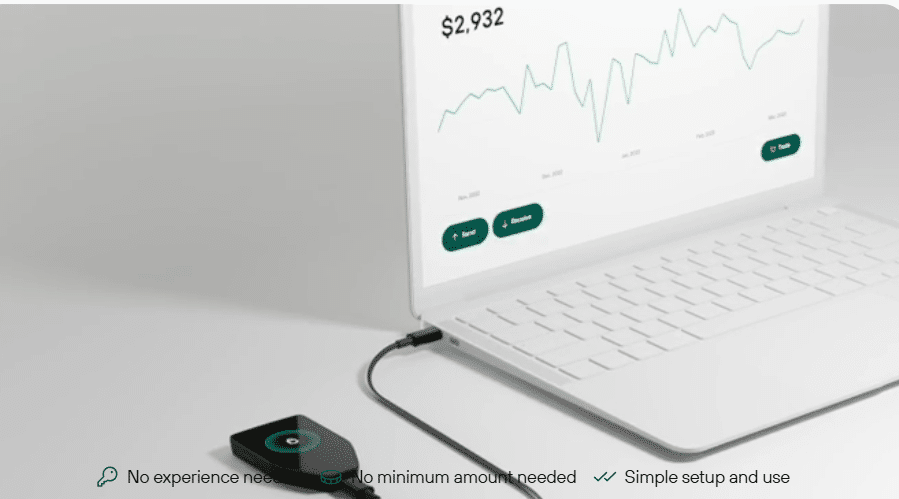
Top features:
- Fully open-source software
- No account or KYC required
- Offline key storage
- Integrates with Wasabi, Electrum, and Sparrow
- Supports 1,000+ coins
Fees:
- One-time cost of the device
- Network fees per transaction
Security:
- PIN, passphrase, and recovery seed
- Verified firmware
- No internet connection required for Bitcoin transactions
5. Tangem Wallet: Best Anonymous Hardware Wallet With NFC
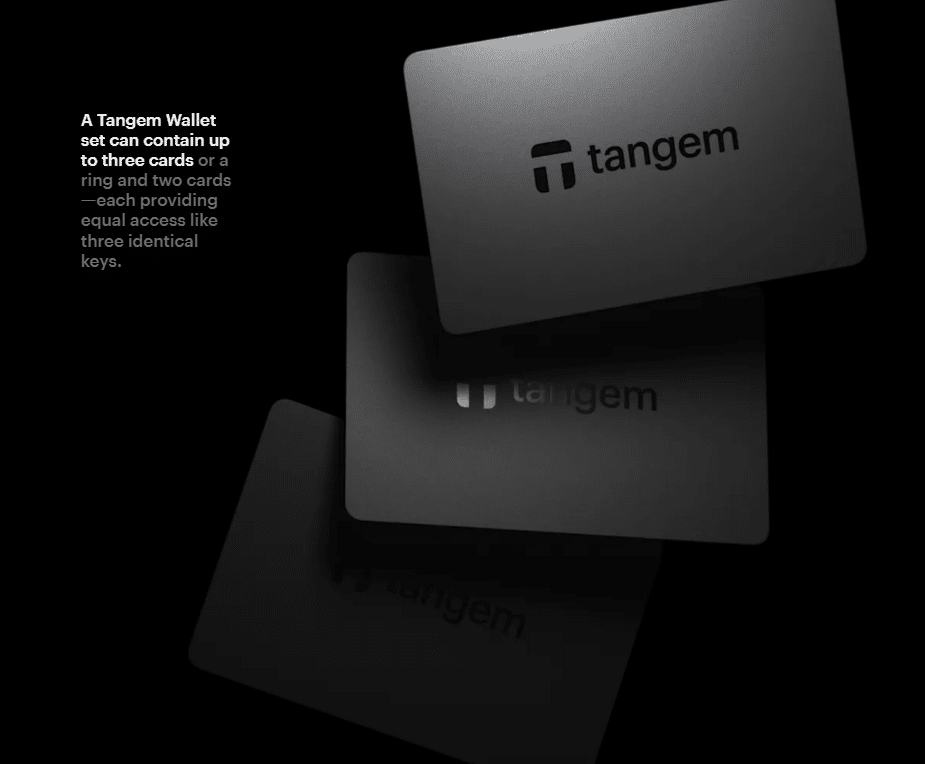
Tangem is an NFC card wallet that functions as a cold wallet with no recovery phrase. You use a set of physical cards to back each other up, no passwords or seed phrase needed. Its “Stealth Card” version looks like an ordinary black card, which makes it ideal for discreet use. No KYC is required for setup or use.
Top Features:
- Tap-to-use smart card wallet (NFC-based)
- No recovery phrase; backup with additional cards
- “Stealth Card” option looks unbranded
- No KYC or sign-up needed
- 6,000+ supported assets across 81+ chains
Fees:
- One-time card purchase fee
- Standard network fees
- Optional exchange/ spread fees for in-app swaps
Security:
- EAL6+ certified chip
- Encrypted NFC communication
- No internet access on the card itself
6. Wasabi Wallet: Top Bitcoin Wallet for Privacy With CoinJoin
Wasabi is a desktop-only, open-source Bitcoin wallet that specializes in on-chain privacy. It is a non-custodial anonymous crypto wallet with zero KYC, runs through Tor, and automates CoinJoin. It recently revamped its Tor integration and interface for Wasabi v2.3.
Top Features:
- Automatic CoinJoin mixing & advanced coin control
- Tor integration for masked IP
- Passphrase-encrypted wallet file
- Detailed transaction previews for improved insights into privacy
Fees:
- Free to use
- Miner fees apply
- Minimal coordinator fee included in the mix
Security:
- Non-custodial and open-source
- Works best on an encrypted, secure OS
- No mobile apps – desktop version only
7. Cake Wallet: Best Privacy-First Monero & Bitcoin Wallet
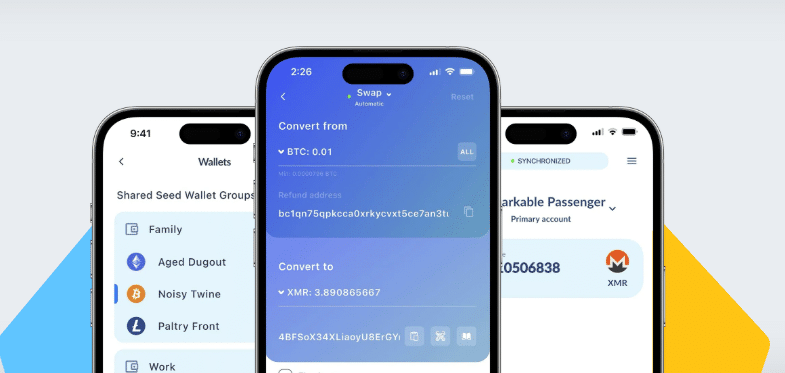
Cake Wallet is a go-to option for Monero and Bitcoin holders looking for privacy in a mobile app. It is an open-source, non-custodial wallet that requires no KYC. Cake makes spending Monero secure and hands-off, but it does lack blockchain mixing features since Monero’s protocol includes privacy natively.
Top Features:
- Monero native wallet, RingCT, stealth addresses
- Also supports Bitcoin
- No KYC required
- Open-source with a simple interface
Fees:
- Network fees for XMR and BTC transactions
- Optional in-app swap fees
Security:
- Non-custodial with seed phrase backup
- Community audited and trusted
- Built-in privacy from Monero
What Is an Anonymous Crypto Wallet?
Cryptocurrency transactions aren’t as private as many people think. While your name isn’t attached to your wallet address, every transaction gets recorded on public blockchains that anyone can view. This means your financial activity could be tracked if someone links your identity to your anonymous crypto wallet.
A crypto wallet is a tool that allows you to store, send, and receive cryptocurrency. Think of it like your digital bank account, but instead of dollars and euros, it holds Bitcoin, Ethereum, and other coins.
Here is the most important fact: not all crypto wallets are anonymous. In fact, many of them aren’t. Some wallets, especially those offered by major exchanges like Coinbase and Binance, require you to go through KYC verification, which stands for Know Your Customer. This means submitting documents like your passport or your driver’s license (and sometimes even sending a selfie).
The goal behind these processes is to comply with anti-money laundering laws. But it comes at the cost of your privacy.
On the other hand, there are plenty of anonymous crypto wallets that don’t ask for personal details. They don’t connect your wallet address to your identity, and they often have advanced security features and privacy-focused features like Tor routing, coin mixing, and support for private coins like Monero and Zcash.
But, here is the catch: even if a wallet itself doesn’t ask who you are, your transactions on the public blockchains are still traceable. It’s just not easy to connect you with your wallet. This is why true anonymity depends not only on which wallet you use, but also how you use it. Choosing the right wallet is only step one.
How Do Anonymous Wallets Protect Your Privacy?
Anonymous crypto wallets don’t just skip the ID checks. They are often loaded with features that hide your activity on the blockchain. Let’s see what these features actually do.
Tor Routing
Tor is short for The Onion Router. This is a network that hides your IP address by bouncing your internet traffic through multiple encrypted relays.
Normally, when you use a wallet, your real IP address can be exposed to the wallet provider or even some network observers. When a wallet routes traffic through Tor, it masks your IP, making it harder for anyone to link your Bitcoin transactions to your location and physical identity.
Stealth Address
A stealth address is a one-time-use address generated for each transaction you make. Normally, if someone knows your wallet address, they can see your entire history of incoming transactions on the blockchain.
With stealth addresses, your anonymous Bitcoin wallet will create new, random-looking addresses for every payment. The funds will land in your wallet, but it will be hard for others to tell they are all yours.
No KYC (No Identity Verification)
KYC or Know Your Customer is the process of submitting ID documents to use a service. KYC verification will link your real identity to your wallet activity, which completely removes anonymity.
Anonymous Bitcoin wallets skip this step entirely. You download the app, write down your recovery phrase, and you’re done. No sign-ups, no email, no ID.
Hardware Isolation/ Cold Storage
Some wallets keep your private keys completely offline. If your private keys are never exposed to the internet, they cannot be hacked ot tracked through malware.
By using hardware or air-gapped wallets, you ensure your activity stays private, even from the device you are transacting on.
What to Look for in Anonymous Crypto Wallets
Choosing the best crypto wallet, especially one that prioritizes anonymity, is more than finding basic wallets that skip the identity verification checks. No matter what crypto you are using, there are a few things to consider when you make this choice.
Truely Non-Custodial Access
Ideally, you should always have total control over your private keys. If the anonymous wallet company (or anyone else) holds them for you, it is not really a private wallet.
No KYC Requirements
The anonymous crypto wallet itself should never ask for personal information. That being said, third-party services inside a wallet, like fiat purchase integrations, may still require KYC. You may want to stick to wallets that let you send and receive freely without these requirements.
Privacy Tools
If you want extreme privacy protection, you can look for features like Tor routing, CoinJoin, or stealth addresses. Privacy coins like Monero offer these features by default, while others like Wasabi add them for Bitcoin.
Wallet Security
Strong security is arguably even more important than privacy. Make sure the wallet you choose has good backup options (like seed phrases or biometric security), encryption, and ideally two-factor authentication.
Compatibility and Flexibility
Whether it is a browser extension, a mobile app, or a hardware device, your wallet should work with the platforms and coins you use. These days, top software wallets can give you flexibility without compromising privacy.
Wallet Fees
Most anonymous crypto wallets don’t charge to store your crypto, but you will be asked to pay transaction fees. Some wallets add a spread on swaps or charge for premium features like mixing. Always check what you are paying for, and whether or not you can turn off paid services.
Can a Hardware Wallet Be Traced or Compromised?
Hardware wallets offer strong security, but they’re not completely invisible or bulletproof. Your hardware wallet itself can’t be directly traced to your identity since it’s just a piece of hardware. However, the transactions you make with the hardware wallet leave trails on the blockchain. If you buy crypto with a credit card, use a KYC exchange, or send funds to addresses linked to your identity, those connections could potentially expose you.
Hardware anonymous crypto wallets can face several types of compromise:
- Supply chain attacks happen when malicious actors tamper with devices before they reach you
- Physical attacks are possible if someone gets their hands on your hardware wallet device (they might extract private keys through specialized techniques or simply wait for you to enter your PIN)
- Firmware vulnerabilities occasionally happen, though reputable manufacturers patch these quickly
Most hardware wallet compromises don’t come from the device itself. People get phished into entering their seed phrases on fake websites, use the same device on compromised computers, or store their backup phrases insecurely.
To stay anonymous with your hardware anonymous wallet, use privacy-focused practices. Route Bitcoin transactions through mixing services, use Tor browsers when accessing wallet interfaces, and never link your wallet to accounts that ask for identification. Buy your hardware wallet with cash or anonymous payment methods, and have it shipped to a location that doesn’t connect to your identity.
Are Anonymous Crypto Wallets Illegal or Sketchy?
No, the vast majority of anonymous crypto wallets are entirely legal and legitimate. In fact, most crypto wallets don’t require KYC (unless you purchase crypto through them), which is completely normal on the blockchain.
Crypto wallets, by design, are tools to hold and manage your own assets. Since they don’t operate as banks or exchanges, they aren’t legally required to verify your identity. This is true for wallets like Trezor or Exodus. You can download, install, and use them without even uploading an ID.
However, when you want to buy crypto using fiat inside a wallet, you’ll often interact with third-party wallets and services like Simplex and MoonPay. These require KYC verification, since they operate as money transmitters and have to comply with financial regulations.
Anonymous wallets aren’t sketchy and aren’t built to help people hide crimes. Naturally, they could be used for criminal activity, but that’s not their main purpose for the vast majority of users. The main idea is to give you control over your finances. In the same way privacy-focused browsers like Brave or VPNs protect your online data, anonymous Bitcoin wallets protect your financial footprint.
Of course, governments may still monitor transactions or exchanges that allow major anonymous transfers, but using a private wallet by itself is fully legal in most jurisdictions (including the U.S.).
Are Anonymous Crypto Wallets Worth Using?
Whether you are just starting with crypto or are already deeply familiar with privacy tools, using an anonymous wallet can give you control, flexibility, and most importantly, peace of mind.
From advanced features like Tor routing and CoinJoin to simple and secure backups without KYC, there is a wallet for every kind of user on the market. Just make sure you are looking at the wallet features that matter most to you: security, ease of use, and how well the anonymous wallet supports your privacy goals.
In the crypto world, the choice is entirely yours, but so is the responsibility of choosing the right wallet. So do your due diligence, research a lot, and pick the best wallet for your coins.
FAQs
Are anonymous crypto wallets legal to use?
Yes. Anonymous crypto wallets are perfectly legal in most countries. They don't handle your money like an exchange would; they just store your private keys and help you interact with the blockchain.
Do I need to verify my identity to use an anonymous crypto wallet?
No. Most crypto wallets, especially software wallets, don't require any KYC to use. You can send, receive, and store crypto freely.
What is the difference between a custodial and a non-custodial wallet?
A custodial wallet means someone else (usually an exchange) holds your private keys. With a non-custodial wallet, you control the private keys, which is better for privacy and security. Still, if you lose access, there is no 'forgot password' button.
Can I use anonymous wallets with Bitcoin?
Yes. In fact, some wallets like Wasabi are designed specifically for Bitcoin privacy.
What happens if I lose access to my anonymous wallet?
If you are using a non-custodial wallet and lose your backup phrase or biometric login, you'll permanently lose access to your funds. This is why wallet security and backups are essential.
References
- What is Tor? Who Uses It, How to Use It, Legality, and Purpose – Investopedia
- Stealth Address Basics – Moneropedia
- What Is a Multi-Party Computation (MPC) – Coinbase
- What are EAL Levels for Crypto Wallets – Monix
- How to Buy Crypto with No Verification in 2025 – BestWallet
- How to Buy Crypto through Ledger Live – Ledger
- Tangem Cards and How They Work – Tangem
- Wasabi Wallet v2.3.0.0 released – Reddit
- Is Exodus Exchange Anonymous – Reddit
- Hardware Wallet Security: Prevent Supply Chain Attacks! (ELLIPAL)
- Monero: The Privacy Coin Explained – CoinDesk