On this Page:
With over 290 million users and several trillion dollars in annual trading volume, Binance is the most popular tier-one crypto exchange. It supports hundreds of spot and derivative markets with competitive fees, and users in most countries can deposit and withdraw fiat. Learn more about the exchange in this extensive Binance review.
To evaluate Binance, we opened and funded an account and then tested the platform on both desktop and mobile devices. We compared our trading experience, commission structure, supported assets, and security features against those of other top exchanges. Read on to decide whether Binance is the right exchange for you, or if better alternatives exist.
Binance Exchange Review: Our Verdict
Binance is the largest crypto exchange globally for several standout reasons. It offers a vast selection of markets, institutional-grade security with verified proof of reserves, and multi-device accessibility across browsers, mobile devices, and desktop software. Fees are competitive, especially for entry-level traders who cannot meet minimum monthly volume requirements to increase their VIP tier.
We also find that Binance appeals to traders who seek leveraged products. It offers hundreds of perpetual and delivery futures pairs, as well as professional options chains with diverse strike prices and maturity dates. Although Binance implements compulsory ID verification, this keeps the platform safe, compliant, and legitimate.
In terms of payments, Binance streamlines crypto investing through instant deposit methods, including debit/credit cards, as well as bank transfers. P2P users access local payment methods to ensure global inclusivity. The main drawback is that certain trading markets, such as leveraged derivatives and on-chain staking, are unavailable in specific regions.
Binance Pros and Cons 2026
According to our Binance review findings, here are the exchange’s pros and cons:
Pros
- The exchange supports a diverse range of markets, including spot and margin trading, futures, and options.
- Launched in 2017, Binance is an established exchange with over 290 million registered users.
- Traders buy and sell trillions of dollars worth of digital assets annually, providing significant liquidity.
- Spot trading commissions of 0.1% without minimum trading requirements.
- Users can reduce trading fees by placing limit orders, holding BNB, or achieving 30-day volume targets.
- The feature-rich ecosystem includes crypto savings accounts, high leverage, copy trading, and instant loans.
- Advanced charting tools include technical indicators and custom trading screens.
- Users in many regions buy cryptocurrencies instantly with debit/credit cards and other popular payment types.
Cons
- Options traders do not receive discounted commissions when they provide liquidity.
- Traders in the UK, the U.S., and several other countries cannot trade derivative products.
Binance Overview
Binance is an online cryptocurrency exchange that lets users buy, sell, and trade various digital assets. Changpeng Zhao (CZ) launched Binance in 2017, and within just six months, it became the world’s largest exchange by trading volume. It generates trillions of dollars in volume annually and boasts a client base of over 290 million people.
The exchange lists hundreds of digital assets, including crypto-to-crypto pairs like BTC/USDT and ETH/USDT, as well as fiat-to-crypto pairs such as BTC/EUR and ETH/TRY. Platform users can invest in cryptocurrencies with traditional money or trade them on the Binance spot exchange. We have previously explored the best coins to buy on Binance.
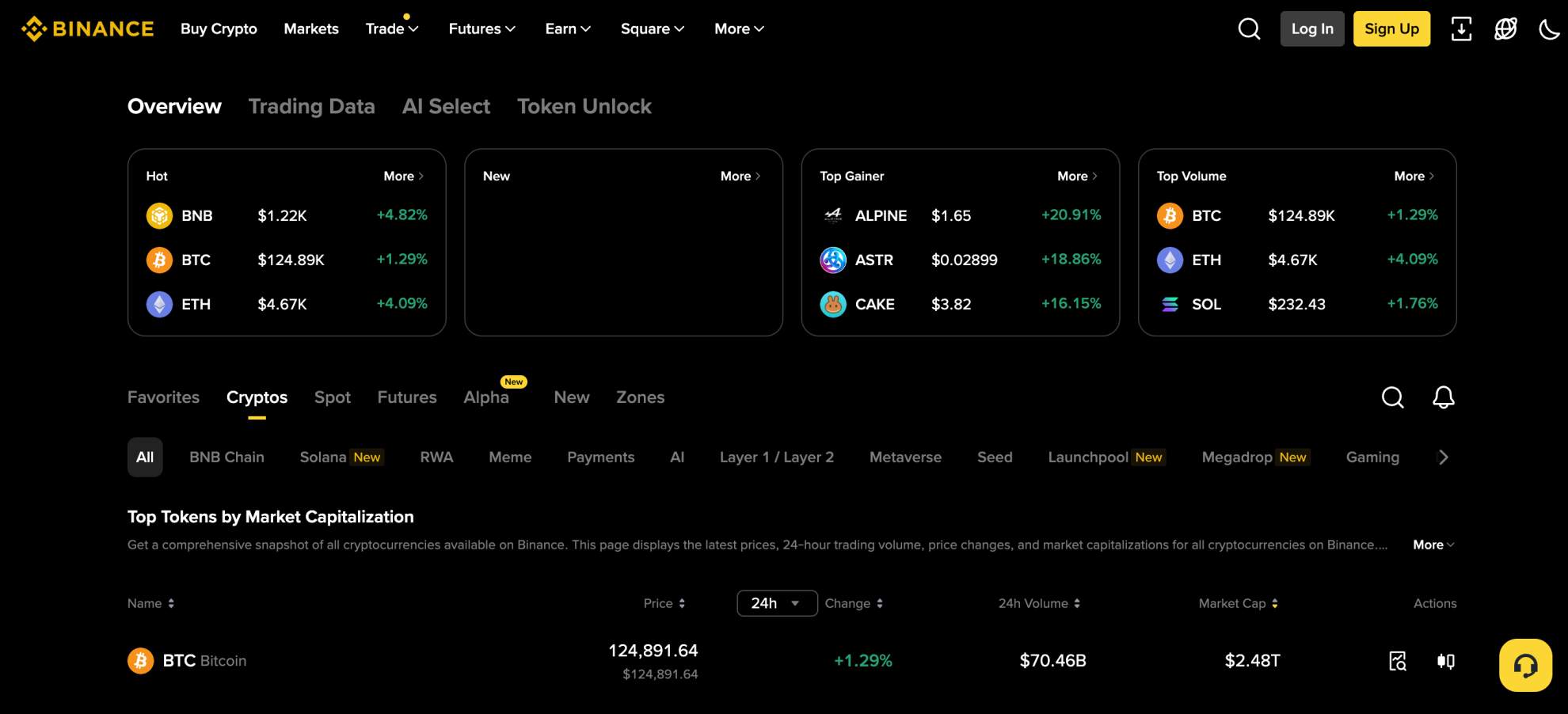
Binance remains a popular choice for derivative trading, with key markets including perpetual and delivery futures, most of which are settled in Tether (USDT). As one of the best crypto options trading platforms, Binance offers comprehensive chains for Bitcoin (BTC), Ethereum (ETH), Dogecoin (DOGE), and other top digital assets.
The Binance ecosystem offers access to various Web 3.0 features, including decentralized finance (DeFi) products such as dual investments, loans, and savings accounts. Bots and copy trading tools also perform well, since users trade cryptocurrencies automatically.
Binance accepts traders from most countries, although certain products and services are subject to jurisdictional restrictions. U.S. clients use the Binance U.S. exchange, which holds state and federal licenses. All other nationalities use the main Binance platform, which offers a much larger selection of coins, tokens, and investment markets.
Binance’s Trading and Investment Products
Exchange users have access to a wide range of trading and investment markets through a single account. The easiest way to invest in digital assets is via the Instant Buy feature. Investors purchase cryptocurrencies with Visa, MasterCard, and other convenient deposit methods, and Binance adds the assets to the account wallet. Those based in non-major economies use the peer-to-peer (P2P) dashboard, as it supports over 800 local payment types.
Active crypto traders use the spot exchange to secure lower fees, access more markets, and use the exchange’s charting tools. The spot exchange supports hundreds of cryptocurrencies, including the best meme coins like Pepe (PEPE) and Floki (FLOKI).
Traders place market and limit orders, which Binance executes when other exchange participants reach the target price. The majority of pairs contain USDT, although some markets support fiat currencies such as XRP/EUR, SOL/ARS, and BTC/ZAR.
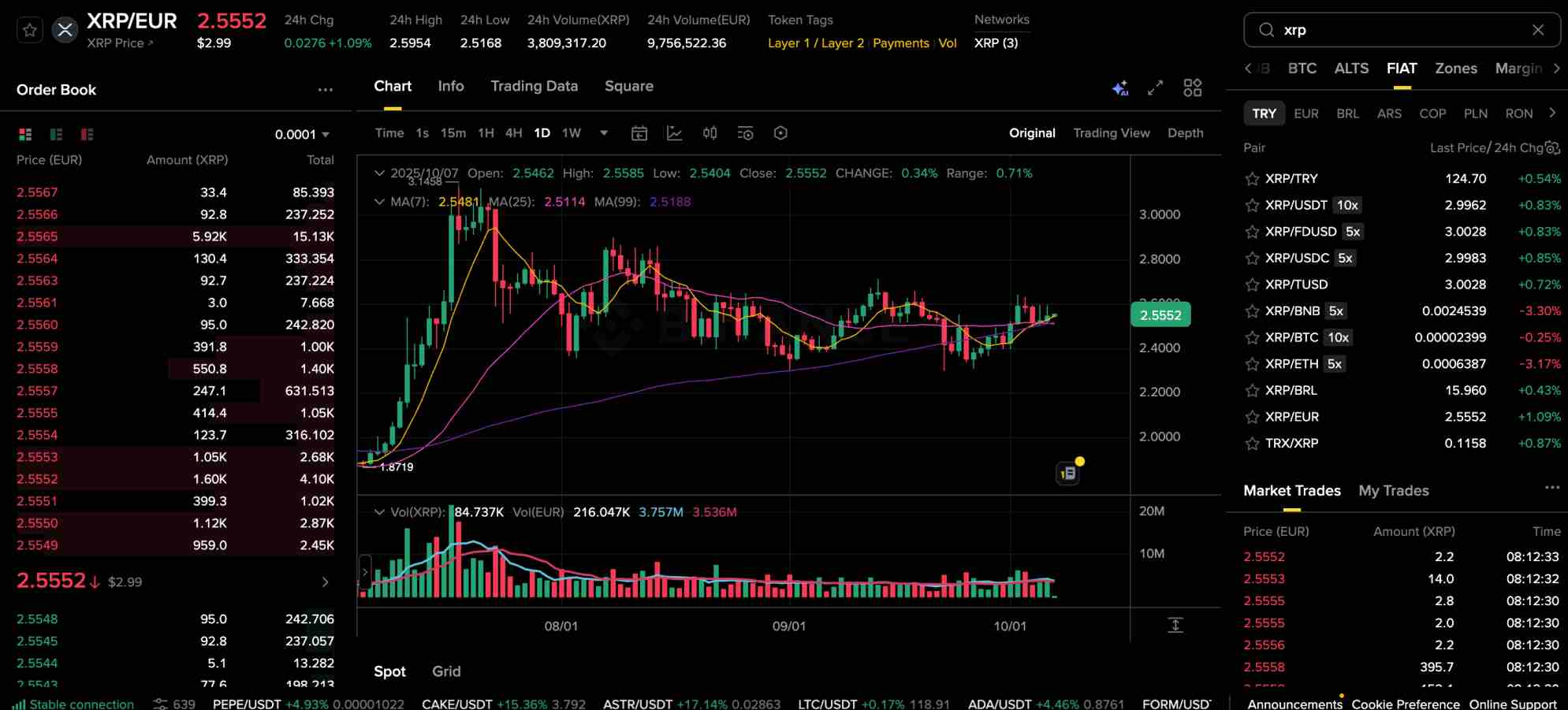
The derivative platform handles substantial trading volume. Traders buy and sell hundreds of perpetual futures with leverage of up to 150x. Delivery futures with quarterly and bi-quarterly contracts are also available, plus fully-fledged options chains across six markets.
Our Binance review finds that the exchange suits investors who seek passive income sources. It offers crypto savings accounts with flexible and fixed terms, which include principal-protected USDT yields of over 13%. In addition to an NFT marketplace and secured crypto loans, the Web 3 platform supports on-chain yields, smart arbitrage tools, dual investments, and grid trading bots.
All-in-all, Binance offers everything needed to maximize digital asset returns.
Binance Supported Coins and Tokens
According to exchange data, Binance’s spot trading platform supports almost 430 coins and tokens. Most traders buy and sell major cryptocurrencies, such as BTC, ETH, DOGE, and SOL, as these markets offer the deepest liquidity and the tightest spreads. We found that most pairs contain USDT, although some markets also use other stablecoins, such as First Digital USD (FDUSD) and USDC.
Investors who prefer buying digital assets directly with fiat currency have fewer options. The instant buy feature supports about 100 cryptocurrencies, and fiat-driven pairs typically feature large-cap markets only. Traders in South Africa, for instance, access ZAR spot markets with BTC, ETH, and USDT only. Europeans have slightly more choice, including the best altcoins such as Polkadot (DOT), Cosmos (ATOM), and Polygon (MATIC).
Trading markets are thinner in the P2P ecosystem, with just 10 supported assets.
Derivative Markets
Binance offers a separate platform for its derivative trading instruments. With over 630 pairs, perpetual futures remain the most popular contract type. These instruments let traders go long and short without expiration dates, and BTC/USDT offers the highest leverage limit at 150x. Most major altcoin pairs, such as XRP/USDT and SOL/USDT, offer 75x leverage; however, these limits decrease as traders exceed their exposure thresholds.
While most perpetual futures pair with USDT, some markets offer inverse contracts that settle in the underlying currency. Popular inverse markets include BTC, ETH, XRP, BNB, Tron (TRX), and Chainlink (LINK). The derivatives exchange also lists a selection of delivery futures, most of which offer quarterly or bi-quarterly expirations. These markets enable Binance users to avoid eight-hour funding fees.
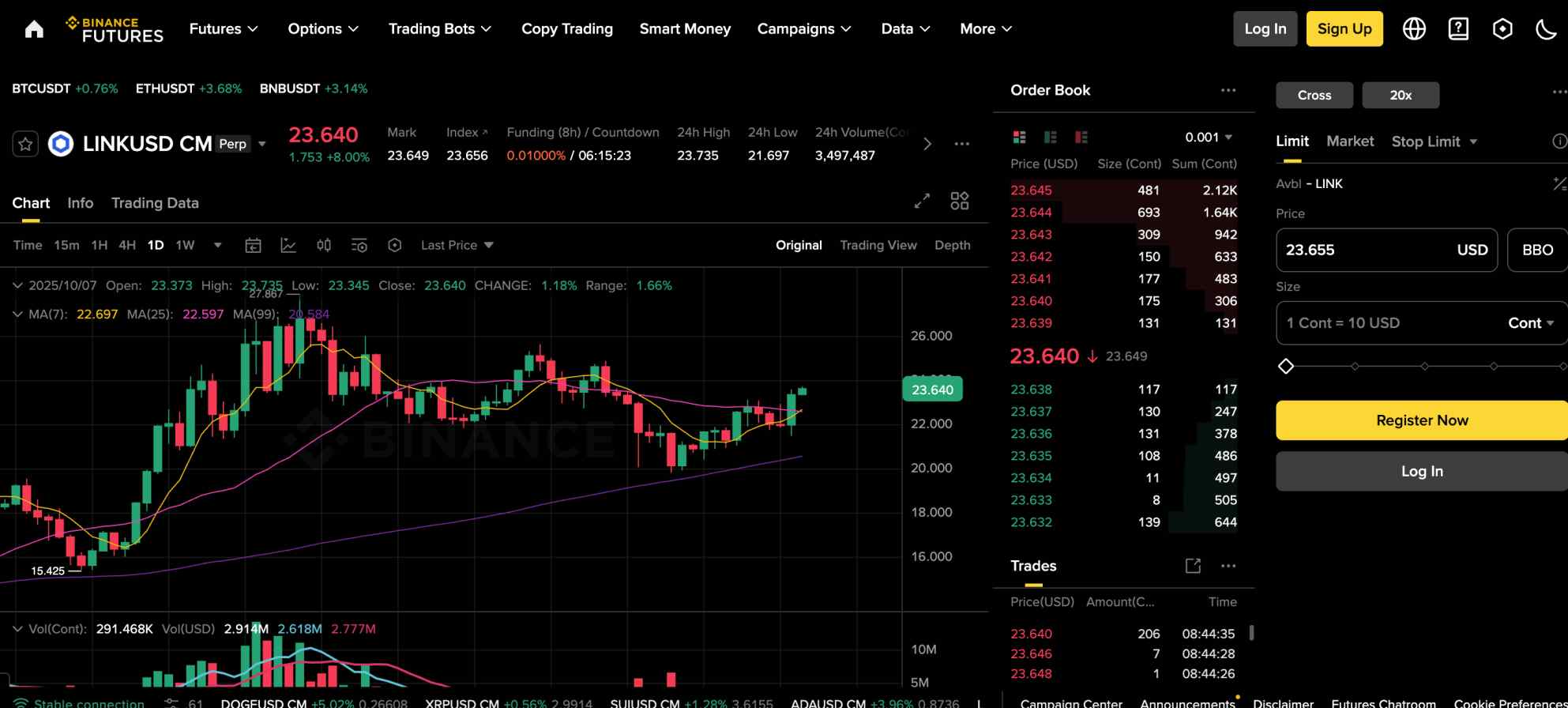
As one of the best crypto exchanges for options, Binance supports six USDT-driven markets: BTC, ETH, DOGE, XRP, SOL, and BNB. Options chains offer exposure to more than a dozen strike prices per market, with short and medium-term maturity dates. Those with limited options trading experience use the “Easy Options” feature. It helps beginners find suitable contract types based on their market projection.
Binance Fees Explained
Binance generates the majority of its exchange revenue from trading commissions, which users pay to enter and exit positions. It also makes money from perpetual futures funding fees, margin trading interest, loans, and other DeFi products. Non-trading income includes markups on fiat deposits and crypto withdrawals.
Learn more about Binance fees in the following sections.
Trading Fees
The exchange employs the maker-taker model on most of its trading markets. It applies varying commission structures across spot and derivative trading, and provides discounts based on varying metrics.
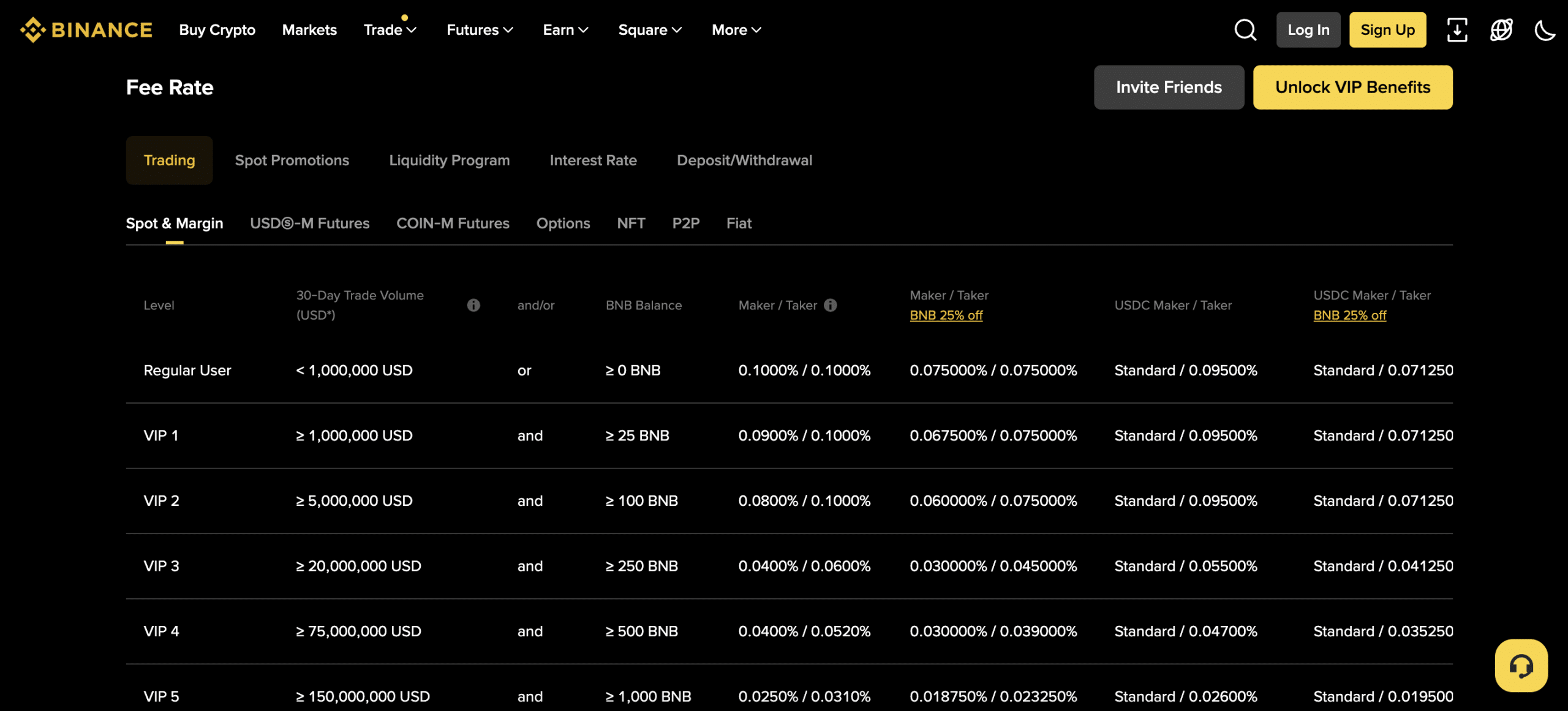
To buy or sell cryptocurrencies on the spot exchange, Binance users initially pay a 0.1% fee. This commission aligns with the low trading fees of other tier-one exchanges like OKX and Bybit. Spot traders receive lower commission rates as their VIP tier increases. This dynamic favors large-scale traders, since the first VIP tier requires $1 million in 30-day volume and at least 25 BNB held in the Binance account.
Once users achieve VIP 1 status, they also get discounted fees by placing limit orders. The platform cuts standard commissions by 25% when users pay fees in BNB.
Derivative traders initially pay commissions of 0.02% and 0.05%, depending on whether they place limit or market orders. This fee structure also aligns with key derivative competitors, although Bybit market orders are slightly more expensive at 0.055%. MEXC is the more cost-effective option for perpetual futures, as the global exchange charges 0.1% and 0.4% on limit and market orders, respectively.
As with Binance spot markets, derivative traders secure more competitive fees on large trading volumes. BNB holders receive a 10% discount on linear futures, but not on inverse contracts.
Regarding options, Binance’s standard commission is 0.3%, which applies to makers and takers. While VIP accounts receive no discounted rates, the exchange currently offers a promotional commission of 0.24%.
Non-Trading Fees
Binance accounts are free to open and maintain. Users can deposit digital assets from a non-custodial wallet without incurring any fees. To deposit fiat money, fees vary depending on the currency and payment method. Most traders pay 2% on debit/credit cards and e-wallets, while local transfers are often free.
Some users may withdraw fiat money to a local bank account without fees, and supported nations include Sweden, Hungary, and Switzerland. ZEN.com handles these transfers with near-instant settlement. Other traders withdraw fiat via the P2P exchange. While sellers may set their own exchange rates, Binance charges transaction fees for certain currencies.
To withdraw cryptocurrencies from the exchange, users pay a flat fee. The fee is always higher than the real-time network charge, resulting in a slight markup.
| Account Opening | Free |
| Spot Commission | Starts at 0.1% (makers and takers) |
| Perpetual and Delivery Futures Commission | Starts at 0.02% (makers) and 0.05% (takers) |
| Options Commission | Fixed at 0.03% (promotional rate is 0.24%) |
| Perpetual Funding Frequency | Eight hours, charged to long or short traders only |
| Debit/Credit Card and E-Wallet Purchases | Averages 2% |
| Fee Reduction for BNB Holders | 25% (spot trading), 10% (futures trading) |
| P2P Commissions | From 0% but it depends on the currency and order type |
| Crypto Deposits and Withdrawals | Free crypto deposits. Withdrawal fees depend on the asset, but are always above the real network charge |
Binance User Experience
Our Binance review finds the platform suits all experience levels. Its 290 million registered users include complete beginners, intermediate traders, and institutional clients.
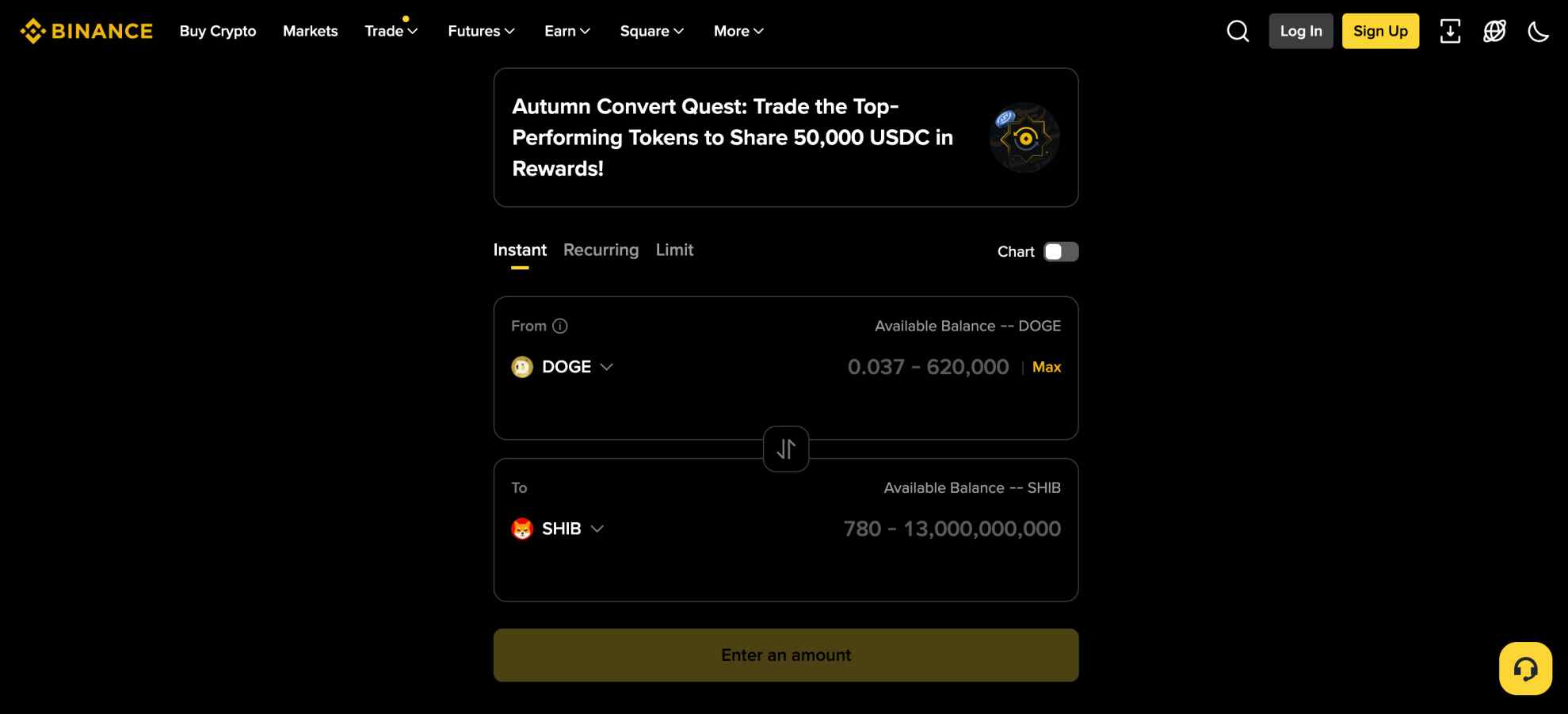
To ensure Binance caters to diverse trading profiles, the exchange separates key markets and products. Those with limited trading experience either buy digital assets directly with traditional money or swap them via the conversion feature. Both channels allow beginners to avoid advanced trading tools, such as order books and charting suites.
Experienced crypto investors use the Binance spot exchange or derivative platform. They access advanced analysis tools, including technical indicators, customizable charts, market depth, and liquidation maps. Seasoned professionals also trade on Binance via API connections, which enable them to deploy algorithmic strategies with lightning-fast execution speeds.
Binance App
Binance provides a fully optimized experience for iOS and Android users. The app, which connects to the same Binance account, provides the same trading markets and tools as the desktop platform. Mobile users buy, sell, and trade cryptocurrencies through spot and derivative markets, as well as access additional features such as savings accounts and copy trading.
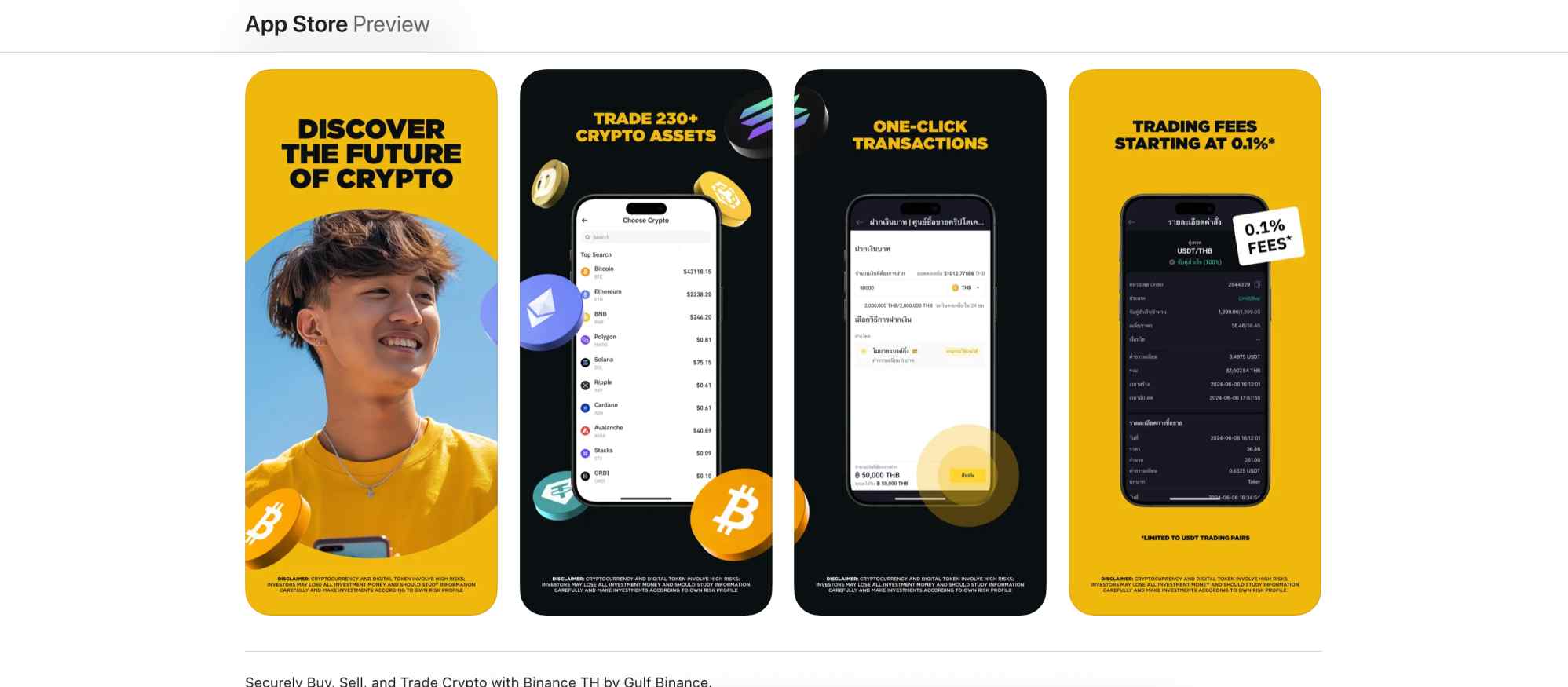
As confirmed by Binance reviews on Google Play and the App Store, the app offers a seamless user experience. Users navigate account functions through simple icons, and the trading chart remains accessible even on smaller smartphone screens.
Binance Exchange Features
Learn more about the best Binance features available in 2026.
Launchpools
Binance partners with new cryptocurrencies with innovative use cases. The platform enables account holders to invest in projects before they are available to the general public. After the event, Binance typically adds launchpool tokens to its primary or alpha exchange.
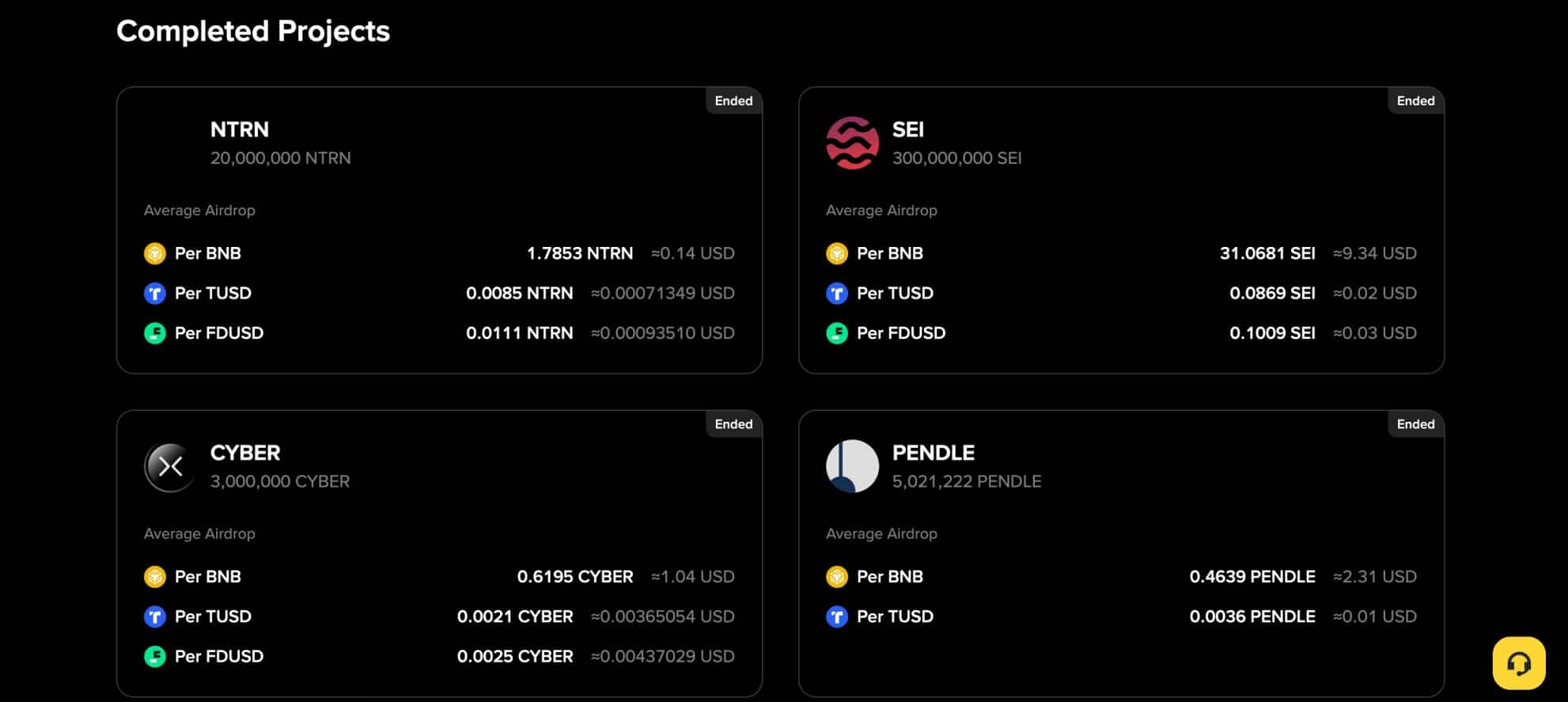
Unlike traditional presales or initial coin offerings (ICOs), launchpool investors stake BNB to access their preferred projects. No investment is needed, which makes the process relatively low risk. Participants receive their tokens via airdrop rewards when the launchpool campaign ends.
CeFi and DeFi
Exchange users can earn passive rewards through various centralized finance (CeFi) and DeFi services.
Binance offers fixed and flexible savings accounts for top cryptocurrencies, including BNB, ETH, and SOL, as well as stablecoins such as USDT, FDUSD, and USDC. More volatile assets like Berachain (BERA) and Sign (SIGN) offer the highest yields at 29.9% and 16.74%, respectively. Note that while flexible accounts offer instant withdrawals, APYs adjust frequently based on market conditions.
If you prefer decentralized solutions, Binance supports on-chain yields. Provided by reputable decentralized applications (dApps) like Aave-Plasma and Solv, the on-chain feature offers APYs of up to 6.5% on USDT and 2.5% on BTC. Users can stake ETH on the Ethereum blockchain, yet reference APYs are low at just 2.48%.
Automated Trading Tools
Some of the world’s most profitable traders use the Binance exchange. The copy trading feature enables users to follow top-performing traders passively. Once users select a trader and an investment amount, buy and sell orders are automatically replicated in their portfolio. Copy traders charge average profit-sharing commissions of 10%, and followers cover standard trading fees.
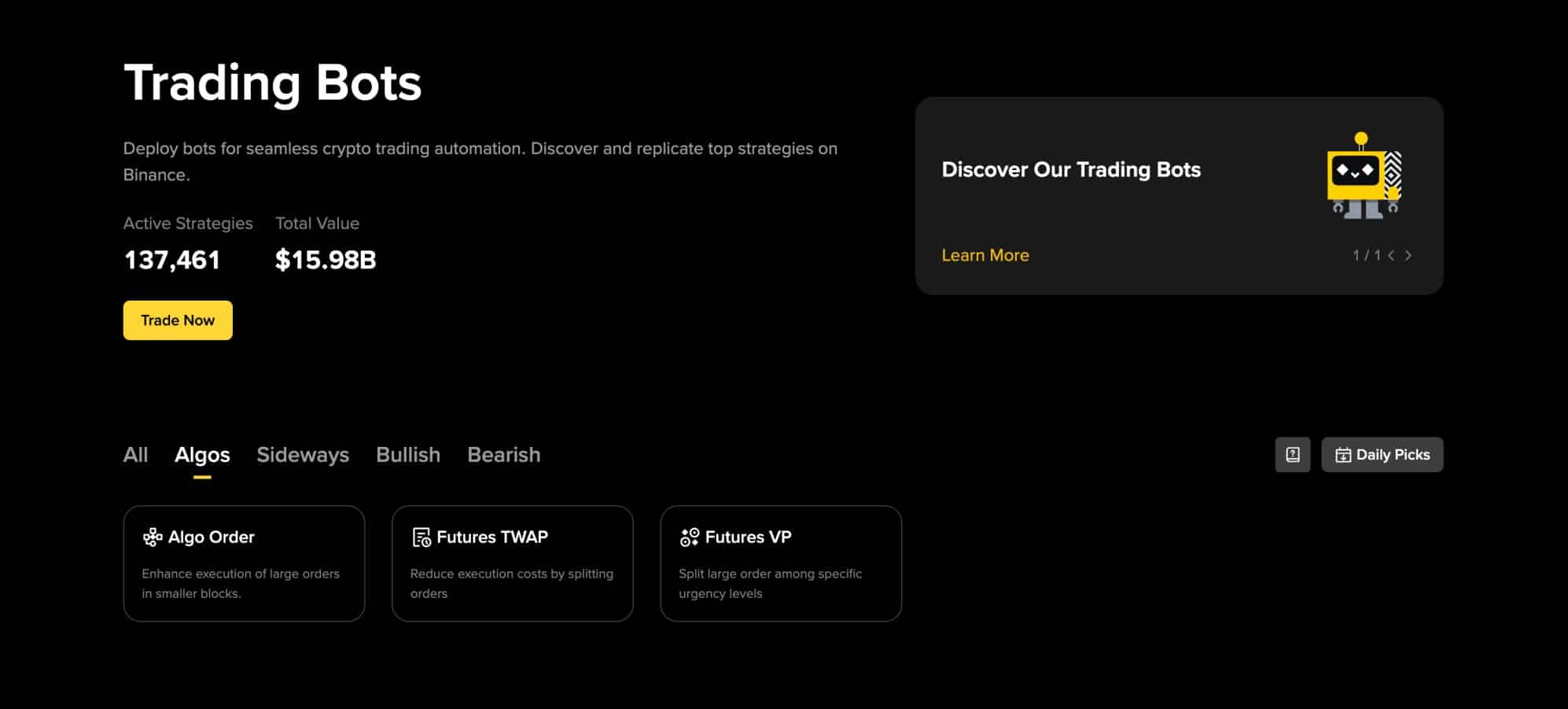
Trading bots are another automated product available to Binance customers. The provider lists over 137,000 active strategies with predetermined conditions. This plug-and-play structure appeals to beginners with limited trading experience. Popular strategies include futures TWAP and spot trading arbitrage.
Leverage and Margin Trading
Crypto traders use the Binance derivative exchange to access leverage facilities. The platform offers 150x and 125x leverage on BTC and ETH perpetuals, which significantly amplifies position sizes. Maintenance margin requirements start at just 0.4%, although these rates rise to 1-1.5% on more volatile markets like Toshi (TOSHI) and OFFICIAL TRUMP (TRUMP).
Options traders also purchase derivative contracts with low upfront requirements, although leverage multipliers depend on the premium, strike price, and maturity date.
Recurring Buys
To mitigate the risk of market volatility, Binance users can set up custom recurring buy orders. Similar to the dollar-cost averaging (DCA) strategy, investors select their preferred cryptocurrencies and determine their investment sizes. DCA trade frequencies include one, four, eight, and 12 hours, plus daily, weekly, bi-weekly, and monthly.
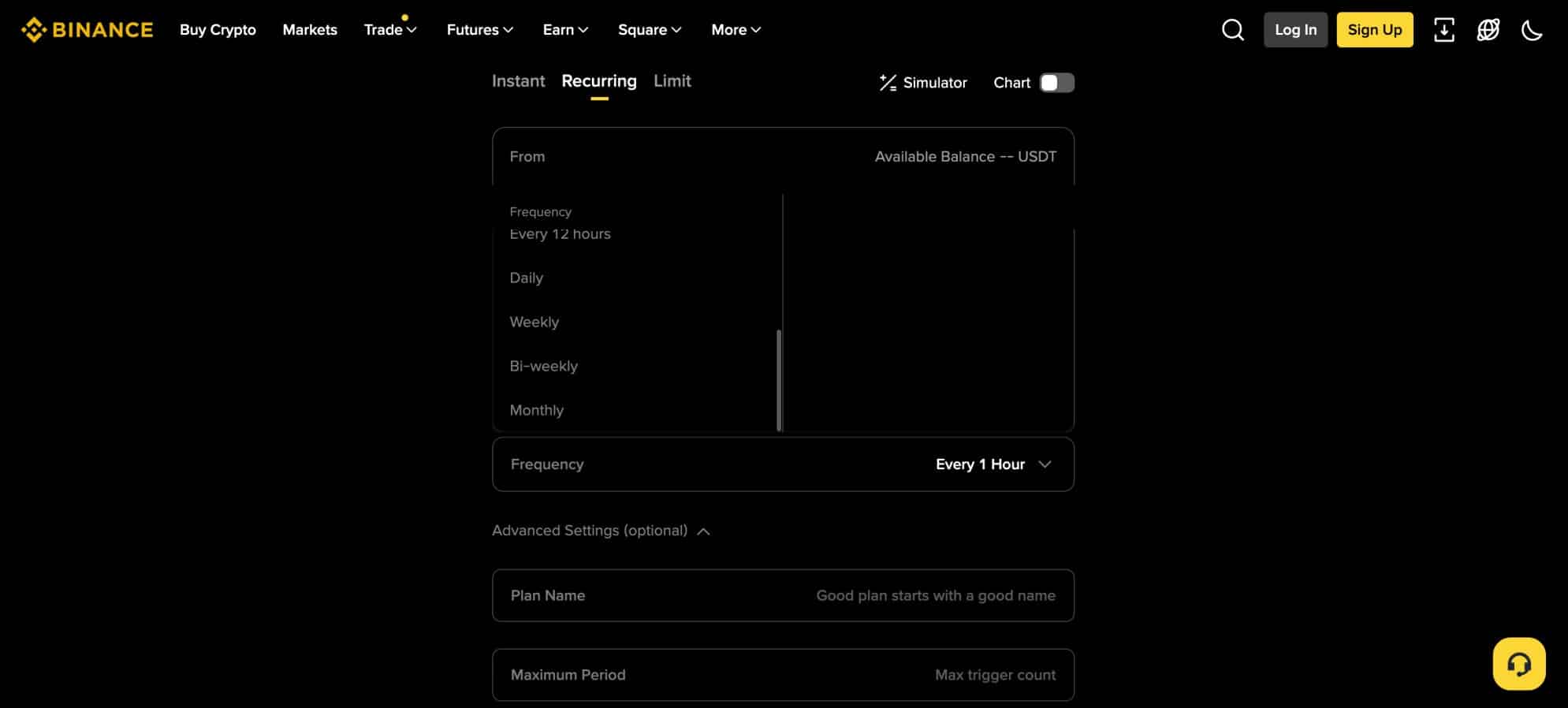
Alternatively, the recurring buy feature supports prebuilt portfolios. With over 10,000 individual investors, the “Top 10” portfolio is the most popular. It includes BTC, ETH, XRP, BNB, SOL, and other leading assets.
DEX Access
Binance enables novice traders to access micro-cap cryptocurrencies through decentralized exchanges (DEXs). Traders use their standard Binance wallet to place buy and sell orders, helping them avoid the complexity of DEX processes. The feature supports three DEX ecosystems: Base, Solana, and BNB Chain.
Since millions of DEX tokens exist, Binance provides user-friendly filters to help traders find suitable projects. Data points include market capitalization, number of token holders, price change, and trading volume.
Does Binance Have a Wallet?
Similar to other centralized exchanges, Binance provides account holders with a custodial wallet. It adds digital assets to that wallet when users complete trades, and users can request withdrawals at any time. Custodial wallets are beginner-friendly and straightforward, yet investors do not control their private keys. This mechanism means Binance users never truly own their crypto investments until they transfer funds to an external wallet with self-custody access.
Binance also offers one of the best anonymous crypto wallets via a native app and browser extension. This wallet type offers non-custodial storage, so unlike the main account wallet, only the user has access to their private keys and seed phrases. Binance’s Web3 wallet supports over a dozen network standards, and it allows custom tokens on compatible blockchains.
Binance Payment Methods
Our Binance review confirms that all account holders may deposit and withdraw cryptocurrencies via wallet transfers. The exchange typically approves digital asset payments in minutes.
However, fiat availability varies by nationality. U.S. and European users can deposit funds via ACH and SEPA, respectively, allowing them to fund their Binance account in fiat currency. Turkish customers transfer TRY via local banking methods. Fiat-funded accounts let users invest in cryptocurrencies without incurring foreign exchange fees.
Traders who cannot access fiat accounts for their preferred currency may purchase digital assets instantly with e-wallets or debit/credit cards. Another option is to use a peer-to-peer (P2P) exchange. It supports hundreds of deposit types, including local options such as mobile payments.
Binance implements deposit and withdrawal limits, which vary depending on the user’s KYC status, currency, and asset type. The exchange shows payment limits when users set up payment requests. To increase those limits, complete enhanced KYC verification.
Is Binance Safe?
Binance is a safe crypto exchange with a robust security framework. Both the global Binance platform and the U.S. exchange provide audited proof of reserves, and they hold at least 100% of user funds. This safeguard is essential, as it ensures account holders can withdraw their assets at any time and that Binance remains solvent, stable, and liquid. The exchange stores client assets in cold storage wallets to mitigate hacking threats.
Users secure their accounts via IP and device whitelisting, two-factor authentication, and email confirmations. These features protect Binance traders from unauthorized access, even if hackers obtain their login credentials.
Established in 2018, Binance’s Safe Asset Fund for Users (SAFU) provides additional protections. Stored in separate cold wallets, SAFU holds over $1 billion in USDC for emergency events, such as exchange hacks or other similar incidents. A small percentage of platform commissions funds the SAFU wallet to ensure sustainability and growth.
Regarding licensing, state and federal regulators approve the Binance.US exchange. This structure ensures U.S. traders buy and sell cryptocurrencies in a safe environment. The global exchange holds several licenses in select jurisdictions, including Thailand, the United Arab Emirates (Dubai), and Brazil. It is also registered with regulatory bodies in Japan and France.
Customer Service
Binance offers customer support through a live chat feature, which operates 24/7. Available in multiple languages, live chat requires users to bypass the artificial intelligence bot before connecting to a real agent. We tested the process and associated with an agent in several minutes. The agent helped resolve various queries linked to payments, margin, and KYC verification.
However, our positive experience does not reflect that of some Binance users. On Trustpilot, for instance, the exchange has a 1.5/5 rating across 5,600 reviews. Some platform users report slow and unhelpful response times, particularly when using live chat on the mobile app. In contrast, Android users rate the Binance app 4.7 out of 5. This rating is based on over 3.3 million reviews.
In addition to email, Binance is also active on social media channels. Platforms include X, Telegram, and Reddit.
How to Get Started on Binance: Step-by-Step Guide
To use Binance, traders first need a verified and funded account. After that, choose a trading instrument and pair, and place a limit or market order.
It takes approximately 10 minutes to set everything up. Read on to get started with Binance in this beginner-friendly walkthrough.
1. Open a Binance Account
Go to the Binance website, click “Sign Up”, and input a mobile number or email address.
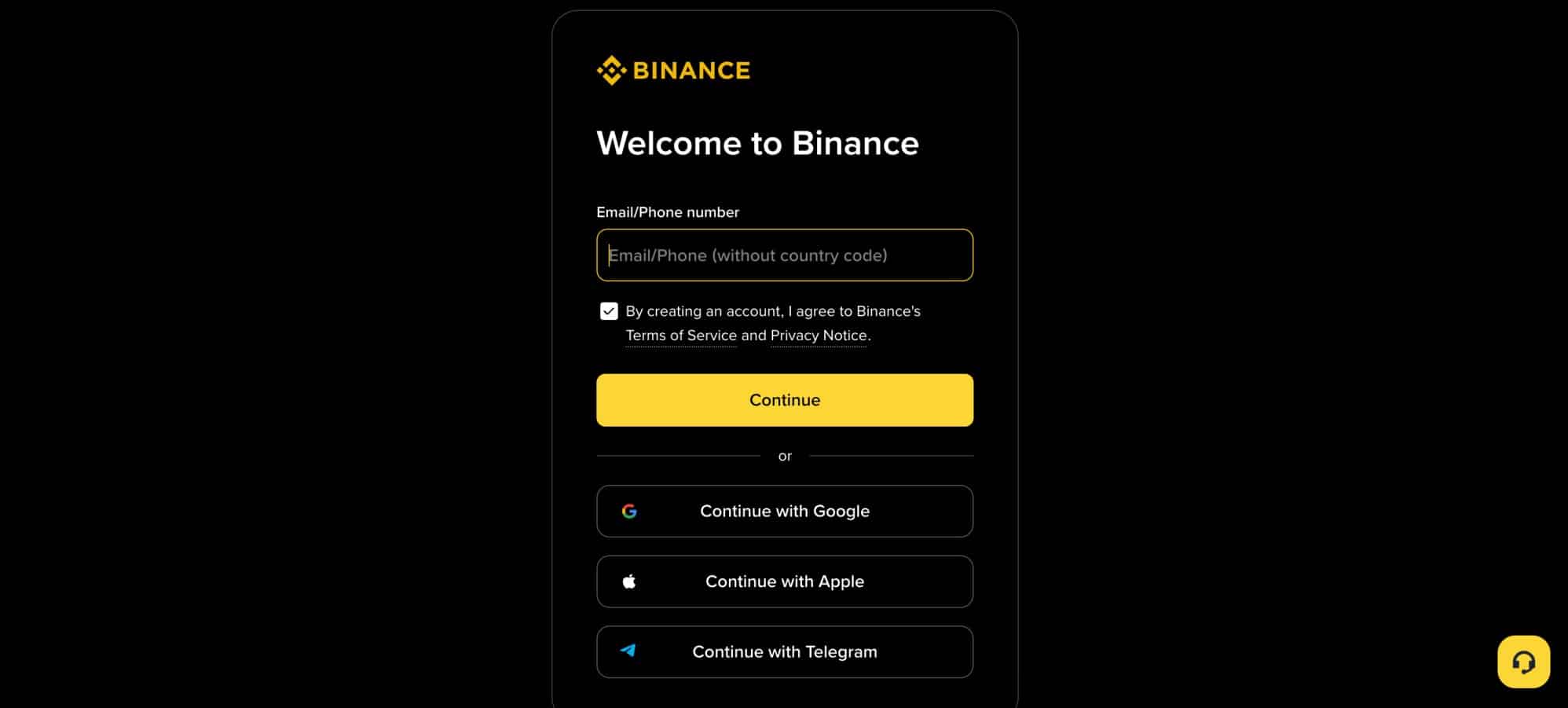
Binance sends a verification code to the registered method. Enter the code to complete the initial registration process.
2. Get KYC-Verified
New users must complete the KYC procedure before depositing funds. After you enter some basic personal information, Binance requires a valid government-issued ID. Supported documents include state ID cards, passports, and driving licenses.
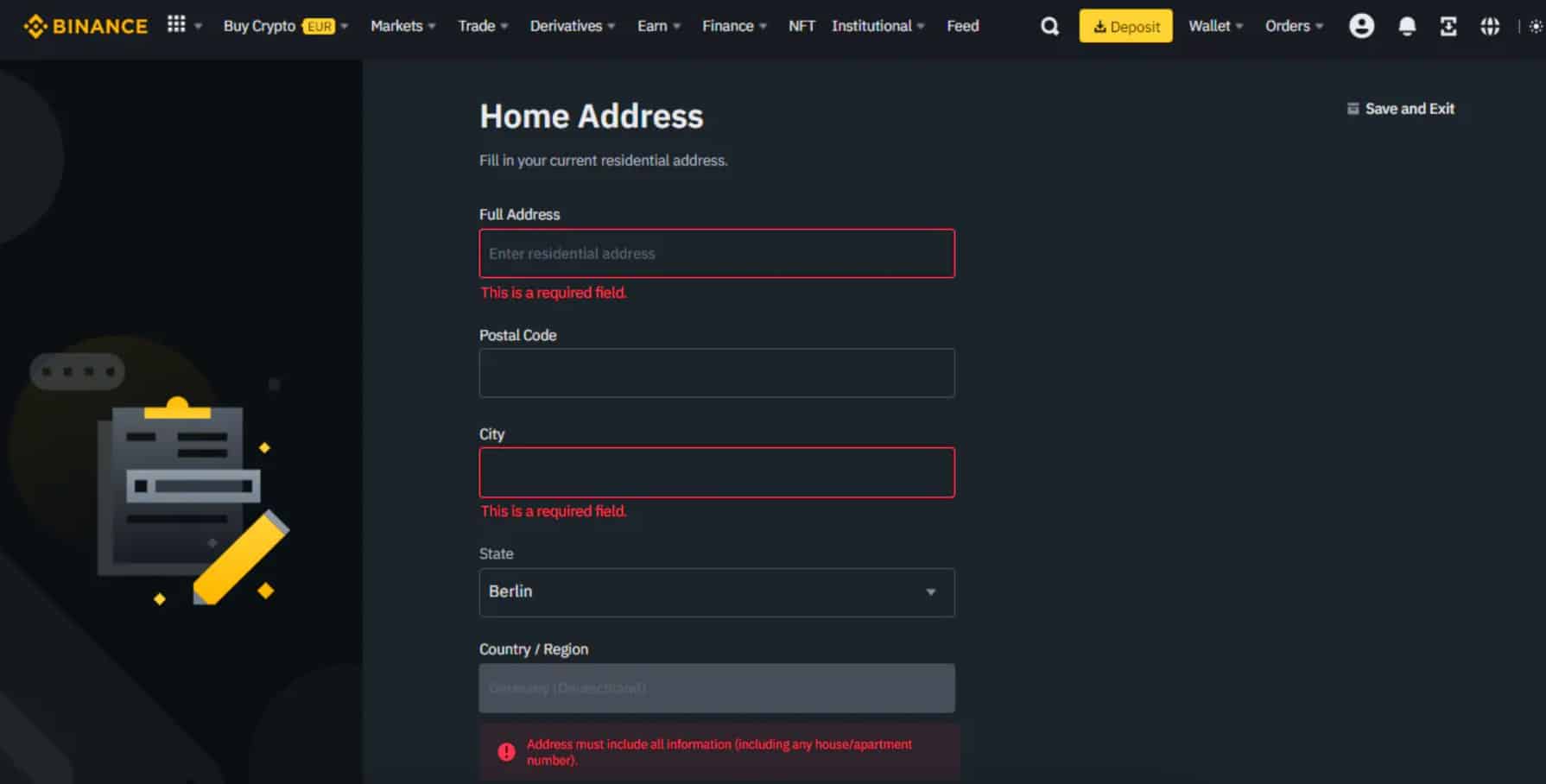
For proof of residency, upload a recently issued document that contains your name and address. Accepted options include water and energy bills, bank and credit card statements, and tax documents from a recognized government agency.
Our Binance review finds the KYC process typically takes minutes. However, invalid or outdated documents, as well as poor-quality uploads, cause delays.
3. Add Security Controls
We strongly recommend activating security controls before you deposit funds. Hover over “Account” and click “Security”. Top safety mechanisms include two-factor authentication via the Authentication app, passkey biometrics, and login confirmations by email and SMS.
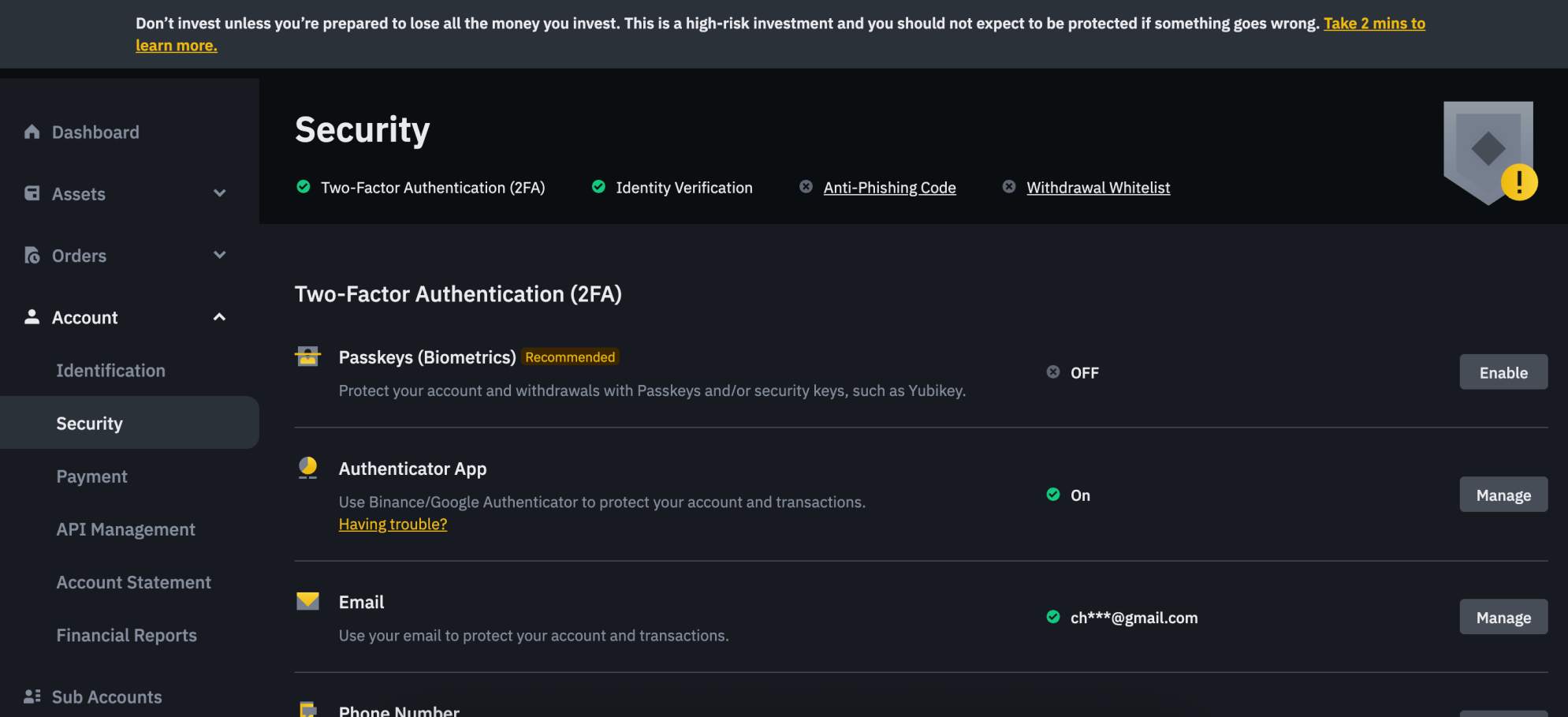
We also suggest whitelisting devices and withdrawal wallets, as well as creating an anti-phishing code.
4. Deposit or Buy Crypto
To fund your Binance account, decide whether you want to deposit cryptocurrencies from a private wallet or purchase coins with traditional payment methods. The exchange also offers direct fiat deposits in some locations.
Deposit Crypto
In the account dashboard, select “Deposit” and “Deposit Crypto”. Beneath “Select Coin”, search for the coin or token you want to transfer. Then select the network standard, if applicable.
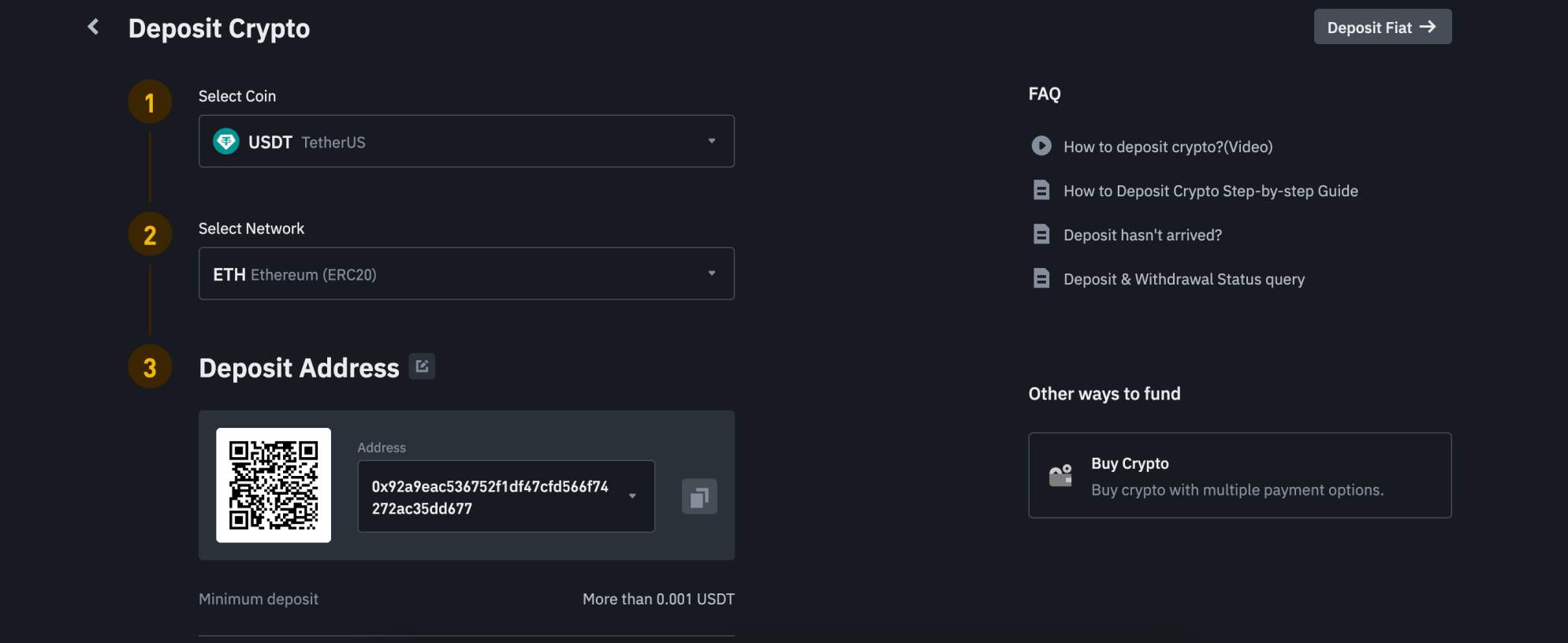
Your unique Binance wallet address for that asset appears, alongside a QR code (for mobile wallet transfers) and the minimum deposit requirement. Complete the transfer from a private wallet, and wait a few minutes for the assets to appear in the spot trading balance.
Buy Crypto With Traditional Money
Binance allows users in most supported countries to purchase popular cryptocurrencies using various deposit types. Options include e-wallets like Google Pay and Apple Pay, Visa, MasterCard, and instant bank transfers. The minimum and maximum deposit requirements are $15 and $15,000, or the currency equivalent.
Click “Buy Crypto With Bank Card” under the “Buy Crypto” menu. Then enter the currency, deposit size, and the receiving asset.
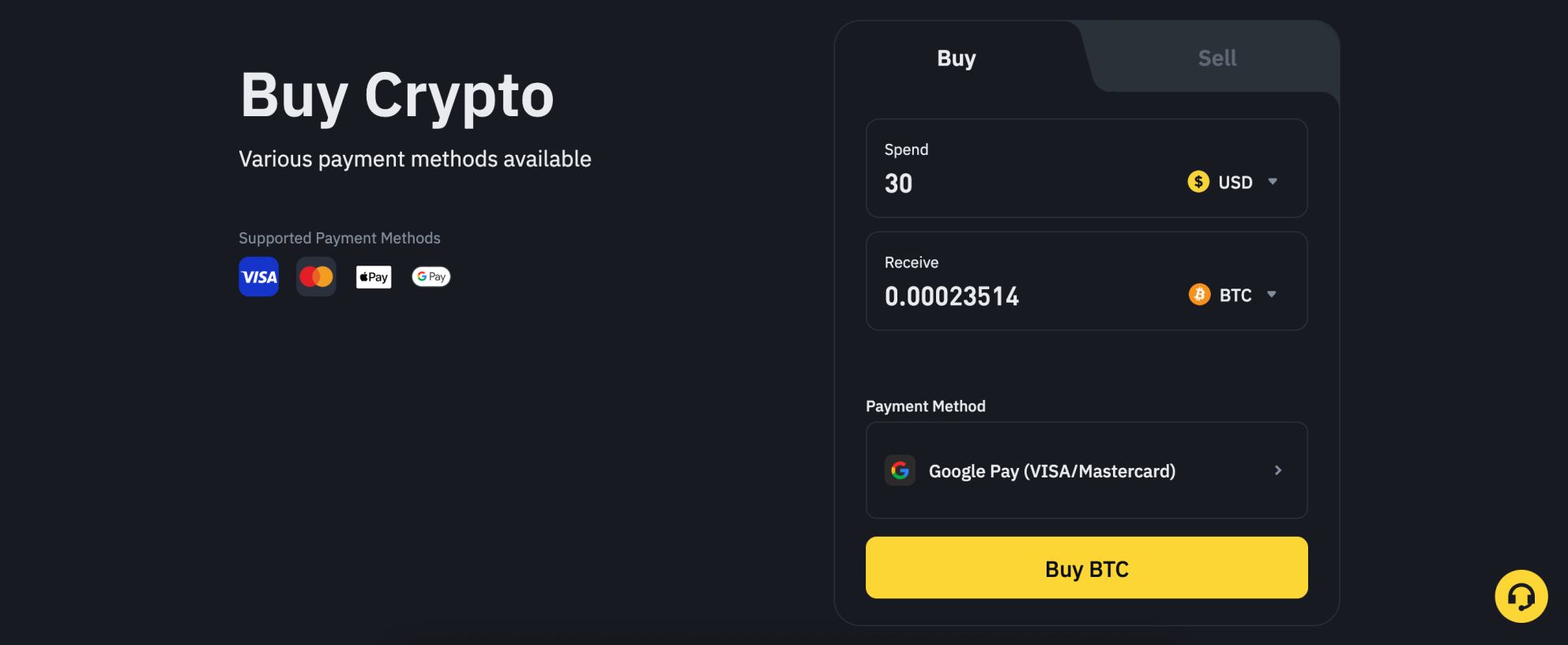
If you plan to trade on Binance’s spot or derivative exchanges, choose USDT. This is because most Binance pairs contain USDT, so it provides seamless market access.
Select another supported coin or token if you plan to withdraw assets to a non-custodial wallet.
Directly Deposit Fiat
Binance users in certain countries can directly deposit fiat money into their accounts, including members of the Eurozone, Japan, South Africa, and Mexico, among others.
Click the “Deposit Fiat” button and select a currency. Binance handles fiat deposits via bank transfers, either directly or through third parties like ZEN.COM. Transfer funds to the provided bank account details, ensuring you include the reference number when making the transaction.
5. Trade Cryptocurrencies
With a funded account, you now have access to the broader Binance ecosystem. To trade digital assets, choose between the spot exchange or the derivative platform. The latter includes perpetual and delivery futures, as well as options chains. Then select a crypto pair to trade. In our example, the user trades SHIB/USDT on the Binance spot exchange.
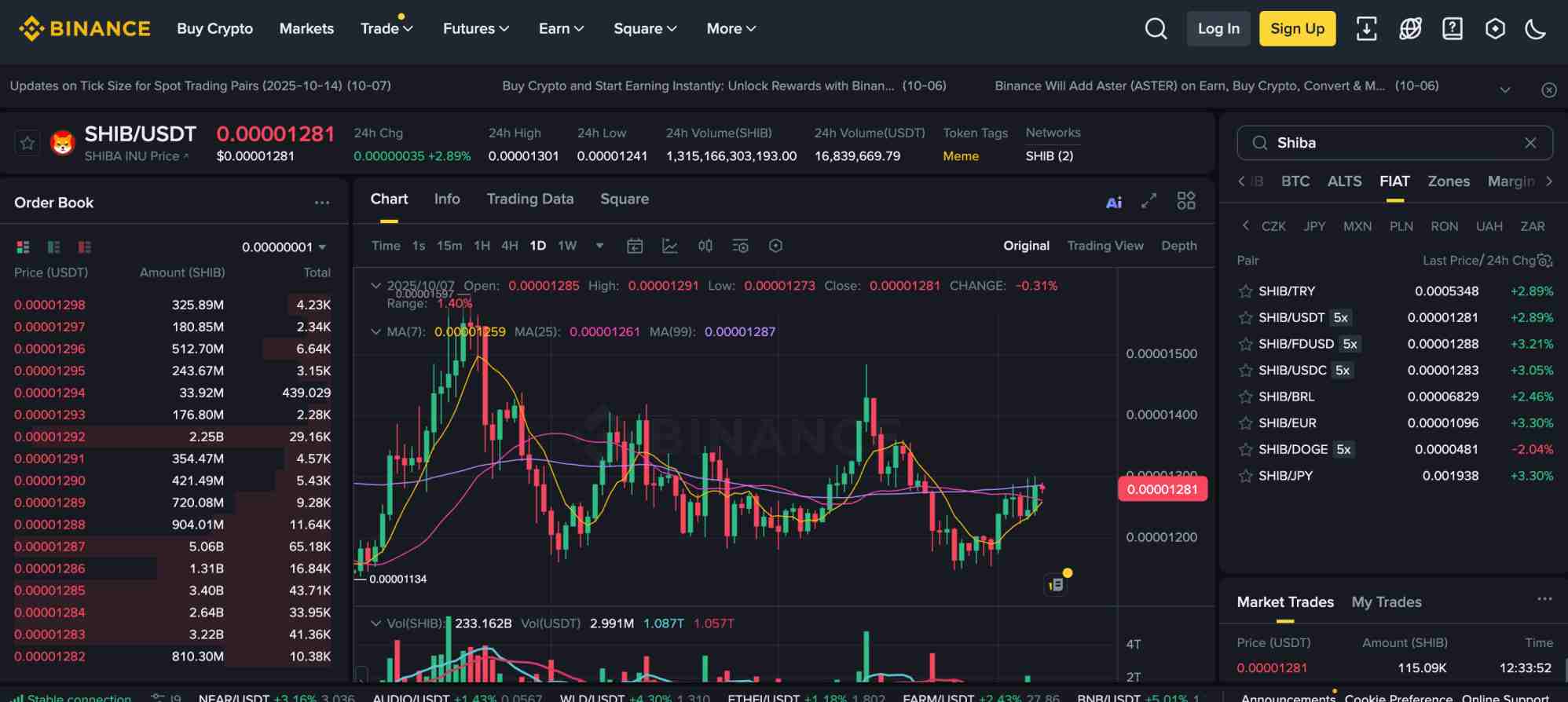
Traders must set up an order below the pricing chart. Select a limit or market order, enter the position size, and click “Buy” or “Sell” depending on the trade direction. Once confirmed, Binance executes market orders immediately. Limit orders fill only when other exchange users match the target price.
6. Withdraw Funds From Binance
Binance allows crypto withdrawals and, in some countries, fiat payouts as well.
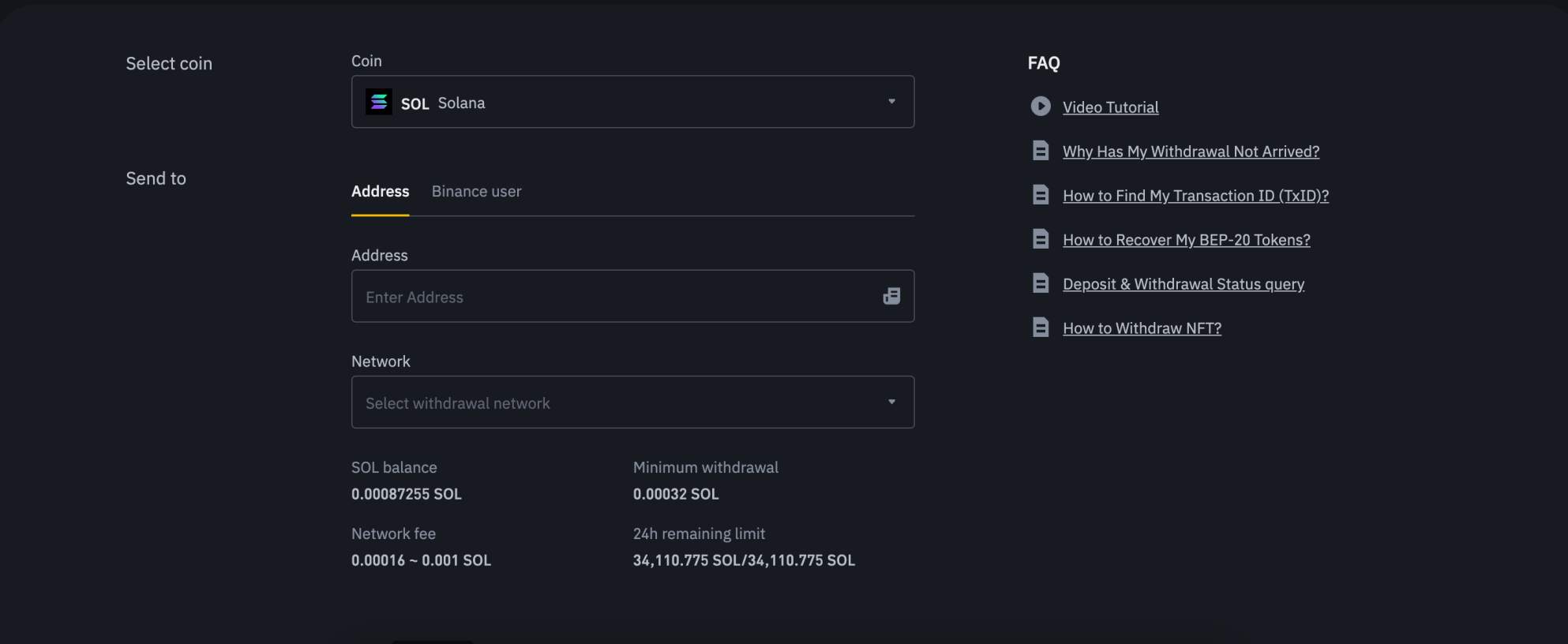
To transfer cryptocurrencies to an external wallet, click the “Withdraw” button in the account dashboard. Input the withdrawal coin, network, amount, and destination wallet address. Binance usually processes crypto withdrawals instantly.
Click the “Withdraw Fiat” to transfer local money to a bank account. Select the currency, and Binance displays the available payment gateway. Complete the withdrawal form, and once confirmed, Binance transfers the funds.
BNB Coin Use Cases on Binance
Here are the benefits available to Binance users who hold BNB:
- BNB holders get a 25% commission discount when they trade cryptocurrencies on the spot exchange. They also get a 10% fee reduction when trading perpetual futures.
- Binance airdrops free cryptocurrencies to BNB holders through its Launchpool feature or HODLer initiative.
- While the platform offers Simple Earn and On-Chain yields of just 0.32% and 0.4%, respectively, BNB dual investments generate APYs of up to 93.4%.
- The Binance DEX tool provides exposure to BNB Chain tokens that trade on popular DEXs like PancakeSwap. These cryptocurrencies often require BNB as the base currency.
Binance Review: Our Research Methodology
Our Binance review relies on a personal testing process to produce accurate and impartial results. The objective is to help crypto investors of all levels make informed decisions. We registered and funded a Binance account, and traded dozens of pairs on the spot exchange, as well as derivative products such as perpetual futures and options. We recorded a wide range of research metrics, including spreads, average order timeframes, margin requirements, and available liquidity.
Our testing framework used all Binance versions, including the desktop and mobile websites, iOS and Android apps, as well as the native software for Windows and Mac. This multi-device approach enabled us to evaluate the overall trading experience.
To help readers make the right platform choice, we compared our research with that of over 50 other exchanges, considering key factors such as commissions, payment methods, and regulation.
Our Binance Review: Conclusion
Overall, Binance remains one of the top exchanges for buying, selling, and trading cryptocurrencies safely. Security features include audited proof of reserves, cold storage, and biometric logins. Hundreds of listed markets offer spot trading and leveraged derivatives.
Binance appeals to all experience levels, including first-time investors who buy digital assets with traditional money and seasoned professionals seeking high-level trading tools. As the platform boasts sector-leading liquidity, users typically receive the best market prices and spreads.
FAQs
Is Binance available in the U.S.?
Can Binance be trusted?
Is Binance good for beginners?
Who created Binance?
What countries ban Binance?
How do I withdraw from Binance?
What are the fees on Binance?
Does Binance have KYC?
References
- Binance Global Fees (Binance)
- Binance U.S Fees (Binance.US)
- Binance Converts Its Billion-Dollar ‘SAFU’ Emergency Fund into USDC (Bloomberg)
- Binance Reviews on Trustpilot (Trustpilot)
- Binance enters Japanese market with Sakura Exchange Bitcoin deal (Reuters)