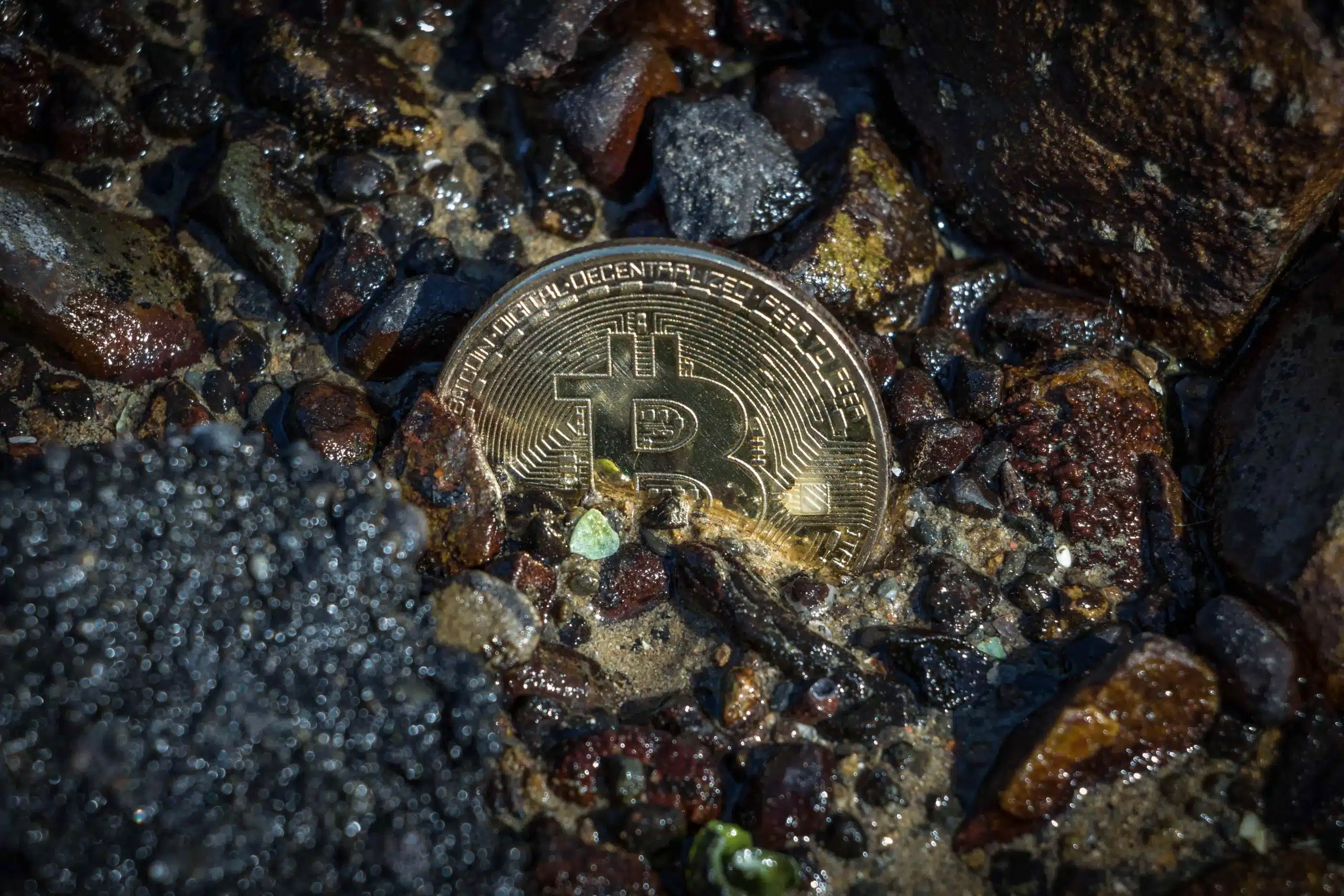
Bitcoin’s fixed supply of just 21 million coins is one of its most important features, and a surprisingly large chunk of those coins are totally inaccessible. While roughly 19.9 million BTC have been mined so far, an estimated 20% of those tokens have been lost forever.
These lost coins are stuck in wallets with long-forgotten keys, sent to unusable addresses, or even stored in old hard drives buried under mountains of garbage at landfills. While they are inaccessible, they significantly impact Bitcoin’s economics by decreasing its already small supply and increasing its scarcity. This is why long-term investors should closely follow lost Bitcoin statistics to gain a better understanding of the coin’s supply-demand dynamics.
In this article, we explore how Bitcoin gets lost, how many are gone forever, notable examples of lost coins, and why it all matters for everyday crypto investors.
Key Takeaways
- It’s estimated that around 20% of all Bitcoin (roughly 3 to 4 million BTC) may be lost forever, affecting the actual circulating supply and potentially influencing Bitcoin’s scarcity and long-term value.
- If a user loses access to their private keys (e.g., due to hard drive failure, forgotten passwords, or discarded wallets), the corresponding Bitcoin is permanently inaccessible.
- Lost Bitcoin reduces effective supply, which can increase scarcity and support higher prices over time, but also skews data on wallet activity and ownership concentration.
What Does “Lost Bitcoin” Mean?
Lost Bitcoins are coins that still exist on the blockchain but have become permanently inaccessible for one reason or another. Investors lose access to their crypto wallets all the time, whether it be because of a forgotten private key, a damaged hard drive, or someone passing away without sharing their private keys.
A helpful analogy is a safety deposit box with a lost key. Even though the box and its contents still exist, they can’t be accessed. The main difference is that, unlike a bank with a master key for its deposit boxes, there is no way to retrieve lost coins in inaccessible wallets. This is because there is no central authority to restore access to wallets. Without the private key, there is no way to retrieve the lost coins.
Investors often confuse the term dormant Bitcoins with lost Bitcoins, but the terms are fundamentally different. Dormant coins are simply cryptos that haven’t been used or moved in a very long time. Unlike lost Bitcoins, their owners still have access to them. They are often simply waiting for the price of Bitcoin to rise and the coins will likely reenter circulation eventually.
How Much Bitcoin Is Lost Forever?
It is incredibly difficult to estimate how much Bitcoin is lost forever because it is impossible to tell definitively just by looking at the blockchain. However, expert crypto analysts have worked out how to create a rough estimate of the number of lost coins.
According to various estimates, about two to six million Bitcoins are lost. Here are some of the estimates from top blockchain analysis firms:
Chainalysis: Chainalysis reported that between 2.3 and 3.7 million Bitcoins have been lost. They analyzed wallet addresses with long-term inactivity to estimate those numbers and have such a wide range because it’s difficult to tell whether they’re lost or simply dormant.
Unchained Capital: Unchained Capital’s 2023 report estimates that up to 3.8 million Bitcoins have been lost, which accounts for approximately 19% of today’s total Bitcoin supply. However, according to Chris and Charlie Brooks (founders of CryptoAssetRecovery.com), roughly 2.5 percent of the lost coins (worth about $5.8 billion) could still be recovered.
Cane Island: CryptoDNES published a story about a recent report by Cane Island. It states that over 7 million Bitcoins could be permanently lost by the end of 2025. This figure accounts for approximately one-third of all Bitcoins mined.
The Most Famous Cases of Lost Bitcoin
Many who lost Bitcoins have gained media attention. Let’s start with James Howell’s story.
8,000 Bitcoin Lost in Garbage Dump
James Howells believes he accidentally threw a hard drive away in 2013 containing the key to access about 8,000 Bitcoin worth nearly $1 billion. Howells wants to excavate the Docksway Landfill in Newport, Wales in search of the drive. He has been battling the local authority in court for years to get permission to excavate the landfill and his tirade has gotten massive media attention over the years.

Howells has been rejected multiple times due to licensing issues and concerns about potential environmental harm. After 12 years of legal battles, Howells is now planning to buy the landfill to recover his drive. This drive contains approximately 8,000 Bitcoins, worth around $930 million in September 2026.
Devastating Forgotten Password
Stefan Thomas is famous for losing his 7,002 Bitcoins, worth over $820 million. Simply because Thomas can’t remember the password, he is unable to access them. This is obviously an extreme case, but it illustrates the importance of password security in the crypto world.
Thomas received the 7,002 Bitcoin in 2011 and stored them on an IronKey USB drive. The IronKey is known for its robust security, which allows only ten attempts to enter the correct passwords. According to media reports, Thomas has only two attempts left to recover his Bitcoins before it locks itself up forever. Thomas even sought help from friends and hackers to recover the passwords, but still failed.
Taking Bitcoins to the Grave
Gerald Cotten, the founder of the popular crypto exchange QuadrigaCX, was the only person who could access the platform’s massive stack of coins. After Cotten died unexpectedly in 2018, the 26,350 coins it held for approximately 115,000 users became completely inaccessible.

Later investigations discovered that Cotten was running a Ponzi scheme and had stolen a massive portion of the coins long before his death. This incident left thousands of users with massive financial losses overnight and made investors much more cautious about crypto exchanges.
Very few people own anywhere near as many coins as were lost in Cotton’s case, but it’s still a vital lesson for all crypto investors. It’s important to plan ahead for the worst case scenarios, such as sharing your credentials with highly-trusted family members or setting up a clear inheritance plan with a lawyer.
Other Notable Mentions
Another notable incident involves the Japanese exchange Mt. Gox, where hackers stole approximately 650,000 Bitcoins in multiple breaches. At one point, one of the wallets used by the hackers held 80,000 Bitcoins, worth billions of dollars today. While these coins are likely not totally lost, they are probably inaccessible without being detected due to strict regulatory scrutiny and monitoring.
The most famous case of lost or dormant crypto is the million Bitcoins, worth over $110 billion, mined by the pseudonymous creator of Bitcoin, Satoshi Nakamoto. The true identity of Nakamoto is easily the greatest mystery in crypto, and these coins haven’t moved for over a decade. No one, except for Nakamoto, can be certain whether these coins are simply dormant or lost forever.
How Bitcoin Is Lost Forever
Bitcoins can become inaccessible due to many reasons but the most common are loss of private keys, forgotten passwords, hardware failures, and unexpected deaths without proper inheritance planning. Since Bitcoin operates without a central authority like a bank, there’s no customer service or manager to call when you lose access to your crypto wallet.
Here are the main ways Bitcoin is lost for good:
Lost keys: This is the most common way that Bitcoin is lost forever. Investors often forget to write down their recovery phrase or back up their private keys.
Hardware error: Losing Bitcoin due to hardware errors was more common in the early days of crypto, but it still happens today. Luckily, most modern hardware wallets allow you to restore your wallet with your secret passphrase.
Transfer Error: Making human error while transferring Bitcoins is another common way to lose Bitcoins. Even a single tiny error in the recipient address (or using an address for the wrong network) will cause you to lose the entire sum.
Sudden death: A wallet’s owner who dies might pass on without sharing the private keys. This way, their Bitcoins might be lost forever since there’s no way to transfer the private keys to others.
How Analysts Estimate the Number of Lost Bitcoins
Researchers cannot calculate the exact number of lost Bitcoins. Instead, many studies reveal estimates using some study methods, such as:
Dormant Address Analysis: In this method, researchers examine dormant wallet addresses that have remained inactive for a prolonged period, such as five to ten years.
Inactive Mining Rewards: Several early Bitcoin holders, including Bitcoin creator Satoshi Nakamoto, have never moved their Bitcoins. This is especially noticeable in the case of mining rewards of Bitcoin’s early days. Many of these early mining rewards are likely lost permanently due to the owner’s death or loss of private keys.
Burned Coins: Some users deliberately lose coins by sending them to invalid or incorrect addresses known as burn addresses. This likely makes up a much smaller portion of the lost Bitcoin, but it’s still important to consider.
Heuristics and Blockchain Analytics: Sophisticated software is used to analyze Bitcoin transaction outputs and Bitcoin wallet activity to estimate the best possible estimate of lost coins. It analyzes factors such as untouched coins to try to reach the most accurate estimate possible.
Even though many brilliant experts have worked on these estimates, it’s important to note that they are likely not very accurate. The blockchain simply doesn’t record enough information to accurately and consistently differentiate between dormant (but still accessible) coins and totally lost coins.
Why Lost Bitcoin Matters
Scarcity is one of Bitcoin’s greatest aspects. Similar to physical gold, there will only be a fixed amount of coins. Cryptos or fiat currencies with uncapped supplies suffer from inflation, which is often a good thing for large economies (to a degree), but it makes it very hard for them to hold their value.
Losing millions of dollars of Bitcoin must be an excruciating experience, but it’s actually good for every other Bitcoin holder because of simple supply-demand dynamics. Assuming demand stays the same or increases, decreasing the supply should increase its value.
The causes of lost Bitcoin also demonstrate the immense security and uncompromising decentralization of cryptos like Bitcoin. Unless you hold the private key, you cannot access the assets.
It’s also important to remember that preventing these tragedies is surprisingly easy if you take the time and effort to do it. By creating multiple secure backups (ideally in different secure locations) and preparing for the worst-case scenarios like lost devices or unexpected emergencies, you can drastically lower the risk of losing your crypto forever.
Don’t Lose Your Bitcoin
If you own Bitcoin, treat it with the same (or even greater) level of care as any valuable physical asset. Practicing secure key management and inheritance planning can nearly wipe out the chances of lost coins.
The loss of Bitcoin has both positive and negative implications. On one hand, it increases scarcity and potentially boosts the value of remaining coins for other investors. On the other hand, it highlights the risks inherent in Bitcoin ownership: once your private keys are lost, your coins are gone forever.
Lost Bitcoin FAQs
How much Bitcoin has been lost forever?
Current studies indicate that about two to four million Bitcoins are lost forever, though some projections suggest this number could reach seven million by the end of 2025.
Can lost Bitcoin be recovered?
Lost Bitcoins cannot be recovered if the private keys are lost or Bitcoins are sent to an invalid address.
What was the biggest Bitcoin loss in history?
If we consider that Satoshi Nakamoto's wallets are permanently inactive with approximately 1 million Bitcoins, it can be viewed as the biggest Bitcoin loss.
Does lost Bitcoin affect Bitcoin's price?
Yes, lost Bitcoins most probably play a key role in increasing the price of the remaining circulating supply.
How can I avoid losing my Bitcoin?
Ensuring proper inheritance planning, storing private keys securely, and maintaining backups are among the most common ways to minimize the risk of losing Bitcoins.
References
-
- A Fifth of All Bitcoin Is Missing. These Crypto Hunters Can Help – WSJ
- How Many Bitcoins Are There? – BiTBO
- The Hidden Impact of Lost Bitcoins on Bitcoin Valuation – B2BINPAY
- Man who lost $800 million bitcoin in landfill wants to buy the garbage dump – CNN
- Did a simple cleanup cost this man $742 million? The shocking 12-year hunt for lost Bitcoin – The Economic Times
- Stefan Thomas: The Man Behind Bitcoin’s Lost Millions – Coinpaper
- QuadrigaCX: A Tale of Crypto Banking Gone Wrong – Onesafe
- Over 7 Million Bitcoins May Be Lost Forever, Study Finds – CryptoDNES
- 8 Largest Lost Bitcoin Wallets Ever – Webopedia
- Are your lost bitcoins gone forever? Here’s how you might be able to recover them – Bankrate