Join Our Telegram channel to stay up to date on breaking news coverage
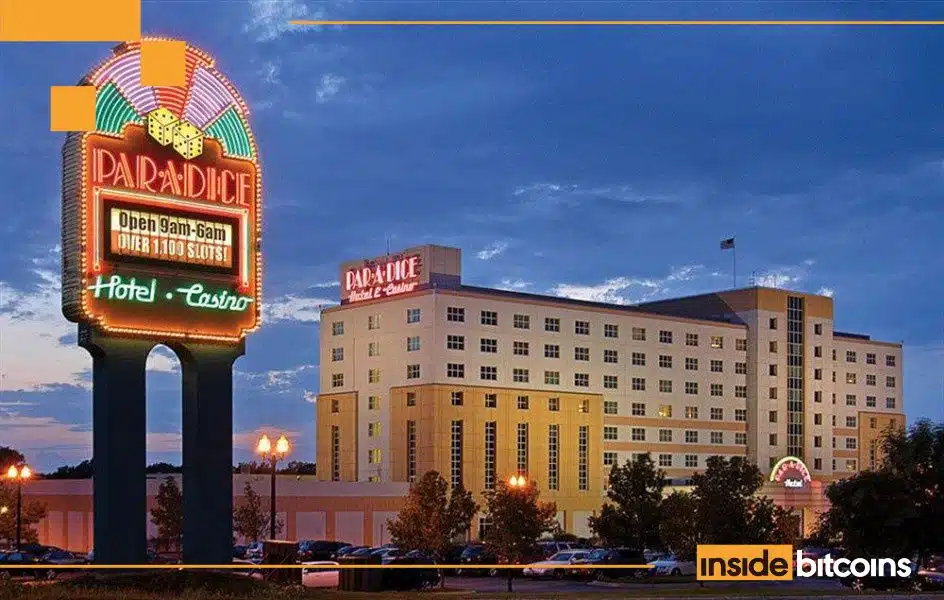
Sister cities Peoria and East Peoria, Illinois, are locked in an escalating dispute over the future location of Boyd Gaming’s Par-A-Dice Hotel Casino, as the Las Vegas-based operator prepares to abandon its aging riverboat facility for a modern land-based casino by 2026. The conflict centers on a 1991 intergovernmental agreement that mandates any land-based casino in the region must be located in Peoria, not East Peoria where the current riverboat has operated since 1993.
This municipal standoff represents more than a simple jurisdictional dispute—it’s a high-stakes battle for economic survival in a region where casino revenues provide crucial municipal income. The outcome will determine which city benefits from millions in annual tax revenue while potentially setting precedents for similar gaming facility relocations throughout Illinois as operators modernize aging riverboat properties.
Key Takeaways
- Legal Foundation: A 1991 intergovernmental agreement explicitly requires any land-based casino in the Peoria region to be located within Peoria city limits, not East Peoria.
- Financial Investment: Peoria has committed over $106,000 in legal fees and consulting costs, including hiring Innovation Capital LLC for $10,000 monthly plus a potential $250,000 success fee.
- Boyd’s Timeline: Boyd Gaming CEO Keith Smith confirmed plans for a $100 million replacement facility with potential construction beginning in the first half of 2026.
- Revenue Decline: Par-A-Dice’s annual gross gaming revenue fell from $79 million in 2017 to $60.5 million in 2024, while visitor numbers dropped 45%.
- Ultimatum Delivered: Peoria Mayor Rita Ali has demanded Boyd Gaming either build within Peoria city limits or sell its gaming license to someone who will.
- Revenue Sharing at Stake: Both cities currently split $3 million annually in casino tax revenue, but East Peoria would lose all casino-related income if the facility relocates.
- Regulatory Deadline: Boyd Gaming must submit detailed development plans to the Illinois Gaming Board by March 14, 2026.
Stakes Rise as Ultimatum Delivered
Peoria Mayor Rita Ali has issued what amounts to an ultimatum to Boyd Gaming, declaring the company must either build its new land-based casino within Peoria city limits or sell its gaming license to someone who will. This hardline stance represents a significant escalation in negotiations that had previously been conducted largely behind closed doors.
The seriousness of Peoria’s commitment became evident in December 2024 when the city council unanimously approved hiring professional advisors to pursue the casino relocation. The city contracted Innovation Capital LLC as a financial advisor for $10,000 monthly plus a potential $250,000 success fee, while also retaining attorney John Elias at $395 per hour. These expenses, totaling over $106,000 to date, represent the first public acknowledgment of Peoria’s aggressive pursuit of the gaming facility.
“We’re not just making demands—we’re making investments,” Mayor Ali stated during a recent city council meeting. “This is about securing Peoria’s economic future and ensuring that agreements made in good faith are honored.”
The financial commitment demonstrates Peoria’s calculation that the potential long-term benefits of hosting the casino far outweigh the immediate consulting costs. Industry analysts note that such substantial upfront investment typically indicates confidence in the legal foundation supporting the city’s position.
Historical Agreement Fuels Current Dispute
The current conflict stems from a carefully negotiated 1991 agreement between the two municipalities when Illinois first authorized riverboat gambling. The agreement was crafted to balance competing interests while the state developed its regulatory framework for casino gaming.
Under this arrangement, Peoria agreed to temporarily host riverboat gambling for two years while East Peoria built permanent docking facilities. In exchange, both cities would split casino tax revenues 50-50 in perpetuity—currently about $3 million annually each. Crucially, the agreement explicitly stated that any future land-based casino must be located in Peoria, a provision that seemed academic at the time but has become the central issue today.
“This wasn’t an oversight or ambiguous language,” explains gaming law attorney Michael Harrison, who has reviewed the agreement. “The parties clearly anticipated that riverboat gambling might eventually transition to land-based operations and specifically addressed this scenario.”
The legal framework gives Peoria significant leverage in its current demands, though East Peoria officials argue the provision threatens their city’s economic future and was negotiated under different circumstances than exist today.
The agreement became relevant when Illinois lawmakers changed gaming laws in 2019 to allow former riverboat licensees to move fully onto land. This legislative change effectively triggered the dormant provision requiring Peoria location for land-based operations, though Boyd Gaming has yet to formally announce relocation plans.
Boyd Gaming’s Expansion Plans Drive Urgency
Boyd Gaming CEO Keith Smith has confirmed during recent earnings calls that the company plans to replace the 30-year-old Par-A-Dice riverboat with a new $100 million entertainment destination. The urgency stems from the facility’s declining performance and the competitive disadvantages of operating from a riverboat format.
The current facility’s performance metrics paint a stark picture of decline:
- Annual gross gaming revenue fell from $79 million in 2017 to $60.5 million in 2024
- Visitor numbers dropped 45% over the same period
- The facility now generates $9.1 million in state revenues and $3.5 million in local revenues annually
- Adjusted gross receipts of $61.9 million in fiscal 2024 represent a 38.5% decline over the past decade
Smith has pointed to Boyd’s successful land-based conversion of the Treasure Chest casino near New Orleans as a model for Par-A-Dice transformation. The Louisiana facility achieved record performance after moving from water to land, demonstrating the potential benefits of modernization.
“The Treasure Chest conversion showed us what’s possible when you eliminate the operational constraints of riverboat gaming,” Smith explained during a December 2024 investor call. “However, we recognize that Central Illinois presents different challenges, including a smaller population base and greater competition from gaming machines in bars and restaurants throughout the state.”
The CEO indicated that regulatory approval should not present obstacles, noting that Illinois Gaming Board officials have encouraged casino modernization initiatives. The company’s timeline suggests planning and design work is already underway, though construction would not begin before 2026 at the earliest.
Boyd Gaming must submit detailed development plans to the Illinois Gaming Board by March 14, 2026, under conditions of its recent four-year license renewal. The Illinois Gaming Board unanimously renewed Par-A-Dice’s license through March 2028 while encouraging modernization efforts.
Strained Regional Relationships
The casino dispute has severely damaged what both mayors previously described as a strong working relationship built around regional cooperation. East Peoria Mayor John Kahl has expressed deep disappointment with Peoria’s tactics, describing them as an attempt to “force a business organization to relocate from a neighboring community.”
In private emails to Mayor Ali obtained through public records requests, Kahl criticized what he sees as Peoria’s overreach, arguing that Boyd Gaming should have the freedom to make its own business decisions without municipal pressure. The correspondence reveals a relationship that has deteriorated from collaborative to adversarial as the casino dispute has escalated.
“East Peoria has been Boyd Gaming’s partner for over 30 years,” Kahl emphasized during a recent interview. “The casino benefits the entire region, not just the host city. Attempting to force relocation damages not only our relationship but the broader regional economy.”
Kahl has maintained that East Peoria deserves the right to retain the casino given its three decades of hosting the facility and the infrastructure investments made to support operations. The city has invested in roads, utilities, and public safety services specifically to accommodate casino operations.
The mayor has also pointed out that East Peoria has never received complaints from Boyd Gaming about its location or the city’s support for casino operations. From East Peoria’s perspective, the relocation push represents an attempt to solve Peoria’s financial challenges at East Peoria’s expense.
The strained relationship extends beyond the mayors to their respective city councils and staff, with cooperation on other regional issues becoming increasingly difficult as the casino dispute remains unresolved.
Economic Implications and Revenue Sharing
The financial stakes extend far beyond the shared gambling tax revenue that currently provides each city with approximately $3 million annually. The economic implications of casino relocation would fundamentally alter the revenue landscape for both municipalities.
East Peoria currently retains several revenue streams from the Par-A-Dice complex that would transfer to Peoria with casino relocation:
- Property Taxes: Assessed on the casino facility, hotel, and related infrastructure
- Sales Taxes: Generated by casino spending, restaurant operations, and retail activities
- Hotel Taxes: From the Par-A-Dice’s 202-room hotel facility
- Utility Fees: Water, sewer, and other municipal services
- Licensing and Permit Fees: Various business-related municipal revenues
A casino relocation to Peoria would transfer these revenue streams across the river while potentially eliminating East Peoria’s share of gambling taxes entirely, depending on how the 1991 agreement is interpreted and enforced.
Financial analysis by the cities’ respective consultants suggests the total economic impact could exceed $5 million annually for each municipality when all revenue sources are considered. This represents a significant portion of both cities’ operating budgets, making the casino’s location a crucial factor in municipal financial planning.
Beyond direct revenue, the casino provides indirect economic benefits through employment of approximately 400 workers, many of whom reside in both cities and contribute to local economic activity. The facility also attracts visitors who spend money at nearby restaurants, hotels, and retail establishments, creating multiplier effects throughout the regional economy.
However, industry analysts note that some of these economic benefits might be preserved regardless of the casino’s specific location, as long as it remains within the broader Peoria metropolitan area. The key question is how relocation might affect overall visitation and spending patterns.
Regulatory Pathway and Timeline
Boyd Gaming faces several regulatory requirements as it moves forward with modernization plans. The Illinois Gaming Board has established clear deadlines and expectations for facility upgrades while maintaining the state’s commitment to responsible gaming oversight.
The regulatory pathway involves several key steps:
- Development Plan Submission: Boyd must submit detailed plans by March 14, 2026, including site selection, facility design, and construction timeline
- Environmental Review: Land-based construction may require environmental assessments not needed for riverboat operations
- Municipal Approvals: Host city must approve zoning, building permits, and other local requirements
- Final Gaming Board Approval: Comprehensive review of all plans before construction authorization
CEO Smith has indicated confidence in navigating the regulatory process, noting that Illinois gaming officials have consistently encouraged casino modernization. The state benefits from increased tax revenues generated by more successful casino operations, creating alignment between Boyd’s business interests and regulatory objectives.
The Illinois Gaming Board unanimously renewed Par-A-Dice’s license through March 2028 during its December 2024 meeting, with board members specifically encouraging modernization efforts. This renewal provides Boyd with regulatory certainty while setting clear expectations for facility improvements.
However, the regulatory timeline assumes resolution of the location dispute between Peoria and East Peoria. If legal challenges arise from the 1991 intergovernmental agreement, they could potentially delay the entire project and complicate Boyd’s planning process.
Broader Market Context and Industry Trends
The Par-A-Dice dispute reflects broader challenges facing Illinois’s gaming industry, where technological advances and changing consumer preferences have made older facilities increasingly obsolete. The conflict also highlights the complex relationship between gambling operators and host communities in an era of increased competition.
Illinois currently permits only one casino license for the greater Peoria region, making the Par-A-Dice facility’s location decision particularly consequential. This regulatory scarcity increases the value of the license while intensifying competition between municipalities to host gaming operations.
The state’s gaming landscape has evolved significantly since riverboat gambling was first authorized in 1991:
- Video Gaming Terminals: Widespread deployment in bars and restaurants has increased local competition
- Neighboring State Competition: Expanded gaming in Iowa, Indiana, and Missouri attracts Illinois players
- Sports Betting: Recent legalization provides new revenue opportunities for casino operators
- Online Gaming: Limited online options reduce the monopoly value of physical casino locations
Boyd Gaming’s experience with the Treasure Chest conversion near New Orleans demonstrates the potential for significant performance improvement when transitioning from riverboat to land-based operations. The Louisiana facility saw substantial increases in gaming revenue, hotel occupancy, and restaurant business following its land-based conversion.
However, the Peoria market presents different challenges than New Orleans, including:
- Smaller regional population base
- Greater competition from video gaming terminals
- Economic headwinds affecting discretionary spending
- Limited tourism compared to Louisiana’s destination markets
Industry experts suggest that facility modernization is essential for long-term viability, regardless of specific location within the Peoria region. The question is whether Boyd’s investment will be sufficient to reverse the facility’s performance decline given broader market challenges.
Legal Strategies and Potential Outcomes
Both cities have retained legal counsel and developed strategies for protecting their interests as the casino dispute moves forward. The legal framework provides Peoria with apparent advantages, though East Peoria has options for challenging or complicating enforcement.
Peoria’s legal strategy centers on strict enforcement of the 1991 intergovernmental agreement, which explicitly requires land-based casino operations to locate within Peoria city limits. The city’s legal team argues this provision is unambiguous and binding on both municipalities and any casino operator.
East Peoria’s potential legal responses include:
- Contract Challenge: Arguing the 1991 agreement is no longer valid due to changed circumstances
- Economic Duress: Claiming Peoria’s demands constitute improper interference with business relationships
- Constitutional Issues: Raising interstate commerce or equal protection concerns
- Alternative Interpretation: Arguing the agreement permits Boyd to choose between cities
Legal experts suggest the outcome will likely depend on the specific language of the 1991 agreement and how courts interpret contracts negotiated under different regulatory circumstances. The case could establish important precedents for municipal control over gaming facility locations.
Boyd Gaming maintains that it has not made final location decisions and continues to evaluate options while working with both cities. The company’s legal strategy appears focused on avoiding entanglement in the municipal dispute while preserving maximum flexibility for facility development.
If legal challenges are filed, they could significantly delay the modernization project and affect Boyd’s regulatory timeline with the Illinois Gaming Board. This uncertainty creates additional pressure for negotiated resolution of the dispute.
Community Impact and Stakeholder Perspectives
The casino dispute affects numerous stakeholders beyond the municipal governments, including casino employees, local businesses, regional tourism, and area residents who benefit from casino-related economic activity.
Casino Employees express concern about job security during any transition period. While Boyd Gaming has indicated its intention to retain existing staff in any new facility, employees worry about potential service disruptions, commuting changes, and construction period impacts.
Local Businesses in both cities have differing perspectives based on their proximity to current and potential casino locations. East Peoria businesses near the existing facility worry about losing customer traffic, while Peoria businesses see potential opportunities from casino relocation.
Regional Tourism organizations emphasize the importance of facility modernization for maintaining the area’s competitiveness as an entertainment destination. They argue that the specific location is less important than ensuring the facility meets contemporary standards.
Taxpayer Groups in both cities have questioned the municipal resources being devoted to the casino dispute, though most acknowledge the significant revenue implications justify the investment in legal and consulting services.
Gaming Industry observers view the dispute as a test case for how municipalities can exercise control over casino location decisions in an era of facility modernization and market consolidation.
Future Implications and Resolution Prospects
The Par-A-Dice casino dispute will likely establish precedents affecting similar situations throughout Illinois and other states where aging gaming facilities require modernization. The outcome will influence how intergovernmental agreements are interpreted and enforced when economic circumstances change significantly.
Several factors could drive resolution of the current standoff:
Regulatory Pressure: The Illinois Gaming Board’s March 2026 deadline for development plans creates urgency for all parties to resolve location issues
Economic Incentives: Both cities have strong financial motivations to reach agreement rather than risk losing the casino entirely
Boyd Gaming’s Preferences: The company’s business requirements may ultimately determine feasible locations regardless of municipal preferences
Legal Clarity: Court interpretation of the 1991 agreement could resolve ambiguities and establish binding requirements
Political Intervention: State-level officials might pressure both cities toward compromise to preserve regional economic development
Industry analysts suggest that resolution will likely require compromise from both municipalities, possibly involving modified revenue sharing arrangements or development incentives that acknowledge changed circumstances since 1991.
The broader implications extend beyond the Peoria region to other Illinois communities hosting aging riverboat casinos. The precedent established by this case will influence future modernization projects and municipal negotiations throughout the state.
As the March 2026 regulatory deadline approaches, pressure for resolution will intensify on all parties. The ultimate outcome will determine not only the casino’s future location but also the framework for similar disputes across Illinois’s gaming industry.
The resolution of this dispute will likely set precedents for similar gaming facility relocations throughout Illinois. Operators seek to modernize aging riverboat properties while dealing complex municipal relationships and legal obligations established decades earlier under different market conditions. Maybe we will see them pivot to crypto casinos in the near future, who knows?
Refereneces
- CDC Gaming. (2024). “Illinois: Peoria Has Spent More Than $100k in Its Pursuit of a Land-Based Casino.”
- WCBU. (2024, December 10). “Peoria City Council Unanimously Moves Forward with Casino Steps.”
- Action Network. (2024). “Riverboat Casino in East Peoria May Move to Land-Locked Location.”
- WCBU. (2024, December 9). “Nothing Stands in Our Way: Boyd Gaming CEO Suggests Par-A-Dice May Emulate Louisiana Casino That Recently Moved from Water to Land.”
Join Our Telegram channel to stay up to date on breaking news coverage