A custodian is a third-party institution or service that holds and safeguards clients’ assets. The assets can be physical or digital, such as stocks, cryptocurrencies, bonds, etc. Whether in finance or crypto, a custodian’s role is to protect clients’ assets from loss or theft. Crypto investors and traders often find managing crypto complex and face many security risks. Keeping their private keys and secret passphrases safe and secure is paramount, and it isn’t always as simple as it seems. Additionally, crypto users always face the risk of theft or hacking.
To prevent the misuse of cryptocurrency, a range of compliance and security measures have emerged over the years, but many users find them difficult to navigate. That’s where digital custodians help. Custodian services help crypto owners manage and safeguard their cryptocurrencies while ensuring regulatory compliance.
Read on to learn about crypto custodians, how they function, and their significance.
What Is a Crypto Custodian?
A crypto custodian refers to a third-party platform that securely stores cryptocurrency assets, including cryptocurrencies and non-fungible tokens (NFTs). To access and control crypto assets, users need private keys. These are like passwords that prove a user’s ownership over their assets.
Users need private keys to authorize crypto transactions, meaning if someone else gets access to your private keys, they can initiate transactions without your permission and steal your assets. A crypto custodian can prevent such access to the assets by storing private keys.
Crypto custodian institutions employ a range of advanced security measures, including multi-signature wallets and cold storage, to ensure safe access to crypto funds. Multi-signature wallets add an extra layer of security as they require multiple private keys to authorize transactions. Since multiple keys are required to initiate a transaction, infiltrating the security becomes extremely difficult.
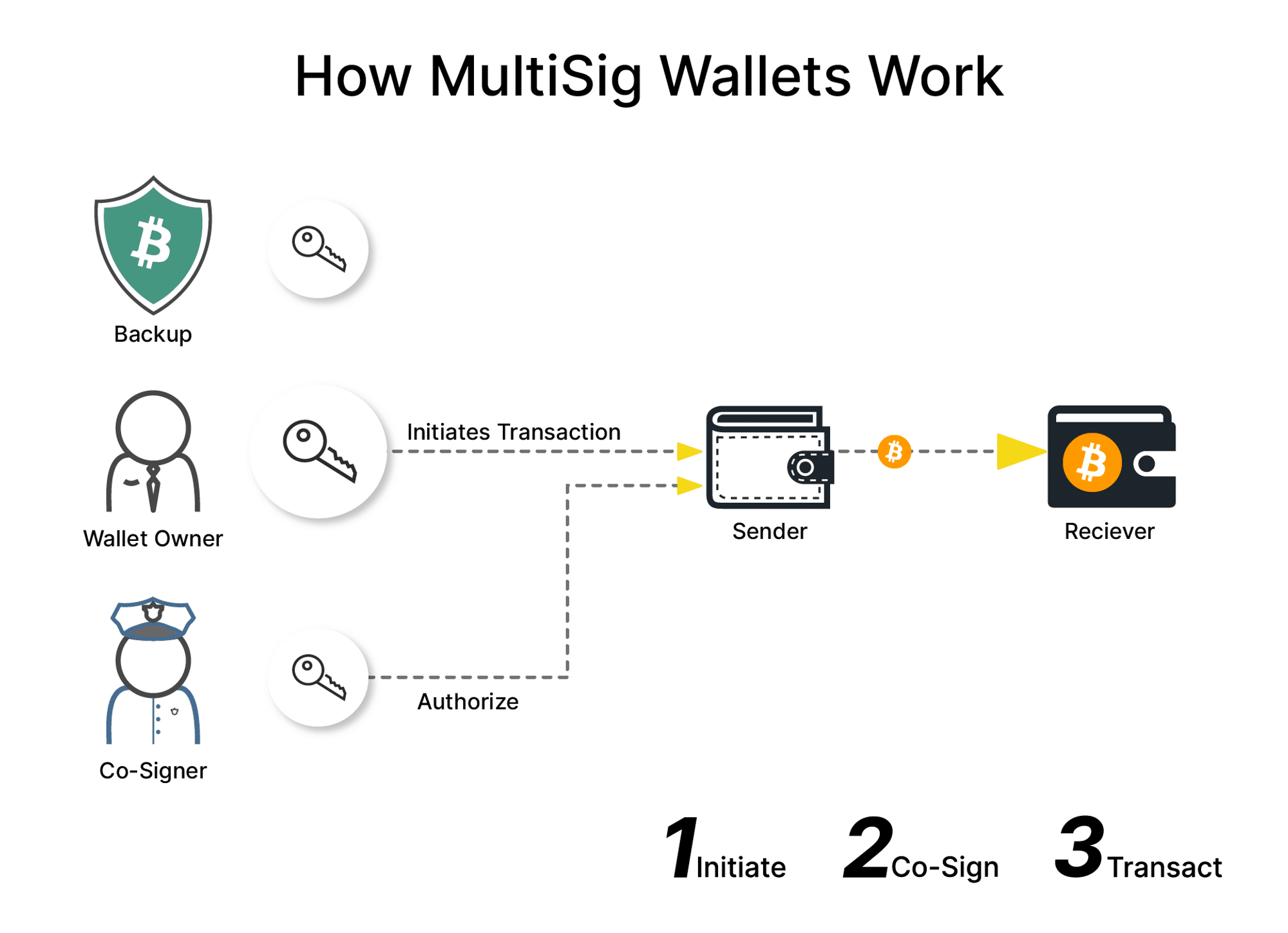
Using cold storage technology, custodians store assets offline. Since the keys are not connected to the internet, hacking them is almost impossible for outside attackers.
Wallets like MetaMask or hardware wallets offer self-custody abilities. Meaning users of these wallets can have full control over their private keys or digital assets. However, it comes with total personal responsibility to keep the assets safe. Crypto custodians differ from self-custody services as they are responsible for holding, managing, and securing your funds.
In a self-custody wallet like MetaMask, access to the wallet is protected by a password on your device, but the true security of your assets depends on your Secret Recovery Phrase (seed phrase). If you lose your Secret Recovery Phrase, you will permanently lose access to your account and its assets.
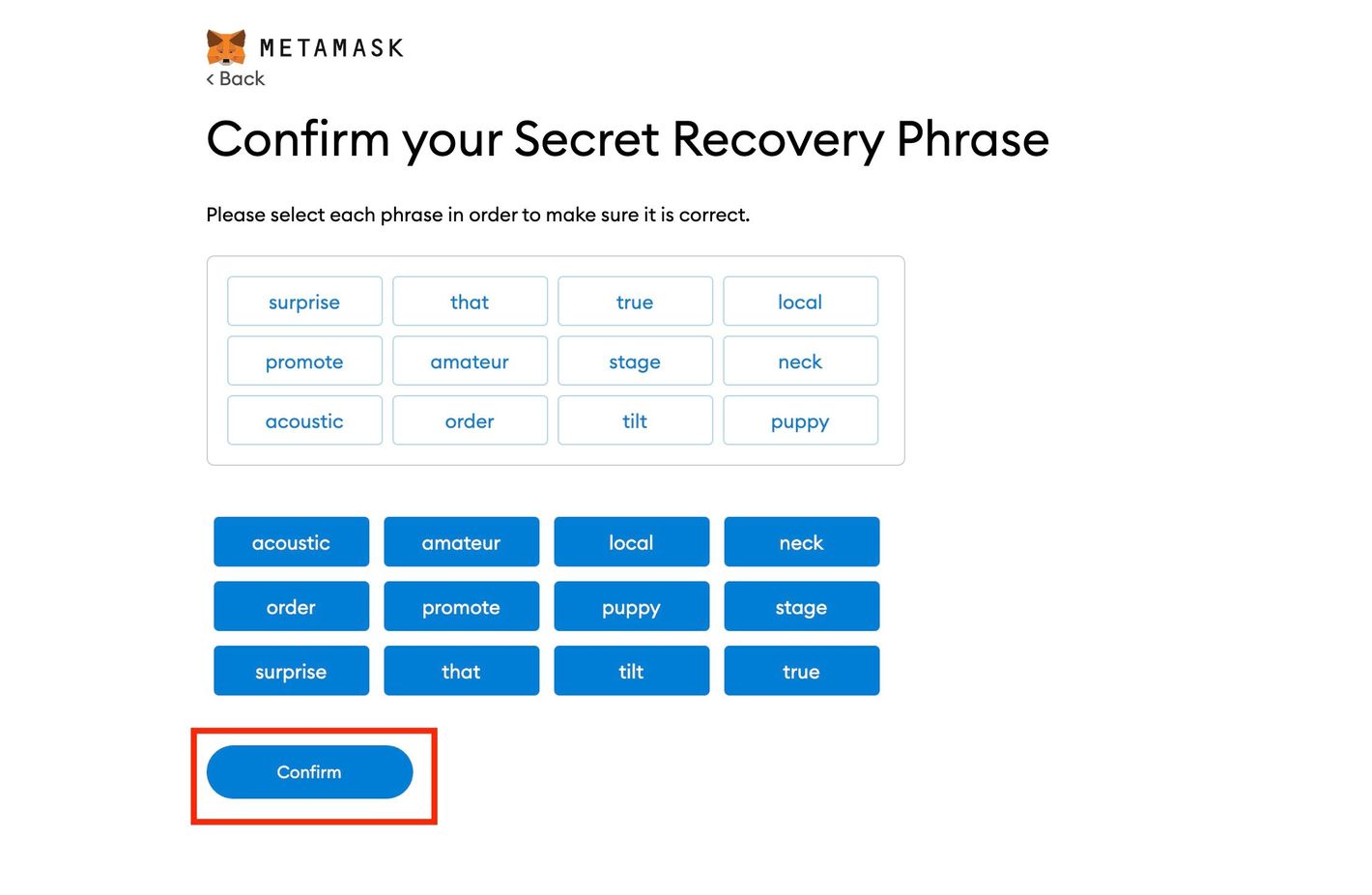
Unlike MetaMask, crypto exchanges like Gemini provide custodial security through cold storage and two-factor authentication. With Gemini’s custodial model, users don’t technically have full ownership of their funds because the platform controls the private keys. Users must rely on Gemini to authorize transactions and manage asset security.
Crypto custodians essentially act as a backup system that stores and secures private keys in case users lose access to them. Unlike self-custody, crypto users don’t have to take any responsibility for securing or storing the access controls. This explains why institutional crypto investors often rely on custodians to safeguard their funds.
Why Does Crypto Custody Matter?
Private keys serve as proof of ownership in the cryptocurrency world. Whoever controls the keys owns the assets, making access to private keys the most important factor in crypto.
For example, if your private keys are somehow exposed to a hacker, they gain control over all your funds and steal them in an instant. This happened with one of the largest Bitcoin exchanges, Mt. Gox, in 2014. Someone, who was potentially an insider, hacked into a Mt. Gox auditor’s computer and stole 850,000 Bitcoins from hundreds of user accounts.
Phishing scams or inadvertently sharing private keys with others lead to crypto theft every single day. Beyond theft and scams, simply losing keys can result in permanent financial losses. If you no longer have the private keys and get signed out of your wallet, you can’t access your coins, and they are likely lost forever.
Custodians play a pivotal role in securing crypto assets for institutions and individuals. Custodians are known for their institutional-grade security and insurance. Typically, advanced security measures such as multi-signature technology and cold storage are used to mitigate the risks of hacking and fraud.
Custodians like BitGo use multi-signature (multi-sig) technology, cold storage, and insurance coverage to strengthen their security while ensuring their clients’ peace of mind. To ensure the fair and secure handling of digital assets, institutions such as banks, exchanges, and individuals must meet regulatory compliance requirements. Legal frameworks, such as the Financial Action Task Force (FATF), establish guidelines for cryptocurrency transactions to prevent money laundering and other illicit activities.
Reputed custodians assist institutions and banks in complying with local regulations that often require them to maintain records of their transactions, monitor suspicious activities, and implement advanced storage technologies. Custodians failing to comply with such legal regulations face fines or penalties. Relying on compliant custodians ensures that users also comply with legal regulations.
Types of Crypto Custodians
Depending on how a custodian manages and secures assets and whether they meet regulatory compliance, crypto custodians can be divided into three types.
- Centralized Custodians
- Decentralized Custodians
- Qualified Custodians
Centralized Custodians
Custodial services that rely on a trusted third party or a central authority to store and manage crypto assets are known as centralized custodians. These custodians allow clients to deposit their assets into an account or wallet. The account or wallet is controlled by the custodian, such as a cryptocurrency exchange.
In this model, currency exchanges offer custodian services, making them responsible for transaction and asset security. Such crypto exchanges facilitate transactions when users request them. Coinbase Custody, BitGo, and Anchorage are centralized custodians that hold control over their clients’ assets through private keys.
With centralized custodian services, clients can benefit from advanced security measures, insurance, compliance, and streamlined institutional onboarding. However, centralized custodians involve a single point of failure because they rely on a single entity. If the central authority is breached, the clients’ assets are at risk. Centralized custodians can also freeze assets or restrict withdrawals, leaving users with limited control over their assets.
Decentralized Custodians
Decentralized custody eliminates the need for intermediaries or centralized authorities by allowing users to maintain full control over their crypto assets. This approach is commonly used in decentralized autonomous organizations (DAOs), treasuries, and various non-custodial platforms.
In decentralized custody, clients hold their own private keys, which serve as the gateway to accessing and managing their assets. Typically, crypto owners store their assets in wallets secured by these private keys through decentralized custodian services.
To enhance security, decentralized custodians use cryptographic techniques and smart contract-based technologies such as Gnosis Safe and multi-signature protocols. These tools add an extra layer of protection by requiring multiple approvals for transactions, reducing the risk of unauthorized access.
Unlike traditional custodians, users in decentralized custody rely directly on the blockchain rather than trusting third-party entities. While this model offers significant benefits in terms of control and transparency, it also introduces complexity. Users bear full responsibility for managing and securing their private keys, and even a small mistake or loss of keys can result in permanent loss of assets.
Despite these challenges, decentralized custodian solutions are gaining popularity rapidly. Although scalability and user experience issues remain, ongoing development in this space offers promising potential for a more secure and user-friendly future in crypto asset management.
Qualified Custodians
Custodians who meet specific legal and regulatory standards, particularly in the U.S. and E.U., are referred to as qualified custodians. In the U.S., Qualified Custodians are services or institutions that meet U.S. Federal securities laws for managing and holding clients’ funds on behalf of registered investment advisers.
Such services are often required by law for registered investment advisers (RIAs) in the U.S. to manage client funds, including crypto funds or retirement accounts, in compliance with regulatory standards. Other countries have their own laws to identify and verify qualified custodians.
How Do Crypto Custodians Work?
Crypto custodians rely on robust security measures like cold storage, multi-party computation (MPC), and multi-signature authorization. Multi-party computation (MPC) enhances security by distributing the private key across multiple parties, reducing single points of failure while maintaining the custodian’s third-party service model.
Since no single entity holds the private key, the risks of hacks and breaches are significantly lower. All the security solutions, such as multi-party computation, cold storage, and multi-signature authorization, are combined, ensuring not only external threats but also internal scams or frauds are prevented.
Asset Segregation
Custodian solutions also use asset segregation to separate client funds from the custodian’s own assets. This protects clients by ensuring their funds are distinct and not mixed with others’, reducing legal and financial risks.
Custodians typically offer two types of accounts: Individually Segregated Accounts that keep each client’s assets separate and easily identifiable, and Omnibus Accounts that pool assets from multiple clients into a single account.
While omnibus accounts are more cost-effective, they carry higher risks because, in the event of insolvency or mismanagement, it may be harder to prove individual ownership, potentially delaying or complicating asset recovery.
Access Control
Access control regulation is a key role of crypto custodians. By restricting control and withdrawals, custodians can provide assets with a high level of security while freeing users from fund management and associated liabilities.
Custodians adhere to strict regulatory compliance and implement robust security measures to ensure that funds are not released without the client’s permission or transferred to the incorrect address. Custodians establish withdrawal rules and security measures to enable authorized owners to transfer and withdraw assets from an account.
Some custodians allow whitelisting, which is a list of approved wallet addresses where assets can be transferred. Whitelisting enables clients to minimize mistakes and fraud by allowing them to send funds only to specific accounts.
Whitelisting significantly reduces the risk of hacking. Let’s say you whitelist some of your trusted accounts to send crypto. If a hacker somehow breaches your account and attempts to send your crypto to their account, they may be unable to send the funds.
Insurance
Some crypto custodians offer insurance to cover certain risks associated with cryptocurrency storage and management, but coverage is often limited and varies by provider. Not all custodians offer comprehensive insurance, and it may only cover specific types of losses. When custodians store assets, unexpected events can occur both internally (by custodian employees or authorized personnel) and externally (from hackers).
In such cases, crypto custodians can ensure that clients’ assets are protected from potential risks. Not all custodians offer the same extent of insurance coverage.
A crypto custodian insurance might not cover the following:
- Losses resulting from client error (like sending to an incorrect wallet address)
- Losses resulting from physical and social engineering attacks
- Losses due to fluctuations in cryptocurrency prices
- Self-custody wallets
However, what’s included and excluded in a crypto custodian’s insurance is entirely dependent on the insurer’s policies and coverage.
What Are the Benefits of Using a Crypto Custodian?
Crypto custodians are essential for enhancing the security of your digital assets. Below, several benefits of using crypto custodians are explored.
Institutional-Grade Security and Key Protection
The institutional-grade security solutions put in place by custodians are designed to safeguard your assets in accounts or wallets. Multi-signature authorization mitigates the risks of hacking while the assets stay safe offline within cold storage.
However, some custodians also incorporate hot wallet storage for faster transaction access. Here, clients can store a client-end key online to initiate transactions. In contrast, a backup key can still be kept offline for future recovery.
For example, BitGo allows users to keep a client key and a backup key. The BitGo custodian itself maintains a platform key and utilizes multiple signing solutions to initiate transactions. Reputable crypto custodians also employ vulnerability testing and 24/7 monitoring to identify vulnerabilities and suspicious activities, thereby preventing theft, loss, and cyberattacks.
Regulatory Compliance and Legal Clarity
Crypto custodian solutions help meet jurisdictional legal requirements with minimal hassle. Here, legal requirements might include the following:
- Maintaining detailed audit trails
- Offering support for regulatory filings
- Providing reporting systems
Compliance with such legal regulations helps maintain legal transparency and reduces the chance of penalties or lawsuits. Moreover, this creates a way for internal governance to secure the platform.
Reduced Operational Risk for Companies and Funds
Crypto custodians can help lower operational risks in various ways. With a custodian’s help, companies can implement internal controls, such as role-based access. It’s like only allowing specific individuals in a company to manage assets, approve large transactions, receive payments, or access sensitive data. Role-based controls like this help prevent fraudulent behaviors within a company.
The custodian’s operational benefits aren’t limited to preventing fraud only. With cryptocurrency, custodian companies can manage multiple currencies within a single platform. For example, crypto investors won’t need multiple platforms to manage multiple currencies like Bitcoin, stablecoins, and Ethereum, as they can control all these assets from a crypto custodian.
Insurance Coverage
Just like physical assets, your crypto assets can be insured with the help of a custodian. This allows companies and individuals to receive full or partial compensation for their assets after an event of a breach or loss.
Peace of Mind
Crypto investors, traders, and other institutions often find self-custody solutions risky. They can rely on crypto custodians to store and protect their assets from loss or unauthorized access while also complying with regulations. Crypto owners don’t have to take responsibility for securing their private keys. The custodian solutions offer clients hassle-free and secure solutions, providing them with peace of mind.
When Crypto Custodians Backfire
Crypto custodians ensure that your assets stay risk-free while all fund management becomes hassle-free and streamlined. However, crypto custodian solutions are not 100% reliable as they can also pose some risks.
Security Risks and Key Management
Centralized custodians hold private keys on behalf of their clients, which adds a layer of security but also introduces the risk of fraud. If the custodian’s security is compromised, it creates a single point of failure where private keys can be exposed. This exposure allows third parties to potentially control the keys for illicit activities like theft or hacking. That’s why it is crucial for users to choose custodians that implement robust security measures for creating and storing private and backup keys.
Limited User Control
A significant downside of highly secure centralized custodians is the lack of full user control over assets. Most custodians partially or completely restrict clients’ direct control.
Clients typically must request approval from the custodian to initiate transfers, but the authority to approve or deny transactions rests solely with the custodian’s central entity. This simply means that the users’ transfer request is reviewed before the custodian’s main operation approves it, and no third party can interfere.
Transaction Delays and Restrictions
The approval process for transactions and withdrawals can cause delays, resulting in downtime or restricted access to funds. Additionally, some custodians impose withdrawal limits, which can further restrict users’ ability to move their assets freely.
Costs and Fees
Centralized custodians often charge clients various fees, including setup, withdrawal, and custody management fees. Withdrawal fees may be a flat rate or a percentage of the withdrawn amount, while custody fees generally amount to less than 1% annually of the assets stored. The exact fees depend entirely on the custodian’s policies.
Examples of Leading Crypto Custodians
A range of crypto custodian solutions is available on the market, catering to the diverse needs of crypto traders, investors, and individual users. Here are a few examples of leading crypto custodians serving businesses and people right now:
1. Coinbase Custody
Coinbase Custody’s US-based custodian is a qualified custodian under the Investment Advisers Act of 1940, which is regulated by the New York Department of Financial Services (NYDFS). Coinbase Custody offers advanced safety features, including encryption and multifactor authentication, and access to 24/7/365 support and insurance, catering to institutions such as banks, hedge funds, and asset managers.
2. BitGo
BitGo’s U.S. platforms are qualified custodians regulated by the South Dakota Division of Banking and the NYDFS. It also complies with regulations from numerous other global regulators. BitGo protects institutional assets with cold storage, self-custody hot wallets, whitelisting, transaction limits, user roles, and other cutting-edge security measures.
3. Anchorage Digital
Anchorage Digital acts as a federally chartered crypto bank that operates under the oversight of the Office of the Comptroller of the Currency (OCC). Anchorage Digital provides qualified custodian services with operational, compliance, audit, and governance controls to a wide range of institutional clients, including wealth managers, ETF issuers, venture capital firms, and corporations.
4. Fireblocks
Fireblocks is a technology provider that partners with licensed custodians. Fireblocks’ partner program allows them to collaborate with licensed custodians and operate as a regulated, limited-purpose trust company under the NYDFS. They provide bank-grade cold storage and asset-safeguarding solutions to institutions like registered investment advisors (RIAs), asset managers, and exchange-traded fund (ETF) issuers.
5. Copper
Copper’s recently launched Liechtenstein is registered under the Token and TT Service Provider Act (TVTG) from the Financial Market Authority (FMA). Copper offers segregated vaults, three entity-controlled wallets, and role-based control to miners, hedge funds, exchanges, trading firms, and other institutions.
When to Choose Crypto Custody Over Self-Custody
Self-custody lets you own your private keys. That means you’re fully responsible for your assets and transactions. Losing private keys or entering the recovery phase means no one, not even banks, intermediaries, or even governments, can recover your assets. Self-custody can be an option for you if you fully understand cryptocurrency and decentralized systems and can manage the private keys despite the risks.
Custodians, on the other hand, have some risks but also give you some control over your assets. Custodians managed by third parties offer user-friendly services like password recovery and insurance, which is often ideal for beginners and less tech-savvy individuals.
Let’s compare security, access, usability, and trust models of self-custody and custodian solutions.
| Aspect | Self-custody | Custodian Solutions |
| Security | The owner is fully responsible for securing their assets, including private keys and backups. | The custodian secures assets on behalf of the owner, using advanced security measures and insurance. |
| Access | Full access for the owner, but with risks of losing or forgetting keys. Owners must store and back up their own keys. | Owners have limited control as custodians authorize transactions, which may cause delays but reduce the user burden. |
| Usability | Can be complex and less user-friendly, especially for non-technical users. | More user-friendly for individuals and institutions by managing security and storage complexities. |
| Trust Model | Relies on decentralized blockchain and the user’s own actions for security and control. | Centralized model where users trust custodians to authorize transactions and safeguard assets. |
Are Crypto Custodians Worth It?
Crypto can custodians play a crucial role in securing your assets, scaling operations, and ensuring compliance. Although this technology sometimes carries some risks of a single point of failure, the strong security measures and strict adherence to regulations can significantly protect user rights.
In the future, a secure and regulated hybrid model may emerge, combining custody and decentralized finance (DeFi) protocols. This development responds to the growing demand for custodians that are less risky, more efficient, and cost-effective. Consequently, we can expect the rise of programmable custodians and AI-driven compliance tools, which promise to offer significant advantages in security, automation, and operational efficiency.
Choosing the ideal crypto custodian depends on factors like risk tolerance, capital, and specific use cases. While self-custody is more secure yet complex, custodians are user-friendly and offer robust storage and insurance capabilities for various use cases.
FAQs
What is a crypto custodian?
A crypto custodian is a third-party entity that holds and manages digital assets, such as cryptocurrencies and NFTs.
Do I need a custodian to hold crypto?
No, you can also use non-custodian or self-custody wallets to control your private keys and hold your crypto assets.
Are custodians safe from hacks?
Due to the implementation of various security features, custodians are considered secure. But custodians cannot guarantee 100% protection against breaches and hacks.
Who regulates crypto custodians?
Financial regulatory authorities in different countries regulate crypto custodians. Organizations such as the Securities and Exchange Commission (SEC), the Commodity Futures Trading Commission (CFTC), and the Office of the Comptroller of the Currency (OCC) are the primary regulators in the United States.
Can individuals use institutional custodians?
Yes, individuals such as investors, managers, and fund owners can utilize institutional custodians.
What happens if a crypto custodian goes bankrupt?
In bankruptcy, if the custodian has properly segregated customer assets and the law recognizes those assets as belonging to clients, customers may be able to recover some or all of their crypto. However, if assets are commingled with the custodian’s own funds or if legal protections are insufficient, the crypto may be considered part of the custodian’s bankruptcy estate, and clients could lose their claims or only recover a portion as unsecured creditors.
References
-
- Why Crypto Custodians Matter: Reducing Risk for Institutional Investors – Bitgo
- Custodial vs Self Custody Wallets – Trustwallet
- What Is A ‘Qualified Custodian’? – Mooloo
- Crypto Custody: An Empirical Assessment – Oxford Academic
- The Role of Whitelisting Wallet Addresses for Digital Asset Security – Rakkar
- The Importance of Crypto Custody Insurance – Bitgo
- How to Choose a Qualified Crypto Custodian – Investopedia
- Custodial Wallets vs. Self-Custody Wallets – Which Crypto Wallet Is Best? – Tastycrypto
- The Story of Mt. Gox: Explained – Trustwallet
- How we keep digital assets safe – Coinbase
- Coinbase: The Standard in Crypto Custody – Coinbase
- Globally licensed and regulated – Bitgo
- Safeguard your digital assets – Bitgo
- Anchorage Digital Bank Faces Federal Probe for Potential Financial Crimes – Ainvest