Kraken is one of the longest-standing crypto exchanges. Available in over 190 countries, the U.S.-based platform provides a safe and regulated environment for investing in hundreds of popular digital assets. Our Kraken review provides everything traders need to know before opening an account.
Our methodology ensures accurate and reliable findings via real funded accounts. We tested the trading experience on Kraken’s Basic and Pro interfaces, using the exchange’s website, desktop software, and mobile apps for iOS and Android.
Key review factors include licensing framework, fee schedules, available markets and trading products, and which investor profiles are best suited to Kraken. Read on to decide whether Kraken is the best centralized exchange for you.
Kraken Review Key Takeaways
Our Kraken review confirms the exchange targets a broad user base. Beginners can buy cryptocurrencies with local currency, and the $10 account minimum ensures affordability. Advanced traders access expert tools, higher-risk products like perpetual futures and margin accounts, and dedicated software for deep analysis.
Kraken Pro fees are reasonable, as spot traders never pay more than 0.4%, which can drop to 0% for higher-volume accounts. Basic users get free or near-free fiat deposits and withdrawals, but Kraken includes commissions and spreads in an all-in-one price.
The biggest takeaway is that, alongside Gemini and Coinbase, Kraken ranks among the safest crypto exchanges. Safeguards include diverse regulatory approval, bank-like compliance, and robust custodianship controls that protect client balances, such as independent audit and funds segregation.
Here are the platform’s key takeaways:
- Verified traders access a huge selection of digital asset markets across spot and derivative trading
- An extensive regulatory structure with institutional-level security, compliance, and governance
- Platform users easily deposit, convert, and withdraw fiat currencies with low-cost payment methods
Pros & Cons of the Kraken Exchange
Besides strong security and tier-one licensing, Kraken users diversify across hundreds of digital asset markets. Through a unified account, traders can buy cryptocurrencies with fiat money, as well as trade futures long and short with leverage. As Kraken recently launched stocks and ETFs, investors gain exposure to non-crypto assets for additional diversification.
Kraken could improve in certain areas, such as streamlining its onboarding process and reducing customer response times. It also requires significant trading volumes to reduce commission rates, and derivative products incur funding fees hourly (the industry average is eight hours). Despite these downsides, Kraken remains one of the best crypto exchanges in the market.
Pros
- Build a diversified portfolio in a strictly regulated environment
- Use local currencies to buy or sell assets without foreign exchange risks
- The platform targets beginner, intermediate, and professional-grade users
- Trade on standard web browsers and native software, and mobile applications
- Get started with a minimum account balance of just $10
- Security features include fund segregation and cold storage wallets
Cons
- The instant buy feature hides commissions and spreads
- Users must trade over $10,000 monthly to reduce commissions
- Customer service is less responsive than many exchanges
- The platform’s comprehensive product range may be overwhelming for some users
- Derivative markets cap traders to 50x leverage
What is Kraken?
Kraken, based in Cheyenne, Wyoming, has been a trusted crypto exchange since 2011 and now serves clients in more than 190 places worldwide. Every day, millions of investors and traders use Kraken, and its spot exchange often reaches $1 billion in daily trading volume.
Kraken has a strong reputation for safety and security, holding licenses in the U.S., the UK, and the European Union, and it offers Institutional-grade security and strict know-your-customer (KYC) processes to ensure a legitimate trading experience. Its regulated framework allows the platform to facilitate fiat deposits, trading pairs, and withdrawals.
Kraken offers more than 600 spot cryptocurrencies and 800 derivative markets, making it suitable for many types of investors. Verified users can invest in digital assets, trade perpetual futures, and use margin accounts to boost their buying power. Other main features are commission-free stocks and ETFs (where available), passive staking rewards, and a cashback debit card with no fees.
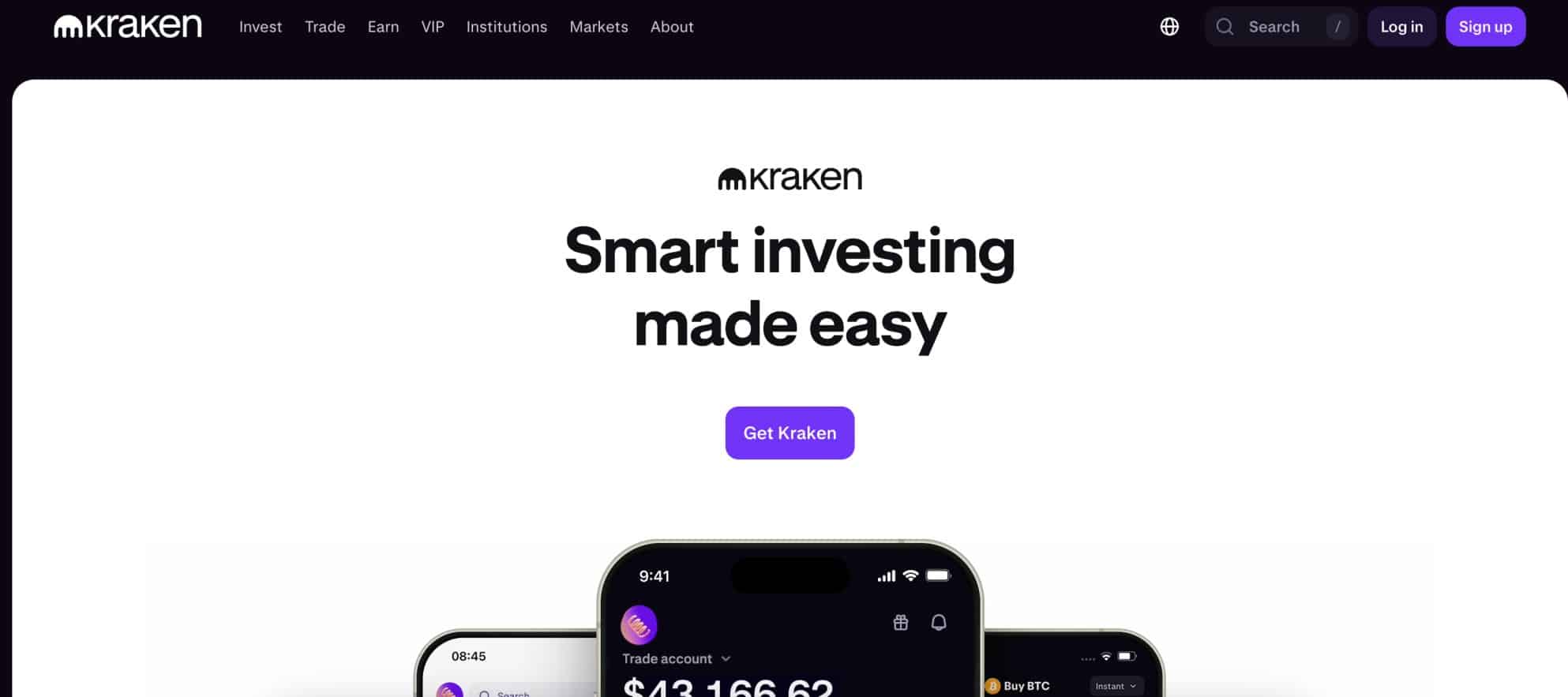
Kraken meets investor needs by offering several platforms and apps. The basic platform, available on web browsers and mobile devices, is for simple buying and selling. For advanced trading, Kraken Pro is available as desktop software. Users can also use separate apps for non-custodial storage and money management.
Safety: Is Kraken Regulated?
The Tier 1 exchange is regulated in various global regions. Licensing bodies from across Europe, North America, and Asia have approved the platform for retail and institutional access, making it an exchange with almost unprecedented regulatory oversight. Kraken complies with all relevant laws in the countries it operates in, including data protection and KYC verification.
When compiling this Kraken review, we verified the exchange’s proof of reserves, which it typically updates quarterly. It holds reserves in high-liquid digital assets such as Bitcoin (BTC), Tether (USDT), and USDC (USDC), well above minimum safety levels to ensure solvency in all market conditions. Although Kraken publishes reserve attestations every three months, account holders can verify their assets via the Merkle System.
To protect client cryptocurrencies against third-party threats, Kraken employs tight security controls. It segregates customer assets in advanced cold wallets, monitored by armed guards and CCTV systems 24/7.
When users register and verify a Kraken account, they can activate additional security measures, such as wallet whitelisting and multi-factor authentication.
While Kraken has never lost customer funds, it encountered at least one publicly reported security breach. In 2024, security researchers exploited a zero-day vulnerability that enabled them to take $3 million from the exchange (later returned). According to reports, Kraken patched the security exploit in just 47 minutes.
Note: As Bloomberg reports, Kraken has filed an initial public offering (IPO) with the Securities and Exchange Commission (SEC). The report suggests that the IPO event could happen in early 2026, allowing the general public to invest in Kraken stock.
Kraken Services & Account Types
Kraken offers many crypto-related services. First-time investors often use the platform’s brokerage interface, which allows beginners to buy assets using USD, GBP, EUR, and other global currencies.
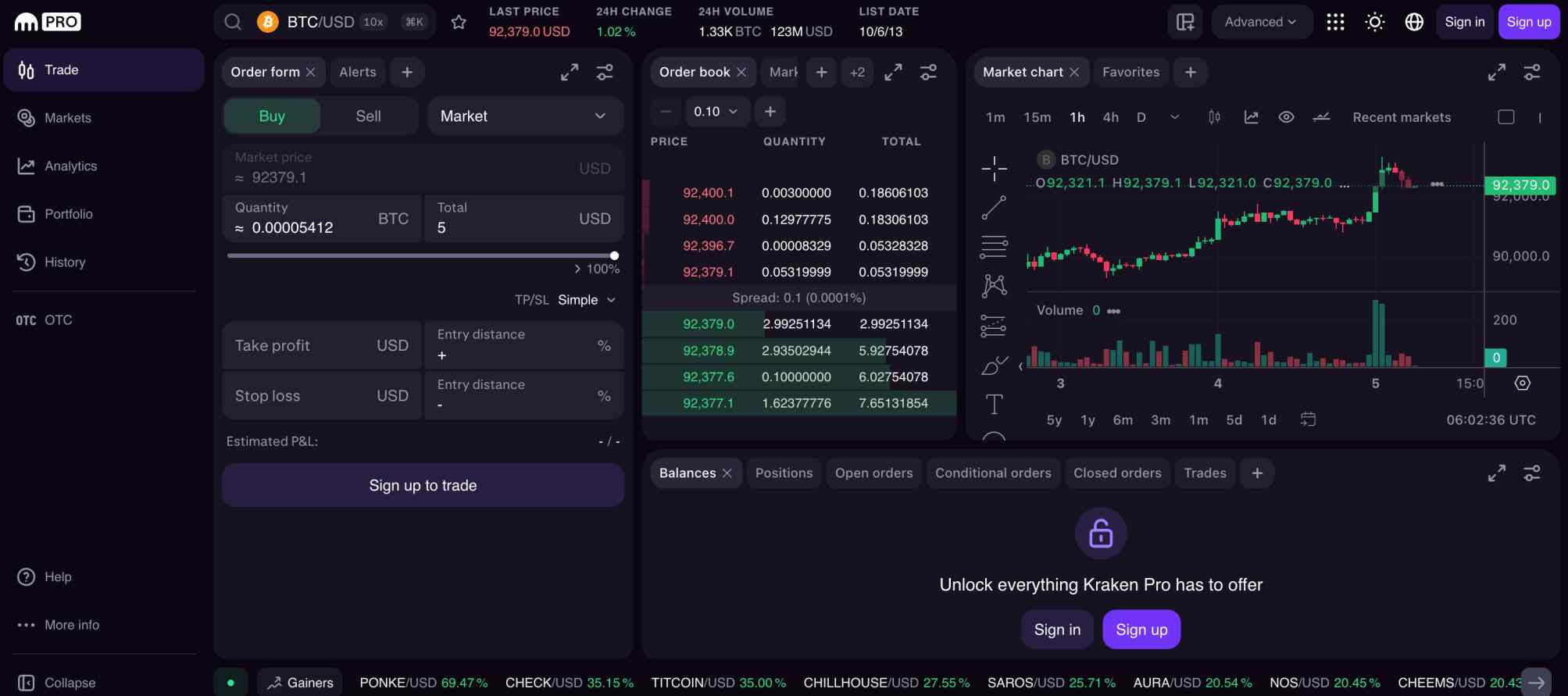
Those with previous trading experience use Kraken Pro, since it offers a much larger selection of markets. Alongside spot trading, the advanced platform supports margin accounts and perpetual futures with 50x leverage. Kraken Pro users can also trade traditional equities from the U.S. stock market, as well as major ETFs from Vanguard, iShares, and SPDR.
Standard accounts provide access to the basic and advanced dashboards, although due to regulatory compliance, Kraken restricts certain services in some locations. The exchange restricts UK retail clients from trading perpetual futures, and U.S. residents from applying for its crypto-backed card.
In addition to business and institutional accounts, Kraken offers a subscription service. Available for $4.99 monthly, Kraken+ offers fee-free trading up to $10,000 each month, 4% APR on Global Dollar (USDG) holdings, and account perks like priority support, airdrops, and free crypto tax reports.
Available Assets & Cryptocurrencies
Kraken’s asset library covers more than 600 spot cryptocurrencies and additional markets on the derivative platform. It covers the BTC and the best altcoins, including Ethereum (ETH), XRP (XRP), Tron (TRX), Litecoin (LTC), and Polygon (POL). Speculative traders can access top meme coins, too. Larger-cap meme markets feature Pepe (PEPE), Shiba Inu (SHIB), and Dogecoin (DOGE), alongside “shitcoins” like Samoyedcoin (SAMO) and Doland Tremp (TREMP).
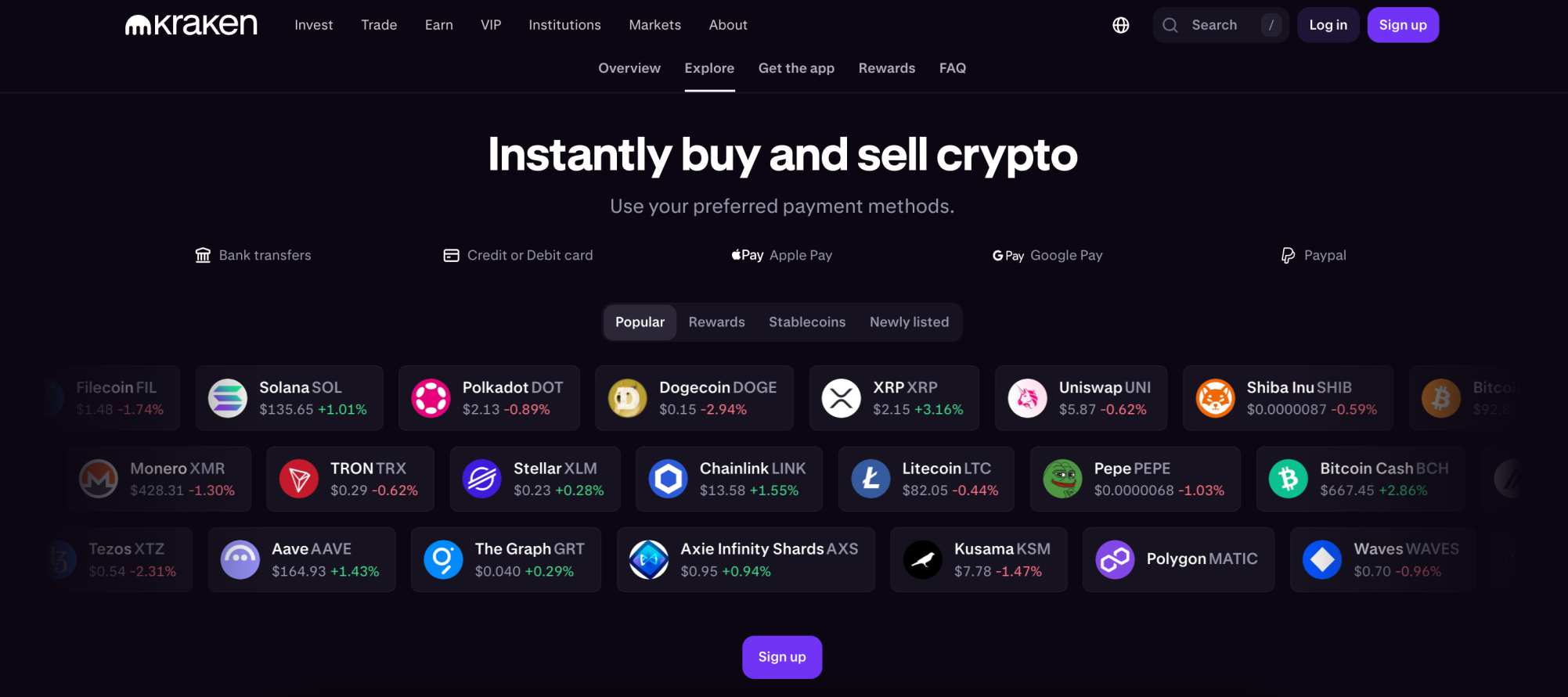
The most popular cryptocurrencies support fiat-driven pairs, allowing Kraken users to buy and sell assets using traditional currencies. Assets with small valuations are traded against various stablecoins, such as USDT and USDC.
| Supported Cryptocurrencies | 600+ (spot), 800+ (derivatives) |
| Crypto Trading Products | Spot trading, margin trading, perpetual futures, CME futures |
| Non-Crypto Assets | Stocks, ETFs, and forex |
| Pair Denominations | USD, EUR, GBP, AUD, CHF, CAD, and various stablecoins |
| Minimum Margin Requirement | 10% (margin), 50x (perpetuals) |
Key Features of Kraken
In this section of our Kraken review, we highlight some of the exchange’s best features.
Leverage Facilities
Kraken offers leverage to eligible users. Its spot margin accounts require a minimum requirement of 10%, allowing traders to amplify their bankroll by 10 times.
Non-U.S. clients can access perpetual futures with a 50x leverage, but some markets offer lower limits. U.S. traders can speculate on CME futures, and leverage limits align with the commodity exchange’s contract specifications.
Crypto Yields
Kraken users can generate passive yields on idle account balances.
One option is staking, where users deposit assets into a proof-of-stake network, such as Ethereum or Polygon. Kraken simplifies the process by removing staking minimums and lock-up terms, although it takes a variable commission from the rewards.
The auto-earn feature, which functions like a savings account, often offers higher rewards and supports a broader range of assets. Kraken generates yields from various sources, including lending funds to margin traders who pay interest.
Krak
Krak is the exchange’s global money app for iOS and Android. While not officially a bank, Krak works like a standard checking account. Users can receive their paycheck, transfer funds, and earn interest on unspent USD balances.
Krak also links to the Kraken debit card. It allows holders to make purchases with any merchant that accepts MasterCard and earn a 1% cashback, paid in either crypto or fiat.
Auto Invest
Recurring buys streamline the dollar-cost averaging strategy. Kraken users choose which cryptocurrencies to buy, at what frequency, and in what amount, and Kraken executes orders automatically.
Self-Custody Wallet
Kraken’s self-custody wallet operates independently from its centralized exchange and it provides users with encrypted private keys and a secret recovery phrase, which ensures full asset control for the holder.
It supports a range of blockchains including Bitcoin, Ethereum, Solana, Dogecoin, and Base. The wallet is free, open-source, and available as a mobile app.
Kraken Pricing & Fees
Several factors determine Kraken fees, such as whether traders use the basic or advanced platform. On the basic dashboard, where users invest in digital assets instantly with fiat money, Kraken includes the commission and spreads as a fixed exchange rate. Although these fees are essentially hidden, our Kraken review found they average 3%.
Kraken Pro, which allows users to trade cryptocurrencies in the spot market, is much cheaper. It uses the maker-taker model, and limit and market orders initially incur a 0.25% or 0.4% commission per side. Similar to other exchanges, Kraken reduces those commissions gradually when traders reach 30-day volume milestones. To secure 0% fees, trading volumes must exceed $10 million.
Although more competitive spot commissions exist elsewhere (e.g., MEXC offers 0% fees without volume requirements), few platforms rival Kraken’s strong security framework.
Onto derivatives, traders initially pay maker-taker fees of 0.02% and 0.05%, and funding rates apply hourly. Large-volume derivative traders receive rebates of up to 0.006%, while takers can get low fees of 0.0125%. Although these perpetual commissions align with those of exchange competitors, Kraken’s funding rates are applied eight times more frequently than the market average.
Kraken users who deposit and withdraw fiat money via bank transfer typically avoid fees. Some banking networks charge nominal fees, which rarely exceed $1 or the equivalent in the local currency. PayPal deposits cost $1, yet debit card payments remain the most expensive option at 3.75% plus $0.25.
| Standard | Makers | Takers | |
| Basic Platform | Included in the exchange quote (averages 3%) | N/A | N/A |
| Spot Markets (Pro) | – | 0%–0.25% | 0.05%–0.4% |
| Derivative Markets (Pro) | – | -0.006–0.02% | 0.0125%–0.05% |
| Margin Trading | 0.02% to open positions and 0.02% every four hours thereafter | – | – |
| Funding Rates | Applied hourly to long or short traders | – | – |
| Bank Transfers | Typically free or near-free | – | – |
| PayPal | $1 | – | – |
| Debit Cards | 3.75% plus $0.25 | – | – |
| Crypto Payments | Deposits are free, and withdrawals mirror dynamic blockchain fees | – | – |
Trading Platforms & User Experience
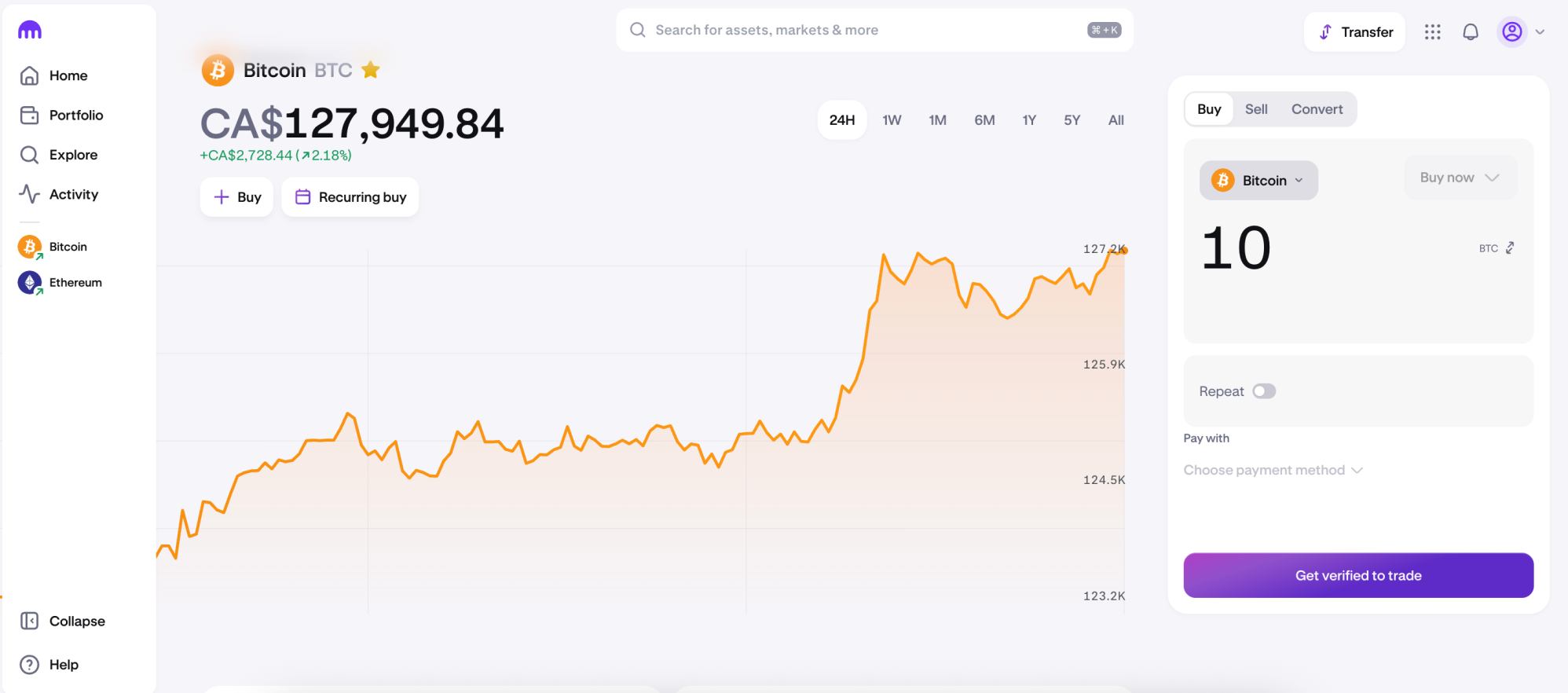
Kraken’s diverse platform choices offer varying user experiences across multiple applications. The main Kraken website and the iOS/Android Kraken app appeal to casual users who prefer basic investing interfaces. Neither platform requires prior experience; users can purchase cryptocurrencies instantly with account funds or debit cards, or credit cards. They can also convert digital assets via a one-click process, allowing inexperienced users to avoid spot orders.
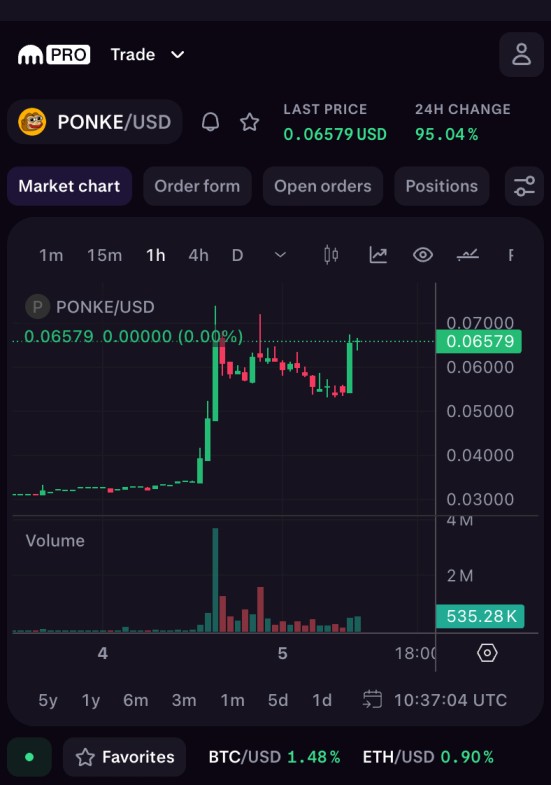
Kraken Pro, available on browsers, desktop software, and mobile applications, offers a professional-grade experience. Products include spot, margin, and derivative trading with advanced charts, traditional order types, and full customization. Although Kraken Pro fees are lower, many beginners prefer the basic platform for its ease of use.
We also recommend the basic version for mobile traders. It offers a great smartphone experience with optimized investment dashboards, icons, and analysis tools. Additional mobile features include one-tap portfolio views and real-time alerts.
Regardless of the platform or device type, all Kraken users must open an account, complete the KYC process, and deposit funds. In our experience, it took several minutes to verify our account, although Kraken reviews report much longer wait times.
How to Sign Up & Trade on Kraken
If, after reading this Kraken review, you wish to join the exchange, follow the step-by-step guide below. We explain the onboarding and funding process and how to place a trade.
Step 1: Open a Kraken Account
Go to the Kraken website, click “Sign Up”, and complete the registration form. Kraken initially requires your email address and country of residence.
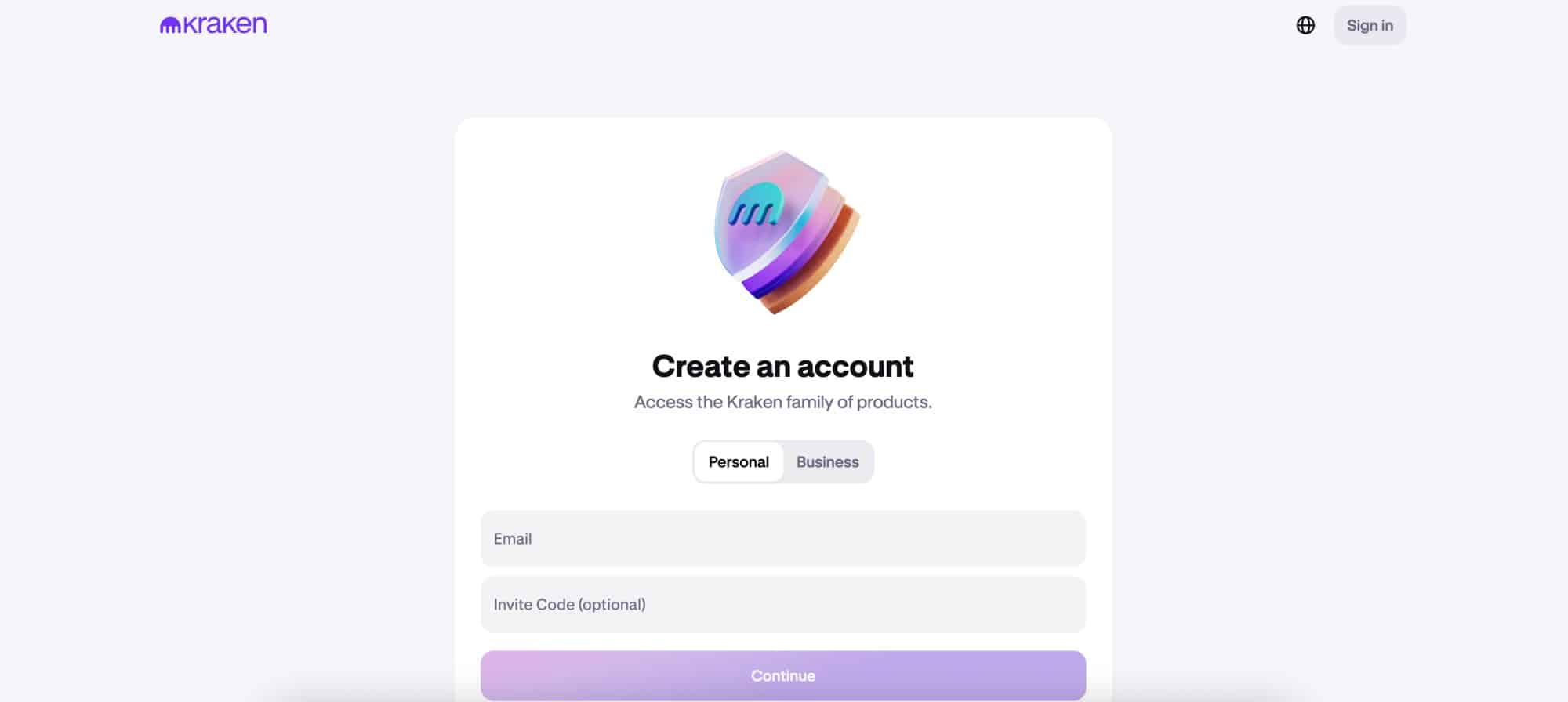
Choose a strong password and confirm the provided email.
Step 2: Complete KYC
You can’t deposit funds until you complete Kraken’s KYC process.
After providing personal information, upload a valid government-issued ID and proof of address, such as a utility bill or credit card statement.
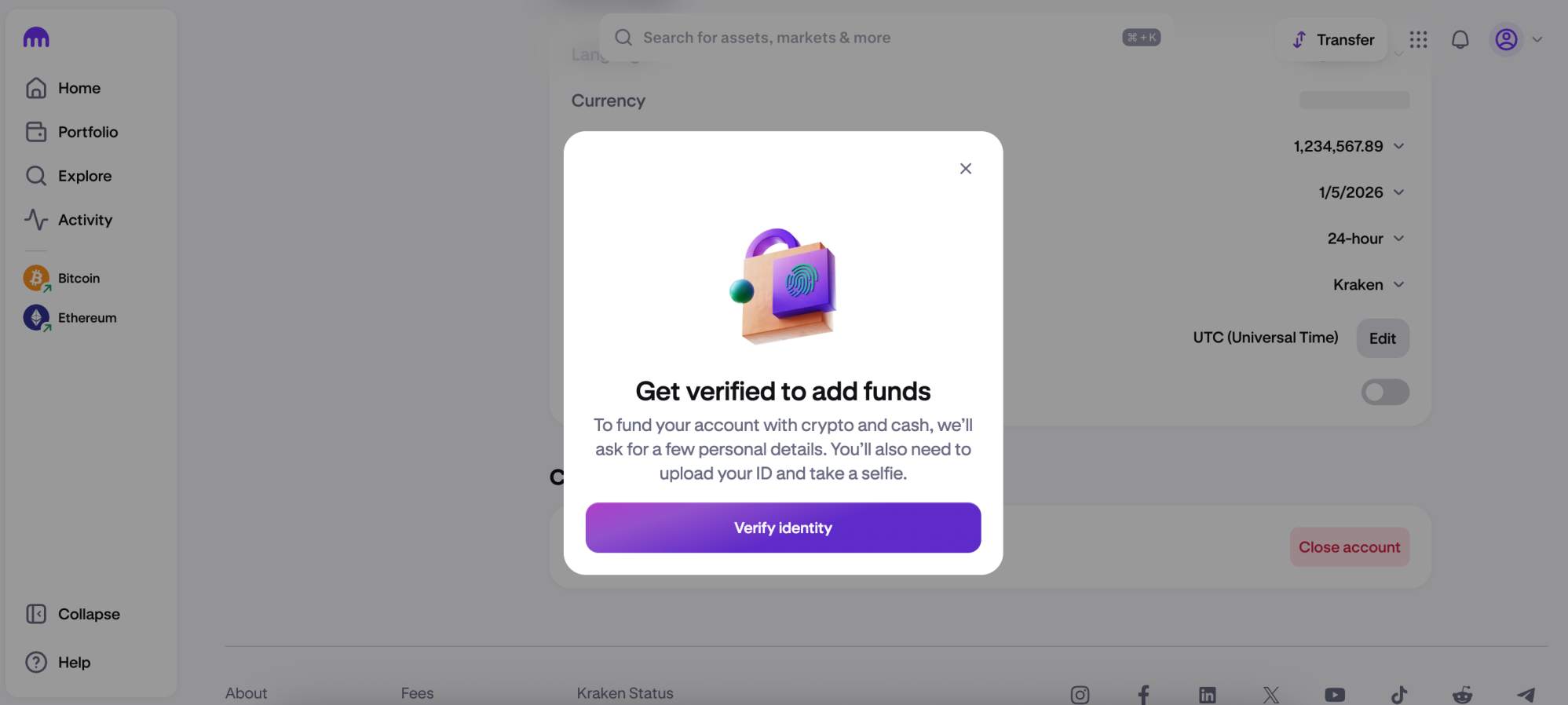
A quick biometric video call follows, where the automated system scans your face. Complete this step with a smartphone camera or desktop webcam.
Step 3: Deposit Funds
In the account dashboard, click “Deposit” and select either fiat money or cryptocurrency. Fiat payments include PayPal and debit cards, although bank transfers remain the cheapest option. Most supported banking networks, such as ACH and SEPA, offer same-day processing. The minimum fiat deposit is $10 or its equivalent in the local currency.
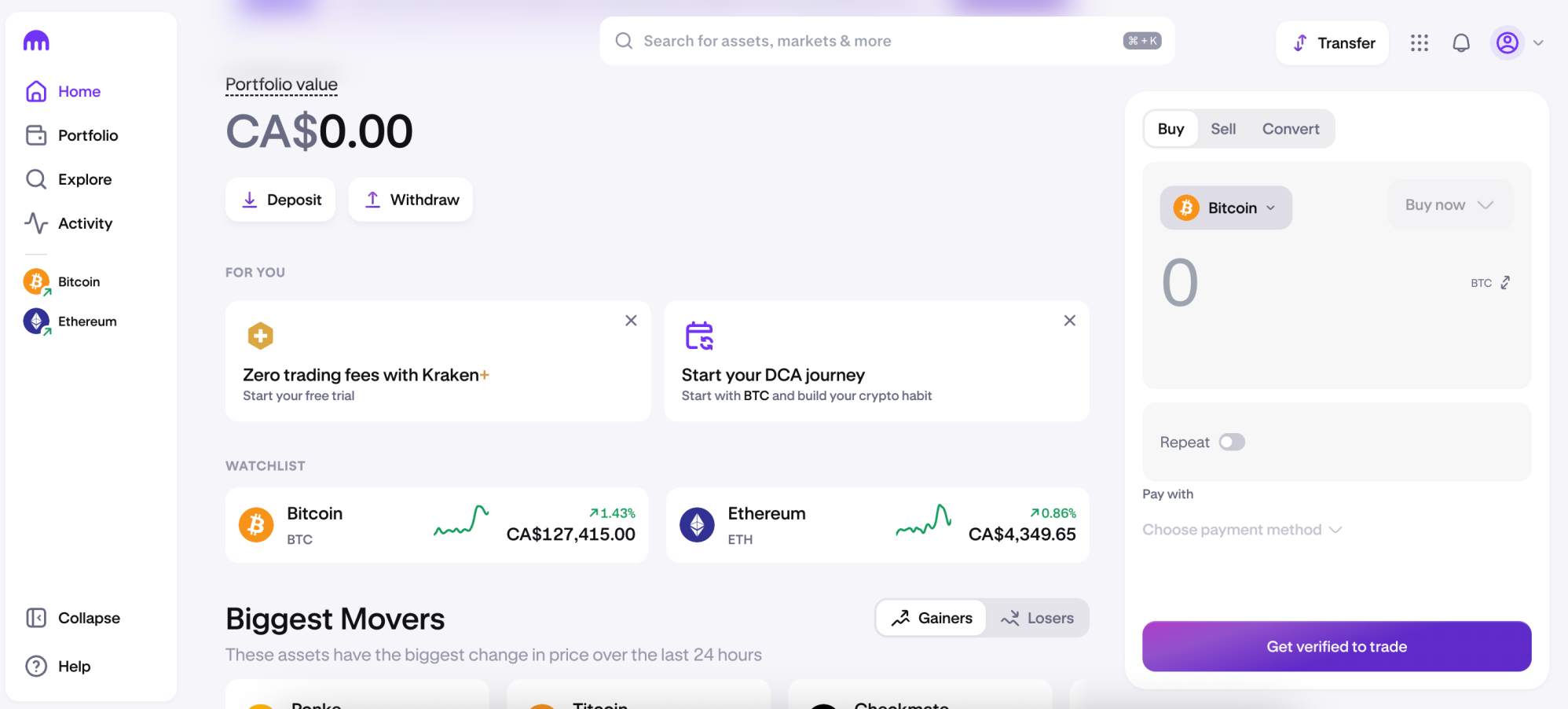
To deposit digital assets, select the crypto and corresponding network, then transfer funds to the provided wallet address. You can also scan the address’s QR code from a mobile wallet.
Step 4: Buy Crypto
Kraken users have two options when buying cryptocurrencies: the basic or Pro platform.
Although beginners may feel more comfortable with the basic dashboard, trading commissions and spreads are considerably higher. By placing a market order on the Pro exchange, traders pay a maximum fee of 0.4%.
Tap the dotted square icon next to “Transfer” and select “Kraken Pro”. Hover over “Trade” and click “Spot”, then tap “BTC/USD” to access the asset search bar. Enter the ticker symbol of the preferred cryptocurrency and select a suitable pair. Kraken supports fiat-driven pairs on major markets, such as BTC/USD and XRP/EUR, as well as stablecoins.
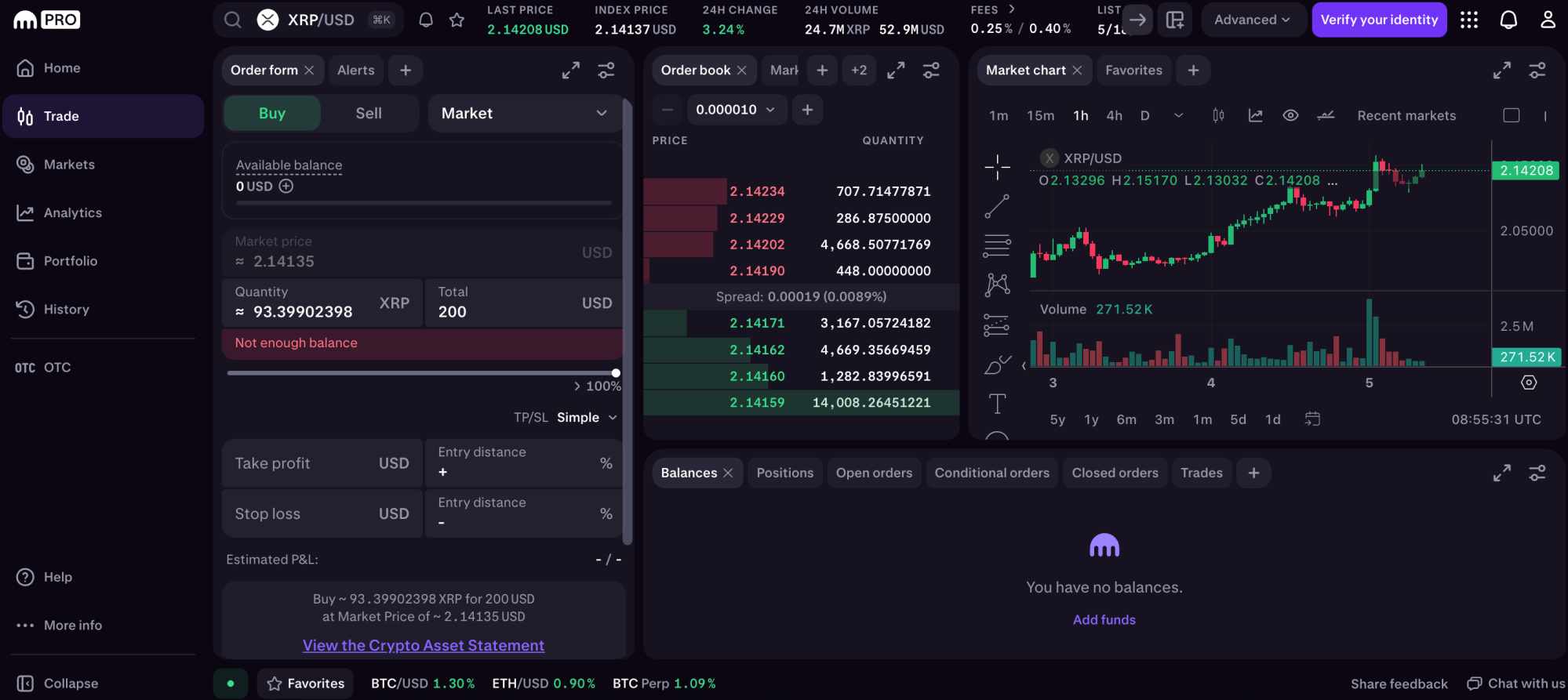
Ensure the platform shows the order type as “Market” and enter the total trade size. Finally, confirm the order, and Kraken executes it near-instantly.
Conclusion: Is Kraken a Good Crypto Exchange?
Kraken excels in several key areas, including licensing, regulatory compliance, and client asset safety. The established exchange lists hundreds of spot and derivative markets and charges reasonable fees, even to casual users who trade small amounts.
While new customers must complete an onboarding process, verified accounts can easily deposit, trade, and withdraw fiat money. Since Kraken offers a basic and advanced platform on desktop and mobile, we found that the exchange suits most investor profiles.
Methodology: How We Conducted Our Kraken Review
As with all exchange reviews on InsideBitcoins, the research team tested Kraken with a funded and verified account to explore the end-to-end trading experience. We evaluated the onboarding and deposit processes before placing trades across multiple markets, including spot trading, margin accounts, and leveraged futures.
To understand how exchange experiences differ across platforms, we used Kraken on a desktop and mobile browser, as well as its native applications for iOS, Android, and Mac. Although we were unable to test its Windows or Linux versions, the specifications and secondary Kraken reviews suggest a similar client experience.
We also analyzed Kraken documents for core platform factors, such as commission structures, proof of reserve audits, margin requirements, supported countries, and general terms of service.
FAQs
Is Kraken legit?
Does Kraken have KYC checks?
How do I withdraw funds from Kraken?
Can I use Kraken in my country?
Does Kraken have deposit fees?
Is Kraken beginner-friendly?
References
- Global Terms of Service (Kraken)
- Crypto Exchange Kraken Files Confidentially for IPO Next Year (Bloomberg)
- KYC for Crypto: How KYC prevents money laundering (Hacken)
- Zero-Day Exploit in Kraken Crypto Exchange Leads to $3 Million Theft (Bitdefender)
- Proof of Reserves (Kraken)