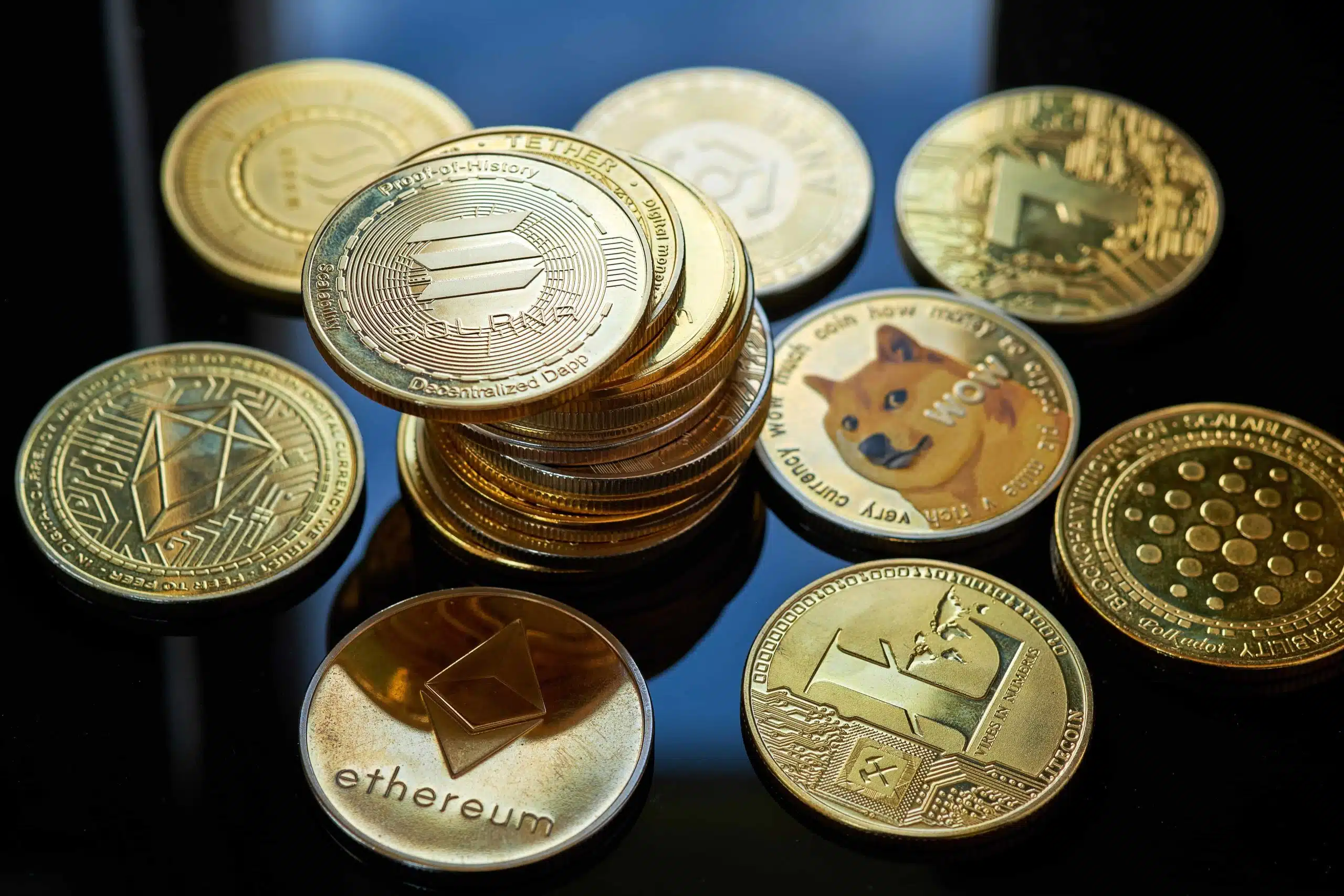
If you are interested in cryptocurrency or just curious about it, you’ve probably heard about people getting free crypto. We aren’t talking about scams or buying coins at a discount, but about actually getting them for free. This sounds too good to be true, but it actually happens all the time in the crypto market.
There are now multiple legit ways to earn crypto without paying for it. However, most methods involve some combination of time, effort, or risk. Whether you are a brand-new investor or already trading, this guide will tell you what “free crypto” actually means, how it compares to buying it, and which methods you can use to get free crypto rewards.
What Does “Free Crypto” Really Mean?
Let’s be real – almost everyone would say yes to free crypto. But, does “free” mean no work, no risk, or maybe even no real value?
Free crypto isn’t magic money that falls from the sky. Almost always, it is something you can earn by doing a bit of work, such as completing tasks, holding coins, or participating in a project.
In other words, you get free crypto as a trade-off, whether it is for your time/attention, your computing power, or something else.
For example, crypto faucets, which date back to 2010, let you claim small amounts of a coin by solving captchas or watching ads. The amount is usually tiny. Airdrops, on the other hand, distribute tokens to users who complete tasks. The token you get may be worthless now, but might spike in value later, all of which we will discuss below.
The bottom line? “Free” means free of financial cost, but not free of effort, time, risk, or data exchange.
Free vs. Paid Crypto: What’s the Difference?
| Aspect | Free Crypto | Paid Crypto |
| Cost | No upfront money | You spend fiat to buy crypto |
| Effort | Tasks, surveys, giveaways, staking setup | Minimal effort – just buy and hold |
| Risk | Scams, phishing, low rewards | Market volatility, exchange hacks |
| Value Potential | Often very small, but occasionally worth a lot | Tied directly to market price/demand |
| Liquidity | May require claiming and unlocking | Instant access on exchanges |
Pros and Cons of Free Crypto
Free crypto can be beneficial in many ways, but it also comes with its own set of disadvantages.
Pros:
- No money needed
- Great for learning without risking real capital
- In rare cases, it can lead to major returns
Cons:
- Often requires lots of time and patience to build something substantial
- High risk of scams and phishing traps, especially in airdrops
- Real free crypto opportunities are hard to find
In comparison, paid crypto is faster and more scalable, not to mention easier to trade and diversify. Still, to get paid crypto, you need to risk at least some of your capital.
How to Get Free Crypto: 8 Top Methods
Getting free crypto for a bit of a time investment sounds great, but you may be wondering what it actually look like.
Let’s take a look at your options.
1. Crypto Faucets
Crypto faucets are like digital penny jars. Your job is to do small tasks like solving captchas, watching videos, completing surveys, or playing mini-games. In return, crypto faucets will drop tiny amounts of crypto into your crypto wallet.
Top Faucet Examples
FreeBitco.in
Operating since 2013, reportedly with over 50 million users, the famous crypto faucet FreeBitco.in has disbursed 300,000+ BTC to date. You roll once every hour: solve a CAPTCHA, hit “roll” and win satoshis (1/100,000,000 of a BTC). Rolls can range from ~0.00005 BTC (≈$3.50 at $70K/BTC) to jackpot amounts (up to 1 BTC, though these are exceedingly rare).
FreeBitco.in is one of the most established crypto faucet platforms. It’s popular for consistent micro-drops and passive growth, but payouts are limited by the volume of rolls and luck. The platform also has a weekly lottery where users can win up to 1 BTC and 4% APY interest on balances of over 30,000 satoshis.
Cointiply
Cointiply was launched in 2018 and now has over 3 million users and over $12 million paid out. Instead of satoshis, the base currency for this faucet is “Coins” (10,000 coins equals $1). The faucet claims bring around 20-200 sats/hour.
Users earn coins through faucet claims, completing surveys, watching ads, and playing simple games. The faucet itself pays out small rewards every hour, but the real earning potential comes from combining tasks. Once you accumulate 30,000 coins, you can withdraw to Bitcoin or other supported wallets.
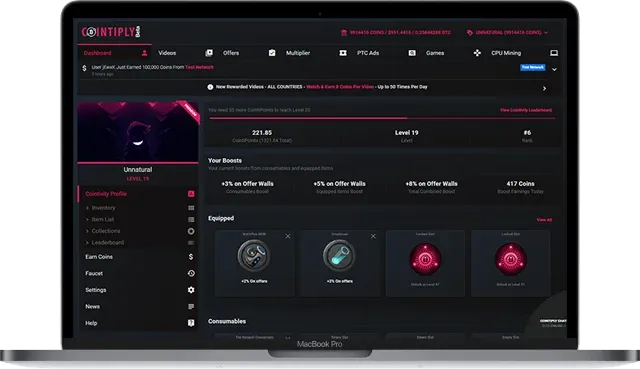
Source: Cointiply
How Much Can You Earn?
According to a report, you can earn about $0.15-$0.25 per week if you spend 30 minutes to 2 hours a day per faucet.
On higher-reward faucets, you might earn more, maybe even up to $3 an hour, but usually only if you actively engage or have multiple faucets running.
The catch for this free crypto method is mostly the time requirement. Don’t expect to make hundreds of thousands of dollars passively. If you are consistent, you may see around $10-$50 per month paid directly into your wallet.
| Pros | Cons |
| Zero investment: You don’t need to spend money to start earning. | Very low earnings: Even with multiple faucets, expect $0.10-$2 a day. |
| Beginner-friendly: Great way to learn how wallets and crypto work. | Time-consuming: Small payouts often require a lot of clicking or captcha-solving. |
| Passive elements: Some platforms offer interest on balances or auto-claim options. | Ads and distractions: many faucets show intrusive ads or redirect links to earn revenue. |
| Accessible worldwide: No location restriction for most faucets. | Limited potential: Don’t expect to make significant income through faucets alone. |
2. Survey and Task Platforms
Survey and task platforms are the step-up from faucets. These are essentially reward hubs where you exchange your time and effort to earn rewards in the form of crypto or cash. Instead of just clicking a button, you’ll complete surveys, test services, play games, or install apps. This usually takes more than just a few minutes, but the payoff is higher than faucets (still, far from sustainable income).
Top Survey and Task Platforms
Freecash (formerly Freeskins)
Freecash is one of the most popular GPT (get-paid-to) platforms in the crypto community. On the platform, you can earn crypto rewards by taking surveys, testing apps, and playing games. You can cash out your rewards in crypto, PayPal, or gift cards.
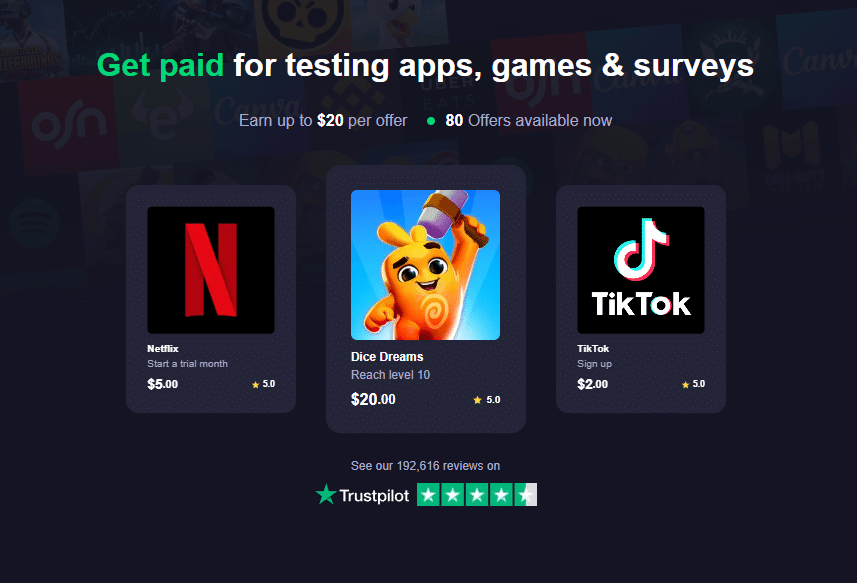
The typical surveys at Freecash pay 100-1,000 coins worth $0.10-$1, with some gaming offers paying $30-$100 (only in more developed regions). The crypto withdrawals start at just $0.10 or 100 coins.
In July 2025, Freecash shared that they rewarded over $50,000,000 to users.
Coinpayu
Coinpayu is a hybrid between a faucet and a paid-to-click platform. It rewards users for watching ads, filling out surveys, and completing simple tasks, offering all payouts in crypto.
Founded in 2019, the platform has grown steadily and now supports withdrawals in Bitcoin, Litecoin, Dogecoin, and Dash. One of its best features is the very low withdrawal threshold, which is just 2,000 satoshis or around $1.30 at $65K/BTC.
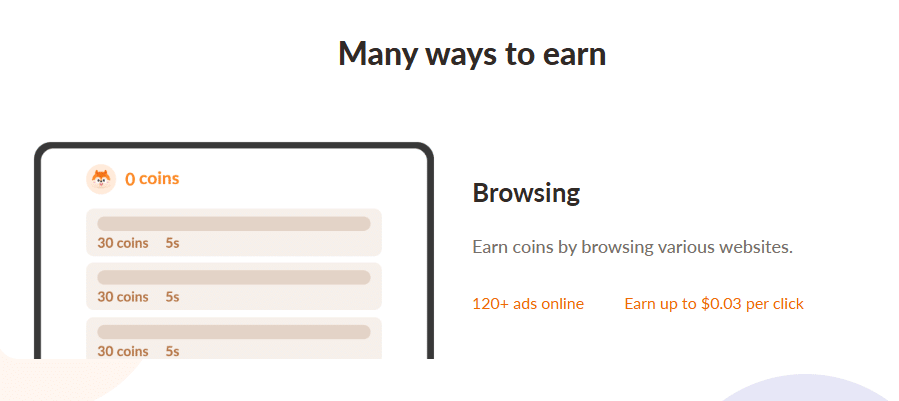
Most users on Coinpayu rely on a mix of ad views, which pay around 10-40 satoshis per click, and surveys, which offer $0.50-$3, depending on the provider.
How Much Can You Earn?
If you are using a platform like Freecash or Coinpayu regularly, you can expect to make between $10 and $50 per month. If you are very active and refer others as well as participate, you may earn over $100 a month. Still, time is the main trade-off here. Surveys can take 10-20 minutes and may pay you less than $1 each.
According to LearnAcdmy, daily earnings on Coinpayu typically range between $1 and $3 if you engage regularly. Power users who combine surveys and offers reportedly hit $5-$20 a day.
| Pros | Cons |
| Higher earning potential than faucets. | Time vs. reward: Some surveys take 20+ minutes for $1 or less. |
| Low withdrawal thresholds on many platforms. | Disqualification frustration: Getting kicked out of surveys mid-way is common, especially in lower-paying regions. |
| Variety of tasks: You are not limited to surveys. | Geo-based limitations: Offers and earnings are often better in countries like the U.S., U.K., and Canada. |
| Flexible payout options: Many sites support PayPal, gift cards, and multiple crypto coins. | Privacy concerns: You may be asked for personal details in surveys or to install third-party apps. |
3. Play-to-Earn Games
Play-to-earn (P2E) games also let you earn crypto or NFTs simply by playing a game. Think of this as gaming with real-world value. Instead of passive clicks or surveys, you’d be engaging with gameplay casually or competitively.
Top P2E Game Platforms
Arc8 by GAMEE
Arc8 is a mobile app offering free-to-play arcade games where you compete in 1v1 battles or tournaments to earn GMEE tokens. You don’t need to buy NFTs or pay to play, just download the app, play, and start earning.
Arc8 has over 10 million downloads on Android and regularly runs events where players can earn between $1 and $5 per week.
Alien Worlds
Alien Worlds is a free-to-play NFT metaverse game on the WAX blockchain where you can mine Trilium (TLM) tokens, participate in missions, and join planets to earn rewards. To start, all you need is a free WAX wallet, so you don’t need to make a payment for mining.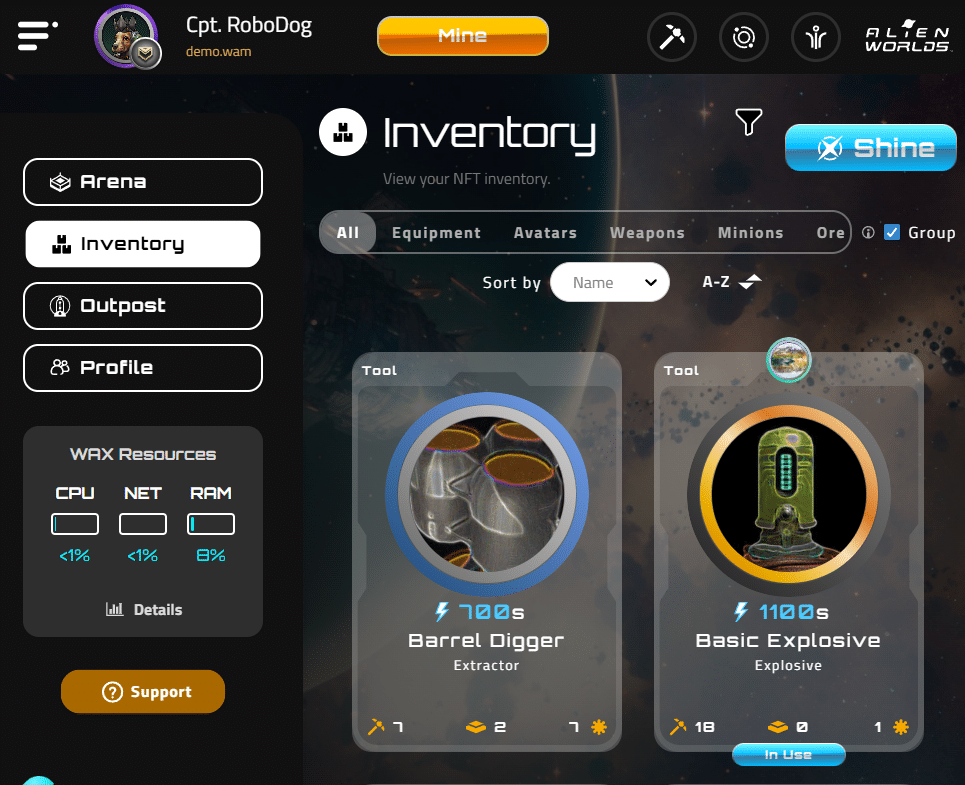
Users have reported earning small amounts of TLM daily by mining and staking. The rewards aren’t huge, often a few cents to a couple of dollars per day.
How Much Can You Earn?
For free-to-start games like Arc8, casual players typically earn $1-$5 a week by participating in the daily challenges and tournaments. Your earnings will depend on how much time you put in, as well as your skill level. Still, competition on such popular apps can be stiff.
| Pros | Cons |
| Some games are free to start, with no upfront investment | Modest earnings, especially for casual play |
| Fun gameplay with real crypto rewards | Earning requires a lot of time and active participation |
| Access to blockchain NFTs and tokens | Token prices and rewards can be volatile |
| Regular tournaments available | Beginners can find the game mechanics to be complex |
4. Airdrops
Airdrops are free token giveaways from crypto projects looking to build buzz and reward their early users. Instead of spending money, you’ll be asked to test apps, hold certain coins, or complete simple tasks like following social media or joining a Telegram group. If you qualify, you’ll receive free tokens directly in your wallet.
Since airdrops can sometimes launch projects before they hit major exchanges, getting in early can lead you to substantial gains. This is likely the method with the most profit potential, as the biggest airdrops can exceed thousands of dollars if you’re lucky. However, most airdrops are low-value, and there are also many scams, so you should be cautious.
Top Airdrop Examples
Uniswap ($UNI) Airdrop
Uniswap made headlines in 2020 by airdropping 400 $UNI tokens worth around $1,200 at the time to every user who had interacted with their platform before a specific date. $UNI later hit an all-time high of nearly $45, making the airdrop worth just under $18,000 at the peak. This was one of the largest, most famous airdrops in history, rewarding early adopters without requiring any investment.
According to Binance, the total value of this airdrop exceeded $1 billion across all users. Unfortunately, the days of four and five figure airdrops seem to be over, but it’s possible that another hyped airdrop could change that.
dYdX Airdrop
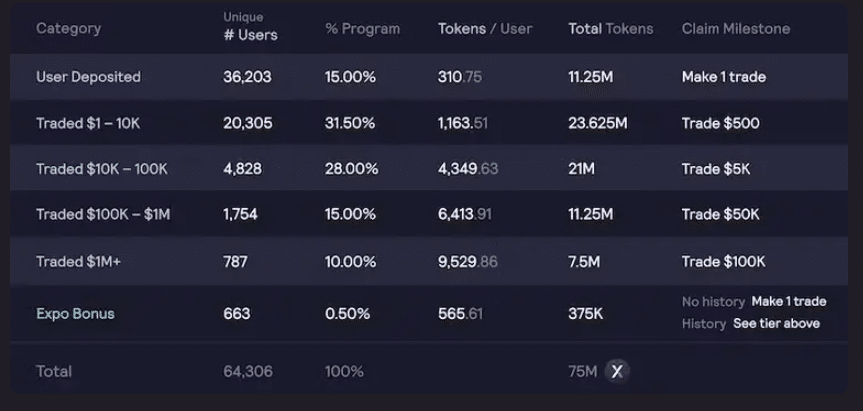
The dYdX crypto airdrop distributed $2 billion worth of $DYDX on September 8, 2021, valued at its ATH token price of over $26. The number of tokens each user received was determined by their previous trading activity on the platform. The lowest tier users received 310 tokens for trading at least a dollar on the exchange.
How Much Can You Earn?
Most airdrops don’t offer life-changing amounts, but can range from a few dollars up to hundreds, or sometimes thousands, for the active early users of massively popular platforms like Uniswap or dYdX.
| Pros | Cons |
| Free crypto: Free crypto with no real investment | Most are low-value and short-lived |
| Rewards for early adopters: If you are lucky, you can get a handsome reward for being an early adopter | Frequent scams: Phishing attempts and scams are common |
| Great for new projects: Helps build community around new projects | Varying qualifying conditions: You might be an early adopter but not meet the qualifying conditions for the airdrop |
| Minimal effort: Most airdrops require minimal effort | Not so easy to find: You need to do research to find real airdrops before their product hits the exchanges |
5. Staking Rewards
Staking means locking up crypto into a blockchain or a platform to help secure the network. In return, you earn freshly minted tokens. It’s passive income, but in the form of crypto. The rewards vary depending on the coin, platform, and the lock-up terms.
Now, this strategy isn’t exactly free. You do need to hold crypto to lock it up into a blockchain, but the good thing is, you get a reward and still get to keep the crypto you own (assuming the platform isn’t hacked or rug pulled).
Top Staking Examples
Ethereum Staking
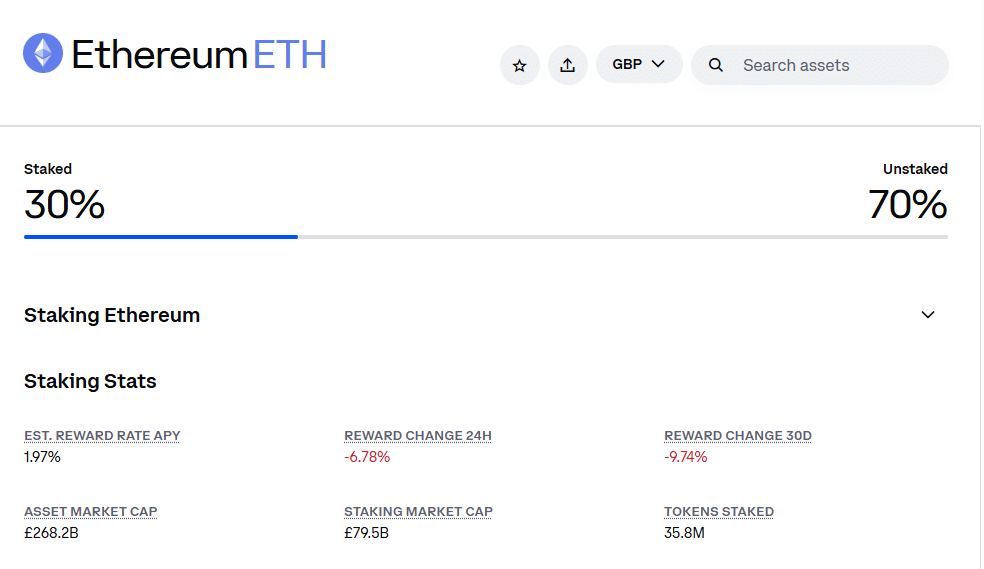
Anyone with enough ETH can stake their tokens to help secure the network and earn a bit of ETH on the side. It requires locking a minimum of 32 ETH to become a validator yourself, but you can also pool your tokens through various platforms like Lido if you don’t have enough to hit the minimum. The current estimated reward rate for Ethereum is 1.94%, which means that, on average, stakers are earning about 1.94% if they hold an asset for a year. However, other platforms like Coinbase and Kraken offer higher yields on ETH staking, and most people use these platforms or pools.
Polkadot (DOT) and Cosmos (ATOM) Staking
There are countless projects that offer staking, and most, including Polkadot and Cosmos, offer higher yields than Ethereum. DOT staking returns around 10-16% APY, and Cosmos can reach 12-20% APY, which makes them very popular for staking earners. However, it’s important to remember that you have to own $DOT or $ATOM to stake, which are often significantly more volatile (and thus riskier) than Ethereum.
How Much Can You Earn?
If you stake $1,000 worth of ETH at a 5% APY, that is $50 annually with minimal effort or risk. Higher-yield assets like DOT or ATOM can bring more, maybe $100-$200 a year for that same investment, but the risks are greater, returns fluctuate quite a lot, and you must manage lock-up times (bonding period).
| Pros | Cons |
| Passive income: Earn without active trading or effort | Locked funds: Some require locking for weeks or months |
| Supports networks: You help secure blockchains | Price risk: Rewards are token-based, so market drops can affect the value |
| High APY options: Some coins offer 10-20% returns | Fees and slashing: Validator pools charge fees and misbehavior can lose stake |
| Accessible: Minimal thresholds on platforms like Binance or Coinbase | Technical complexity: Solo staking needs foundational knowledge and hardware |
6. Referral Programs
Many crypto platforms will reward you with free crypto for bringing in new users. You get a bonus when someone signs up, trades, or stakes using your referral code.
Top Referral Examples
Binance offers up to 40% lifetime commission on trading fees from referred users. If someone you refer trades $10,000 and Binance charges 0.1%, you’d earn $4 on that trade. With many active referees, rewards can add up to quite a lot.
Coinbase gives around $5-$10 worth of BTC when a referred user buys at least $100 worth of crypto. This is a low sum, but it barely takes any effort on your behalf. All you need to do is share a link, and you both instantly earn rewards when they make their first purchase.
How Much Can You Earn?
Referrals depend on how active your network is. If your referrals constantly buy and trade crypto, and you have more people you’ve referred, you can earn nice rewards this way. For instance, if ten people you’ve referred each trade $1,000 a month with a 10% referral bonus, at 0.1% trading fees, you’d get roughly $10 a month and more as volume grows.
| Pros | Cons |
| Easy and passive: Share a link and earn from other people’s trading actions | Dependent on referrals: Income depends on invitee activity |
| Low risk: No investment required | Limited by program terms: Some offer payouts only after thresholds |
| Mutual rewards: Both you and the referee often earn | Regional restrictions: Some programs don’t work in all countries |
7. Learn-to-Earn Platforms
Learn-to-Earn programs will reward you with crypto tokens for completing educational modules about projects or platforms. This is ideal for those who want to earn using educational content and learn along the way.
Top Learn-to-Earn Examples
Coinbase launched its Earn program to teach users about tokens like Polygon, Cosmos, and Compound. Users watch short videos as part of the Coinbase Learn program and take quizzes to earn $10-$50 per token, sometimes equating to a 10-20% bonus, without the need to make any investments. Each course only takes a couple of minutes, so it’s a great way to earn a bit of crypto while learning about major tokens.
Platforms like Bitrue and Phemex occasionally reward users with small amounts of BTC or other tokens for taking educational quizzes. These are smaller in scale, but are easy and free ways to earn.
How Much Can You Earn?
Typical Learn-to-Earn campaigns offer between $5 and $50 in tokens. While not exactly lucrative, this is a risk-free way to earn cryptocurrency rewards and gain knowledge all at the same time.
| Pros | Cons |
| No cost: You only need to invest your time | Limited opportunities: Rewards are only available during campaigns |
| Educational value: You learn while earning free crypto | Small earnings: Often under $50 total |
| Fully free: No investment or entry barriers | Short-term: No passive income beyond quizzes |
8. Bug Bounties and Developer Contests
Crypto projects also host bug bounty programs and developer contests, paying users who find vulnerabilities or build new features with crypto.
Top Examples of Bug Bounties and Developer Contests
Gitcoin Grants and Bounties
Gitcoin connects developers with open bounty tasks on Ethereum projects. Bounties usually range from $50 to $5,000 or more in ETH, depending on the task’s complexity.
Poly Network Bug Bounty
After the infamous $600 million exploit, Poly Network offered a $500,000 bug bounty to the hacker who returned stolen funds. Though extraordinary, this shows how valuable security can be in crypto.
How Much Can You Earn?
This is a way to earn free crypto using your knowledge in the field, and the gains can be much bigger than the other options listed above. Still, this is reserved for security researchers and developers, so it is not an option for inexperienced or new users of cryptocurrencies.
If you find a valid bug (e.g., in a decentralized finance (DeFi) contract), you could earn anywhere from $50 to $100,000 or more, depending on the severity. Developer contests vary. Some hackathons offer thousands in seed funding or token payouts.
| Pros | Cons |
| No cost: You only need to invest your time | Limited opportunities: Rewards are only available during campaigns |
| Educational value: You learn while earning free crypto | Small earnings: Often under $50 total |
| Fully free: No investment or entry barriers | Short-term: No passive income beyond quizzes |
Risks and Considerations for Getting Free Crypto
Getting crypto for free sounds great, and in many cases, it is. However, there are some important things to keep in mind to avoid wasting your time or falling into a trap.
Risks and Scams
The biggest danger when chasing free crypto is running into scams. Many fake platforms promise huge rewards but ask for things like your wallet seed phrase, or ask you to send a “small amount to verify,” or install shady browser extensions. Once you do this, your funds will likely vanish soon after.
In early 2023, scammers cloned the popular Arbitrum airdrop, tricking thousands into signing malicious contracts that drained their crypto wallets.
How to Stay Safe:
- Never give out your seed phrase. A legit project will never ask for it.
- Use a burner wallet, not your main one, for airdrops and unknown tasks.
- Stick to reputable sources like AirdropAlert, CoinMarketCap Airdrops, or CoinGecko Earn.
The Potential for Profit from Free Crypto
Nearly all ways to collect crypto without putting in your own funds ask for a trade-off, namely the hours you spend. Whether you use faucets, fill out surveys, or complete learn-to-earn tasks, the payouts usually range from a few cents to a couple of dollars per hour.
Naturally, you should ask yourself: Is it worth my time?
If you’re looking to get some crypto without spending a dime, just starting out and curious how it works, or hoping to earn a bit while learning about crypto, these methods could be a great fit for you.
However, if you are looking to earn a meaningful income in crypto, these methods probably won’t cut it. You may want to look into more serious crypto strategies like:
- Trading perpetual contracts or spot contracts (requires capital)
- Providing liquidity on DeFi platforms
- Participating in token launches or launchpads
- Running validator nodes or mining tokens
- Building projects, tools, or content that earn tokens or revenue
These approaches are not free. They require time, upfront investments, and a lot of risks. However, they offer some of the highest profit potential in the crypto world.
You almost certainly won’t get rich from most free crypto offers. That said, there are some moments where being early might pay off big.
Take, for instance, the 2020 Uniswap airdrop. Those who held onto the 400 UNI tokens reward saw the token spike to over $44 in 2021, turning the free airdrop into $18,000 if they sold at the peak.
Even if most airdrops or earn platforms offer just $5-$20 in crypto, getting in early on a promising project can mean those small bags grow into something bigger over time.
So, while the returns might seem small today, the upside potential lies in what the free tokens could become tomorrow.
Is Free Crypto Legit?
Yes, free crypto is very real, and there are countless opportunities to get it, but none of this is magic. You’ll trade your time, attention, or your early participation in exchange for a few coins. Whether you choose to click through faucets, complete surveys, learn about crypto, or claim airdrops, you’d be putting in effort and time.
The key here is to manage your expectations. Be consistent, stay safe, and look for real opportunities from legit sources. The returns might be small, but they add up, and in rare cases, they explode.
FAQ
Is free crypto legit?
Yes. If it comes from reputable sources and projects, you can really get free cryptocurrency. However, beware of scams promising high rewards as they are extremely common.
Do I need to invest any money to get free crypto?
No. The free crypto methods listed here don't require money, just time and some identity verification.
How long does it take to earn something meaningful?
With regular use, you can earn around $10-$50 a month on survey sites or faucets. Bigger payouts come from rare airdrops or high-effort bounties.
What is the best way to get started as a beginner?
If you are a beginner, try a learn-to-earn platform like Coinbase Earn or Freecash. It's safe, easy, and helps you learn more about crypto.
Do I need to pay crypto taxes on free crypto?
In most countries, you need to pay crypto taxes. Free crypto from airdrops, surveys, staking, and even referral bonuses is considered taxable income. Later, if you sell or trade that crypto, you'll also owe capital gains tax on the profits.
References
- How Much Can You Realistically Earn Through Faucets – PublishOx
- FreeBitco.In Review 2025 – BitcoinsGuide
- How to Earn Crypto with Coinpayu’s Ads in Minutes – LearnAcdmy
- Arc8 by Gamee Offers Biggest Tournament Prize Pool – Play2Moon
- The Total Value of the Uniswap Airdrop – Binance Square
- Estimated Reward Rate APY for Ethereum – Coinbase
- Polkadot Staking Stats – Kraken
- Bonding and Unbonding Periods – Ledger Academy
- “White Hat” Hacker Behind $610m Crypto Heist Returns Most of Money – TheGuardian
- Crypto Community Warns Users about Fake Arbitrum Airdrops – CryptoPotato