Join Our Telegram channel to stay up to date on breaking news coverage
Chasing the most popular tokens or paying top dollar aren’t the only methods to find value in the cryptocurrency market. Even though they are currently trading at $1, some of the most intriguing projects are quietly developing practical solutions. The actual opportunity is there. This analysis of the 5 best cheap cryptocurrencies to buy under 1 dollar looks more closely at Golem, IOTA, and VeChain, not just because of their prices, but also because of their inner workings.
In the meantime, cryptocurrency assets have been formally designated as the primary source of money laundering concerns in Europe by the recently established European Anti-Money Laundering Authority. It is preparing to assume direct supervision of significant cryptocurrency companies by 2028 with the launch of a task force and policy tools, demonstrating how the sector is now firmly in the crosshairs of authorities.
5 Best Cheap Cryptocurrencies to Buy Under 1 Dollar
Every project has something special to contribute, from enabling machine-to-machine payments to reimagining supply chain transparency and empowering decentralized computing. Despite this advancement, why are they still less than a dollar? And what new information indicates that they’re gaining traction?
1. Golem (GLM)
Golem creates a peer-to-peer marketplace for raw processing power to address the inefficiency of centralized cloud computing, which is restricted by high fees and gatekeepers. It makes resource sharing more accessible by enabling anyone to become a “Provider” and profit from idle computing or a “Requestor” and place a competitive bid in GLM to do difficult jobs more quickly and affordably.
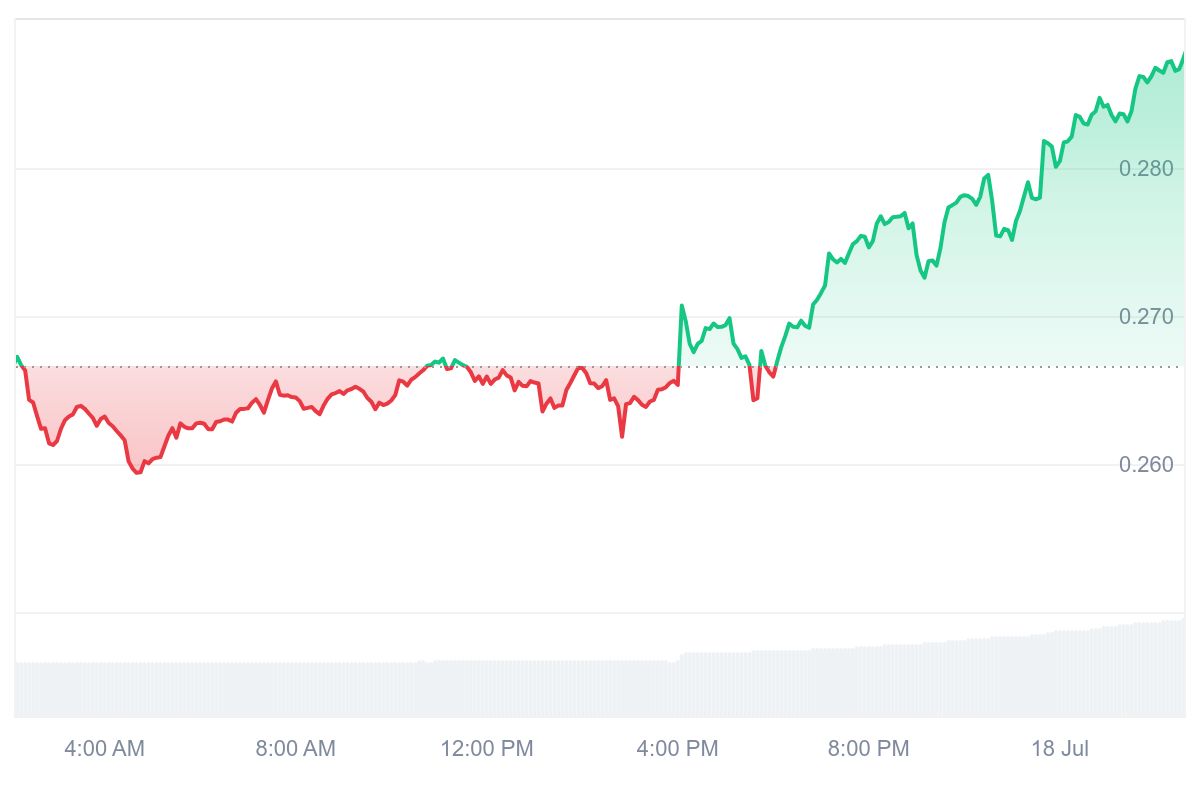
The announcement of an improved AI/GPU roadmap was one noteworthy turning point. This upgrade brought more attention to Golem’s main AI infrastructure services: the Golem-Workers API, which gives developers direct access to GPU/CPU nodes for fine-tuning and wider processing, and Modelserve, which enables scalable AI model inference.
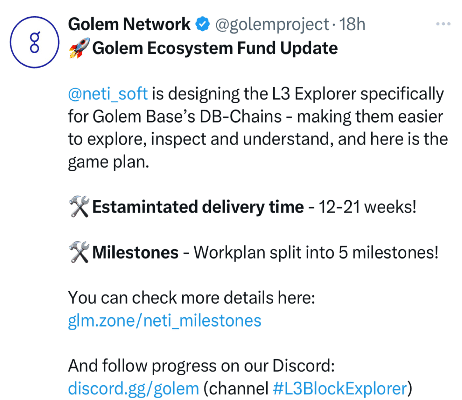
It is striking to observe GLM’s 30% increase from $0.22 to about $0.29 in a matter of weeks. This kind of movement might draw attention to the network’s renewed use. Analysts even predict a continuous upward trajectory if this increase continues; some estimates put GLM at $0.23 and $0.25 in the near future and as high as $0.38 and $0.46 by 2026.
A recent significant collaboration with Gamerhash AI increased Golem’s presence in a GPU-sharing network with a gaming focus. By utilizing the GPU power that gamers contribute, Golem significantly increases the resources available for AI and rendering operations. It is a useful step toward decentralized GPU infrastructure on a real-world scale.
2. IOTA (IOTA)
IOTA was created to address a basic issue: how to connect billions of Internet of Things (IoT) devices in a way that is scalable, free, and energy-efficient. Miners, fees, and poor transaction speeds are the main problems with traditional blockchains. By employing a “Tangle,” a directed acyclic graph in which each new transaction validates two previous ones, IOTA gets around these restrictions.
The Foundation introduced IOTA Notarization, an alpha toolkit that allows businesses to anchor tamper-proof information onto the Tangle, including dynamic records like sensor feeds and static records like certificates. The TWIN Foundation was established at the same time as the Rebased Mainnet made its successful debut, turning IOTA into a full-fledged Layer-1 blockchain. The TWIN Foundation is already working with the Tony Blair Institute to promote trustworthy digital trade infrastructure.
One not to be missed – IOTA real world adoption! https://t.co/gcC6X9N7re
— Phylo.iota (@PhyloIota) July 17, 2025
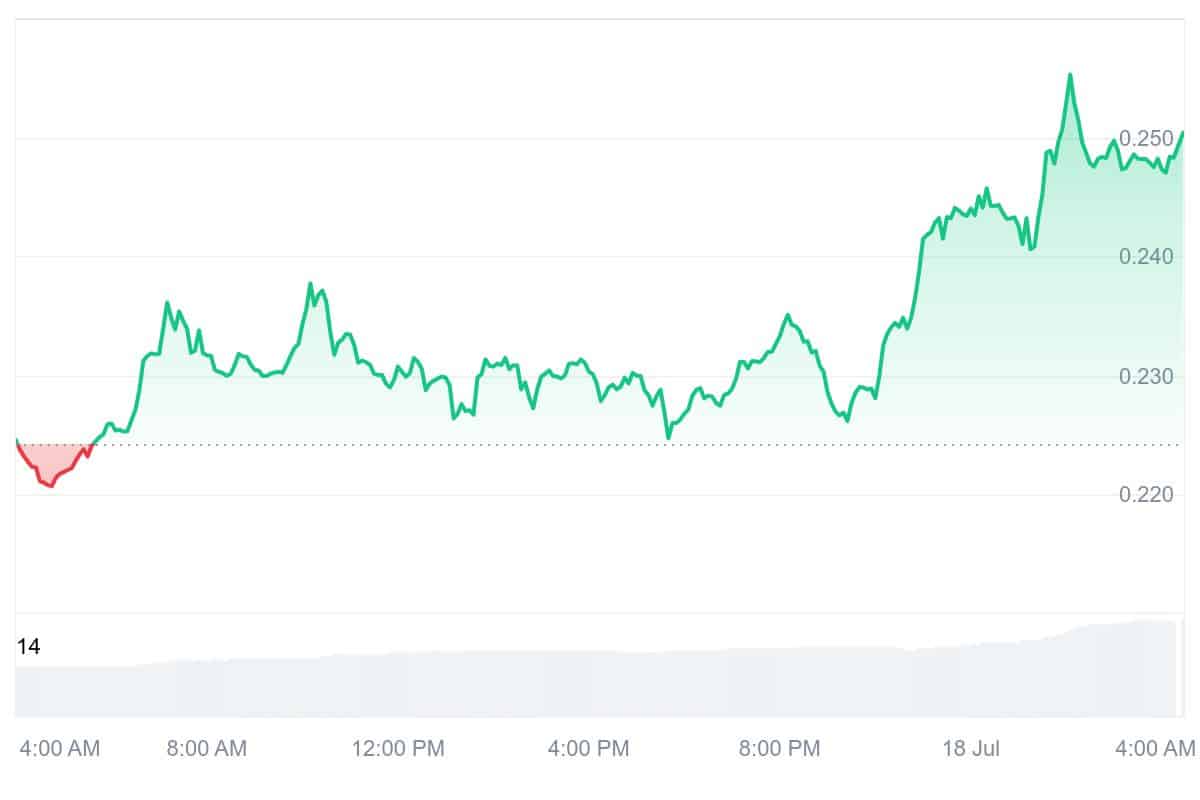
With intraday swings between $0.22 and $0.25 and consistent, low-volatility movement, the price is currently trading at around $0.248, up slightly more than +0.11% from yesterday. That points to a tranquil market phase, but given the wider increases in cryptocurrency markets over the last week, IOTA’s momentum may be subtly gaining ground.
The project is solidifying its position in global blockchain standards through the Global Blockchain Business Council, which has offices in the US, UK, and EU, and the TWIN Foundation’s partnership with the Tony Blair Institute. To put this from theory to practical use, TWIN’s East Africa implementation demonstrates actual IOTA technology deployments in cross-border trade.
3. VeChain (VET)
VeChain’s value as one of the 5 best cheap cryptocurrencies to buy under 1 dollar is found in its ability to build a minimal-fee blockchain on top of enterprise-grade infrastructure. With the dual-token model, businesses can estimate prices and automate smart contracts and IoT events without experiencing unexpected spikes or fee drains: VTHO for gas and VET for value transfer.
According to its official X account, over 591,000 VTHO were burned yesterday, over 22,000 new wallets, demonstrating a thriving ecosystem and increasing on-chain activity. That’s momentum, not simply metrics: each transaction raises the value of each token that remains and lowers VTHO.
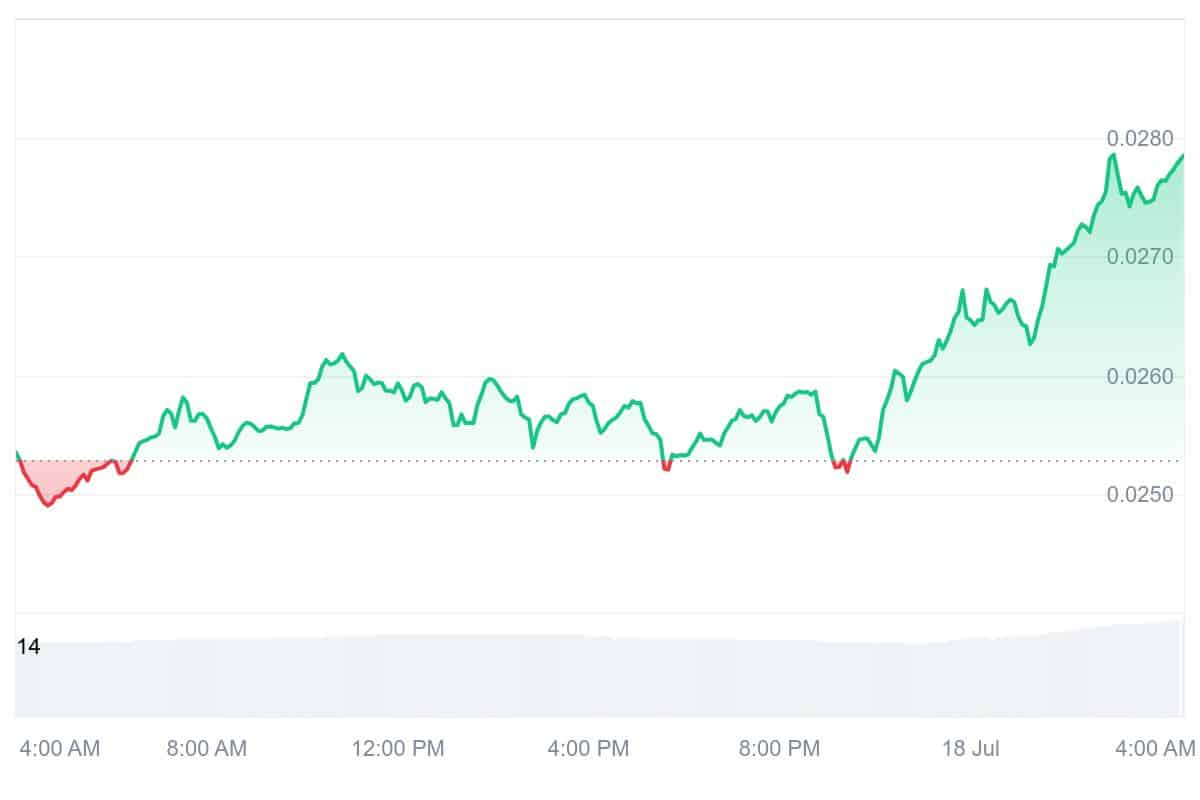
VET is currently trading at about $0.0267, indicating a big upward swing of over +1.2% since yesterday and up more than +3% over the last two days, which suggests a renewed interest in the market. Tens of thousands of dollars in locked liquidity across pools such as VET/WBNB indicate secure backing prepared to support larger deals as volumes increase.
"Crypto never needed a “killer app.” It needed useful ones. Ones that make life a little better, a little healthier, a little more connected." — from @CoinDesk
Over 20 million of actions have already been recorded on VeBetter, across a growing ecosystem of apps that bridge… pic.twitter.com/yuAKBSkXrv
— VeChain (@vechainofficial) July 17, 2025
With more than 360 changes made recently across more than 50 core GitHub repositories, developer activity is highly encouraging. This indicates that technology, including enterprise tooling, multisig, wallets, and token analytics, is continuously being improved. Enterprise clients remain interested when the code continues to evolve, which is precisely what is taking place at the moment.
4. XDC Network (XDC)
XDC Network resolves the chaos in international trade finance, where a lack of transparency, sluggish settlements, and paperwork impede cross-border transactions. XDC builds a flexible and reliable ecosystem where companies, from banks to exporters, can easily track assets and settle payments promptly by fusing a hybrid blockchain with quick, inexpensive transactions and smart contracts.
The team reported a successful test integration with an East African regional trade consortium, where a shipment was digitally certified using XDC’s hybrid network, cutting down on processing time from days to minutes. Whilet, a Discord developer, released a lightweight SDK that allows small businesses to take immediate cross-border payments in less than an hour by integrating XDC payments into e-commerce checkout routines.
Assetera & XDC Network: A New Era for On-Chain Capital Markets
“This partnership is a pivotal moment in our roadmap to build the next generation of regulated, tokenized capital markets in Europe and beyond. With Assetera’s regulatory infrastructure and XDC’s scalable blockchain… pic.twitter.com/HZtM4MkYuo
— XDC Foundation (@XDCFoundation) July 16, 2025
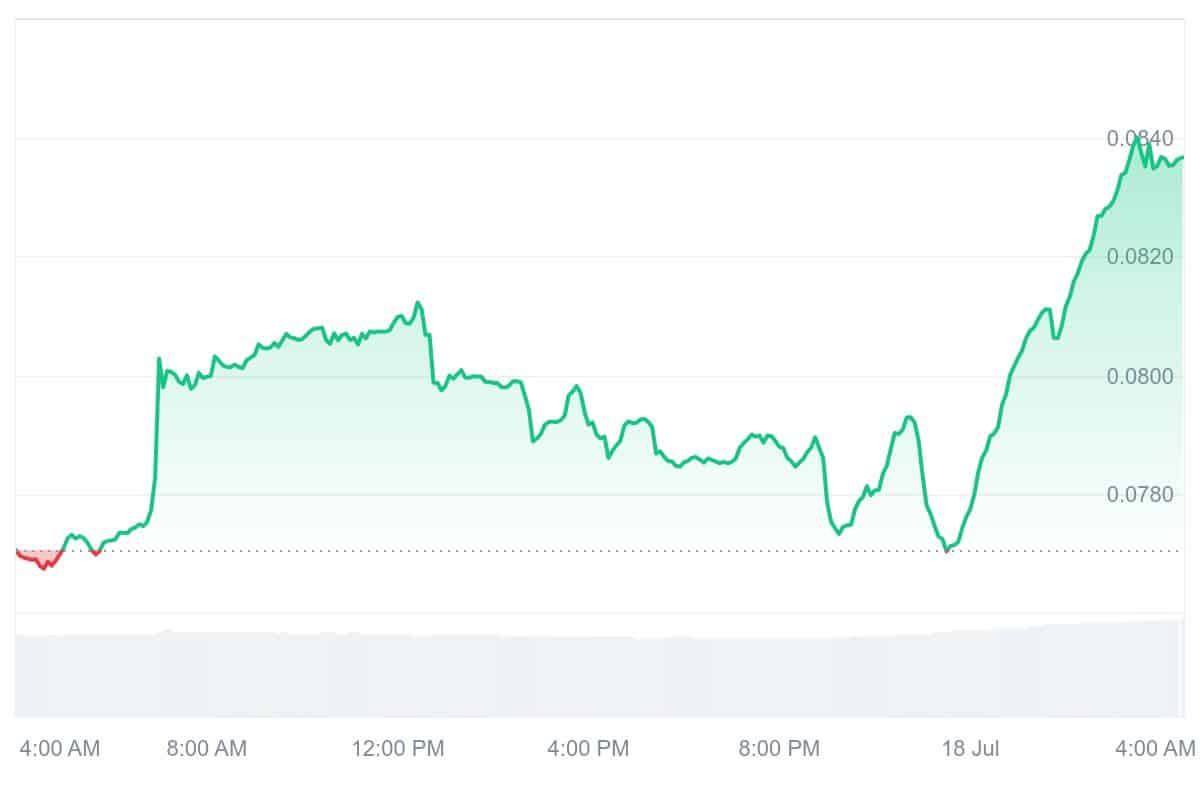
Over the last week, it has increased by double digits and is currently trading between $0.082 and $0.083. This indicates that traders are becoming more aware of trade-finance solutions that truly provide value, which is indicative of improving market sentiment.
It recently revealed a partnership with one of Southeast Asia’s top trade finance platforms, which will allow for rapid payments into XDC and invoice tokenization. As a founding member of the Global Blockchain Business Council, XDC has preferential access to regulatory bodies in the EU, UK, and Singapore, which gives it significant influence over compliant digital trade infrastructure.
5. Bitcoin Hyper (HYPER)
Most attempts to “improve” Bitcoin follow the same well-worn script: faster blocks, lower fees, maybe a nod to energy efficiency, but little else. Bitcoin Hyper doesn’t follow that path. Instead of trying to one-up Bitcoin on paper, it focuses on something more practical: making it actually usable.
It offers almost immediate finality, micro-fees that don’t interfere with little transactions, and a foundation layer designed for contemporary cryptocurrency operations, like on-chain payments and real-time token swaps. In short, it feels more like a next-gen L1 than a typical Bitcoin fork.
And while most launches chase attention with aggressive hype cycles, Bitcoin Hyper has taken a quieter route. Its presale has been going smoothly because early traders, DeFi users, and protocol developers have begun spreading the word about it, not because of loud marketing.
Sure, part of that is the branding. But what’s keeping people watching is the underlying structure: a blend of Bitcoin’s trust with the speed and functionality the space increasingly demands.
It’s still early, and the competition is relentless. But for anyone tracking the next wave of utility-focused L1s, HYPER might be one to keep tabs on, especially while it’s still flying slightly under the radar.
Learn More
Join Our Telegram channel to stay up to date on breaking news coverage